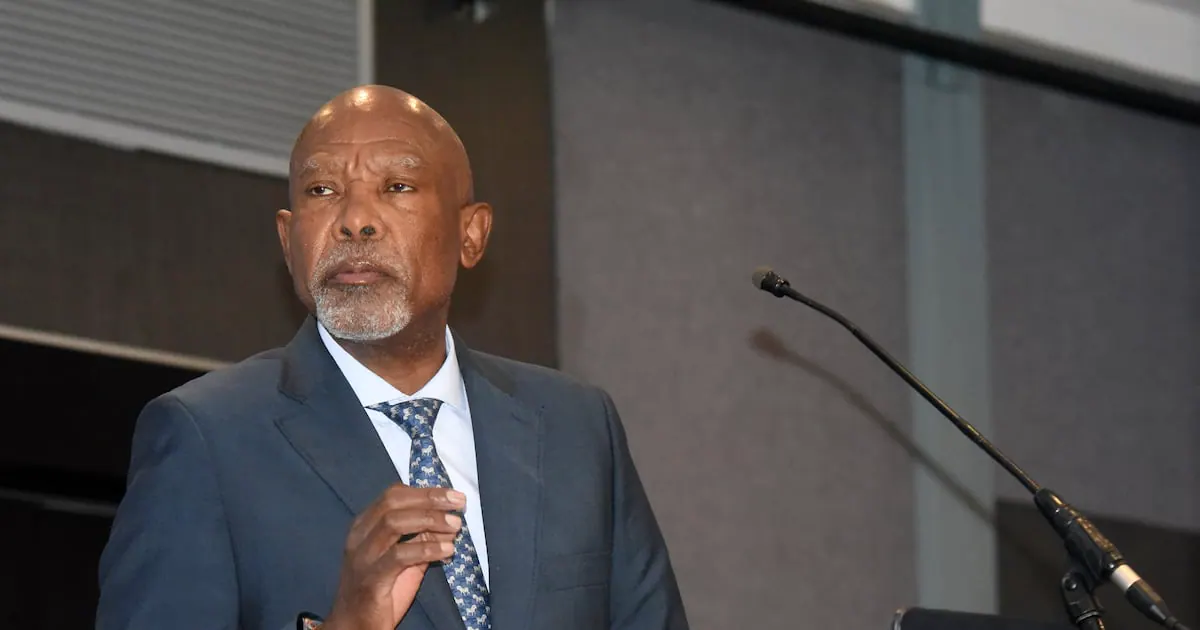
The South African Reserve Bank is set to make a crucial decision on interest rates this Wednesday, balancing the need to control inflation with the risk of hurting a struggling economy. The bank's monetary policy committee, chaired by governor Lesetja Kganyago, will announce its decision a day earlier than usual due to the September 24 Heritage Day public holiday. The committee has kept its benchmark policy rate steady at 7% since July, after hiking it by 25 basis points in May due to inflationary pressure from oil prices.
The Reserve Bank's decision will come just hours after Stats SA releases its August consumer inflation data. However, the bank has made it clear that it takes a forward-looking view of inflation, considering factors beyond current data. It will also take into account a recent report from the Bureau for Economic Research, which showed that inflation expectations moderated in the third quarter of 2026 despite ongoing geopolitical tensions in the Middle East.
According to the BER report, inflation expectations among analysts, businesspeople, and trade union officials for headline consumer inflation in 2026 remained unchanged at 4.4%. However, expectations eased to 4% from 4.2% for 2027 and to 3.8% from 3.9% for 2028. Household forecasts declined sharply, with 12-month expectations falling to 4.9% - their lowest level in nearly five years - from 6%.
Despite the moderation in inflation expectations, they remain significantly above the Reserve Bank's 3% target. The economy also contracted by 0.2% in the second quarter of the year, which could argue for keeping rates on hold to offer some relief to consumers. Economists are divided on the likely decision, with some arguing for a rate hike to control inflation and others expecting the bank to hold rates steady.
The Reserve Bank's decision is not made in isolation, as it takes into account the actions of other central banks, which affect global and domestic financial conditions. The Federal Reserve raised rates last Wednesday, and the European Central Bank also raised rates nearly a week earlier, citing higher oil prices and inflation concerns.
Economists expect another uptick in inflation in August, albeit a slight one, to 4.5% year on year, driven primarily by higher fuel prices. However, food inflation continues to provide an offset, as near-term food price pressures remain contained. The Reserve Bank's July leading business cycle indicator, which fell 1.4% in June, will also be released this week.
Ultimately, the Reserve Bank's decision will depend on its assessment of South Africa's inflation outlook and risks. While a rate hike is possible, some economists argue that it would not address the root cause of the problem, which is the high oil price. The bank's decision will have significant implications for consumers and the broader economy.
Key points
- The South African Reserve Bank will decide on interest rates this Wednesday, balancing inflation concerns with the risk of hurting a struggling economy.
- Inflation expectations have moderated, but remain above the Reserve Bank's 3% target.
- The economy contracted by 0.2% in the second quarter of the year, which could argue for keeping rates on hold.