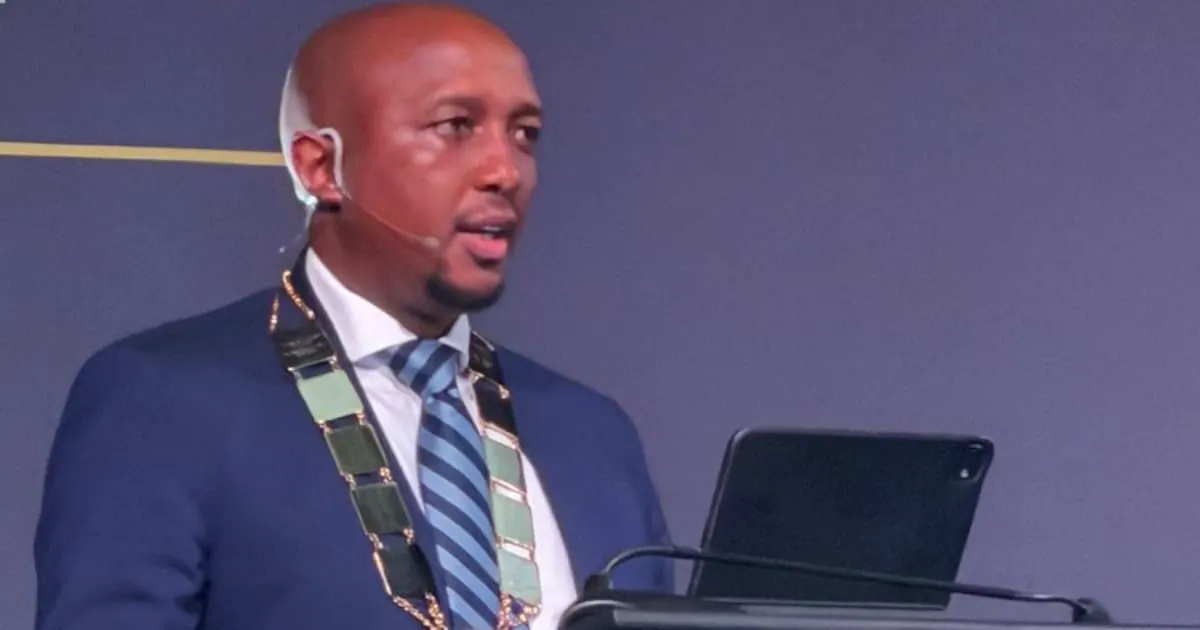
The South African Property Owners Association (Sapoa) has called on the country's commercial property industry to play a more active role in addressing the municipal and infrastructure crisis. Sapoa president and Vukile property fund MD Itumeleng Mothibeli stated that property owners and practitioners need to be part of the discussions shaping the country's economic and infrastructure future. This is due to the sector's dependence on functioning municipalities. Mothibeli made these comments at Sapoa's 60th anniversary convention at Sun City.
Mothibeli emphasized that the property sector cannot afford to sit on the sidelines anymore. He noted that Sapoa is the best vehicle and voice for the industry to engage in these discussions. The municipal crisis has severe financial and service delivery pressures. Sapoa is focusing its advocacy on municipal rates, tariffs, revenue collection, and institutional capacity. Only 39 of South Africa's 257 municipalities achieved clean audits in the 2024/2025 financial year.
The auditor-general's report highlights the scale of the deterioration in local government. Mothibeli stated that real estate is directly linked to the country's prospects. The property sector can enable the realization of the country's latent potential to address structural and social challenges. Sapoa is stepping up its engagement with municipalities on budgets, tariffs, rates policies, revenue collection, and expenditure management.
Sapoa's municipal rates project has quantified the impact of municipal rates and taxes on property values. The organization plans to use this technical analysis to contribute to the government's white paper on municipal and local government reform. Last year, the outlook was more positive, with Mothibeli pointing to macroeconomic green shoots, interest rate cuts, and improving property prices.
However, the environment has since become more uncertain. Despite the challenges, the property sector has shown resilience. New cranes are still being anchored, public and private markets continue to trade assets and raise capital, and approved plans, construction, and infrastructure investment remain active. The industry's response reflects the long-term nature of property as an asset class.
Sapoa has 593 members who are property companies and has stepped up its policy and municipal advocacy. The organization continues to invest in the industry's skills pipeline through the Sapoa Bursary Fund. Since its establishment in 2009, the fund has awarded 213 bursaries worth R86m, with 72 bursaries awarded in 2026 alone.
Mothibeli reflected on the industry's achievements over the past six decades, including developments such as the Carlton Centre, Sun City, and the Gautrain. However, he noted that the industry faces a grave paradox, with challenges such as inequality, sluggish economic growth, and youth unemployment close to 60%.
Key points
- The South African property sector must engage in discussions shaping the country's economic and infrastructure future.
- Only 39 of South Africa's 257 municipalities achieved clean audits in the 2024/2025 financial year.
- Sapoa has awarded 213 bursaries worth R86m through its bursary fund since 2009.