South Africa's property sector is facing significant challenges, including failing infrastructure and political uncertainty, which are hindering growth and investment in the industry. According to Professor Adrian Saville of the Gordon Institute of Business Science, the country's economy has been stuck at roughly 1% growth for 15 years, with the production sector, including mining, declining from half of the economy in 1980 to less than a fifth today. This has resulted in a "hollowed out" economy with income per person lower than in 2010.
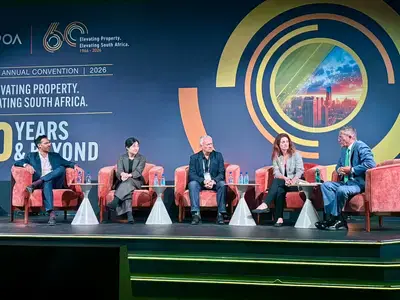
The South African Property Owners Association's 60th annual convention heard from economists and property experts who emphasized the need for change. CNN's Richard Quest told the delegates that South Africa usually waits until things get bad enough before it fixes them, and that the country needs to get out of its own way to achieve growth. The panel discussion that followed was lively, with calls for corrupt officials to be held accountable and criticism of the governing party's record.
Investment in infrastructure is crucial to attracting private money and driving growth, but investors have lost trust in the country due to its poor infrastructure. The panel argued that cleaning up roads and towns would help win back investor confidence, but Quest dismissed this as trite. Fixed investment in South Africa sits at around 14% of GDP, down from 21% in 2008, and the National Development Plan aims to raise it to 30% by 2030.
The property sector is directly affected by the lack of investment in infrastructure, with many projects failing to materialize due to poor municipal services. A developer can have the land and approved plans, but if the town around the site is going backwards, the numbers stop working and the scheme gets shelved. Public-private partnerships have accounted for only 2.5% of public investment in every budget over the past 25 years, despite the private sector having the money and know-how.
The panel also highlighted the issue of unemployment, which has risen to 33.6% in the second quarter of 2026, with young people aged 15 to 34 facing a staggering 47.4% unemployment rate. This has a direct impact on the property sector, as tenants pay rent from wages and profits, which come from a growing private economy. The panel emphasized the need for a growing private economy to drive growth and investment in the property sector.
The upcoming local government elections on November 4 are seen as an opportunity for change, but also pose risks. A weaker ANC might improve accountability, but it could also lead to unstable coalitions and fragmentation. The property sector is closely watching the elections, as municipal decisions affect property rates, building plans, and infrastructure maintenance. The cost of money is also a concern, with the Reserve Bank raising the repo rate twice this year, taking prime to 10.75%.
Ultimately, the property sector is calling for agility and change, with Professor Saville citing Muhammad Ali's famous phrase that agility is being able to choose your speed. The sector is urging voters to make a choice on November 4 that will support growth and investment in the industry.
Key points
- South Africa's property sector is facing significant challenges, including failing infrastructure and political uncertainty.
- Investment in infrastructure is crucial to attracting private money and driving growth.
- The upcoming local government elections on November 4 are seen as an opportunity for change, but also pose risks.