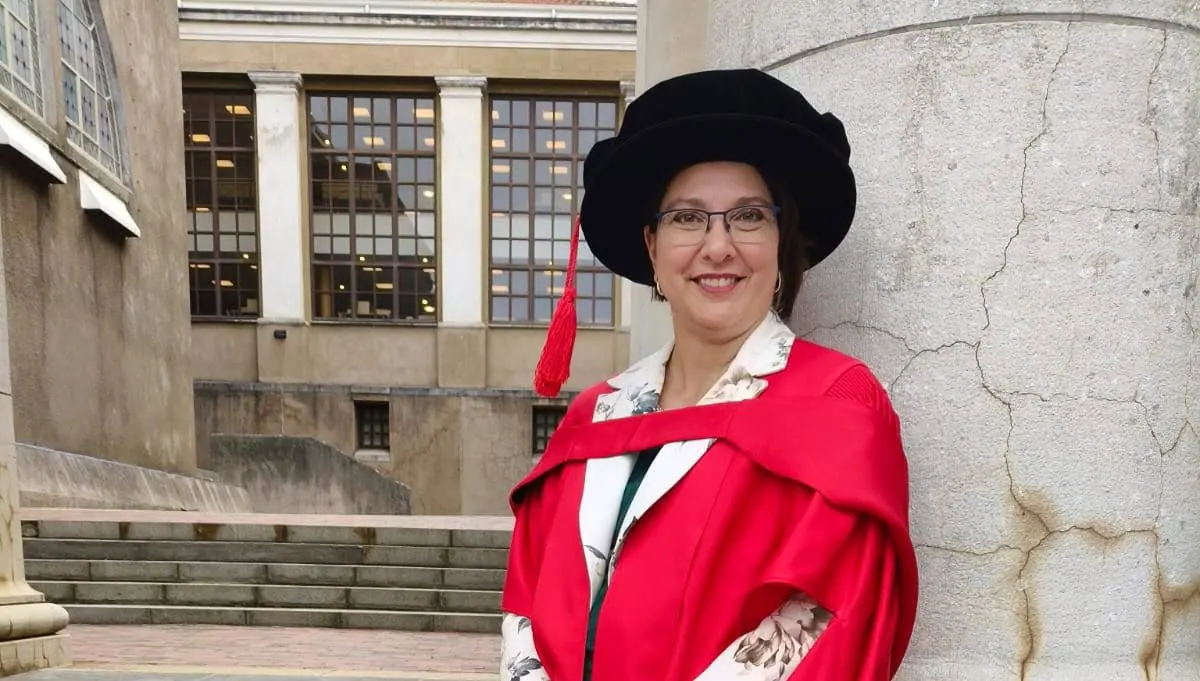
Prof. Welma Lubbe, director of research at the North West University's (NWU) Nursing and Midwifery Research Unit, has achieved a remarkable milestone by earning her second PhD from the University of Cape Town (UCT). Her latest doctoral degree, under the supervision of Prof. Kirsty Donald, explores pediatric neuroscience and builds on her extensive work in neonatal care and neuro-developmental supportive care. This academic accomplishment is all the more impressive given that Lubbe has faced significant personal challenges, including two cancer diagnoses.
Lubbe's cancer journey began when she was 40 years old and diagnosed with breast cancer for the first time. Four years later, at the age of 44, she received her second diagnosis. Her second cancer battle coincided with the COVID-19 pandemic, which further complicated her experience. The chemotherapy treatment affected her cognitive abilities, making it difficult for her to recall specific words. This experience led Lubbe to question her capabilities and sparked a desire to prove to herself that her brain and contributions to academia were still valuable.
Lubbe's personal struggles have profoundly influenced her research and perspective on patient care. She notes that her experiences as a cancer patient have given her a deeper understanding of the needs of patients and their families. Her research has highlighted the importance of support and connection in patient care, particularly in neonatal units. Lubbe's work emphasizes that patients and families need to feel safe and heard to effectively participate in care.
Lubbe's academic journey has been diverse and extensive. Initially considering physiotherapy, she eventually pursued nursing at the University of the Free State. Her interest in midwifery led her to work as a midwife, and she later developed a passion for aromatherapy and reflexology. Her master's degree, undertaken while working in an intensive care unit, further solidified her interest in the relationships between parents, babies, and their environment.
Lubbe's first PhD focused on the care of premature babies, while her second PhD expanded her focus to the neurological development of young children and the role of parents in this process. She has developed a parenting program aimed at helping parents connect with their babies and improve their long-term relationships. A key finding from her research is that parents need to feel safe and heard before they can effectively participate in their baby's care.
The NWU is currently developing new postgraduate programs in neuroprotective care and development, including a postgraduate diploma and PhD, with the first students expected to start in 2028. These programs aim to strengthen clinical and academic capacity in neuroprotective care and development in South Africa. Lubbe hopes that her work will ultimately extend beyond the academic world and equip a new generation of healthcare workers to adopt a multidisciplinary approach.
Lubbe emphasizes that parenting is often assumed to be instinctual, but modern parents face an overwhelming amount of information and unrealistic expectations. She encourages parents to trust their instincts and not to feel inadequate if they do not have all the answers. By sharing her experiences and research findings, Lubbe aims to inspire a new approach to patient care and parenting, one that prioritizes connection, support, and understanding.
Key points
- Prof. Welma Lubbe has earned her second PhD in pediatric neuroscience despite battling cancer twice.
- Lubbe's research emphasizes the importance of support and connection in patient care, particularly in neonatal units.
- The NWU is developing new postgraduate programs in neuroprotective care and development to strengthen clinical and academic capacity in South Africa.