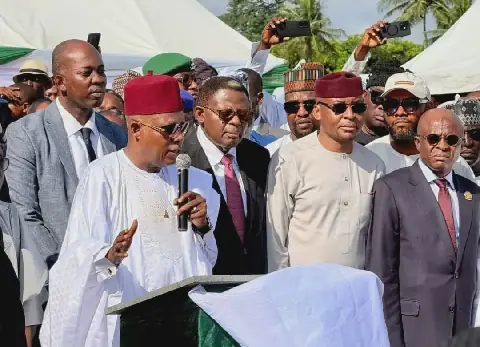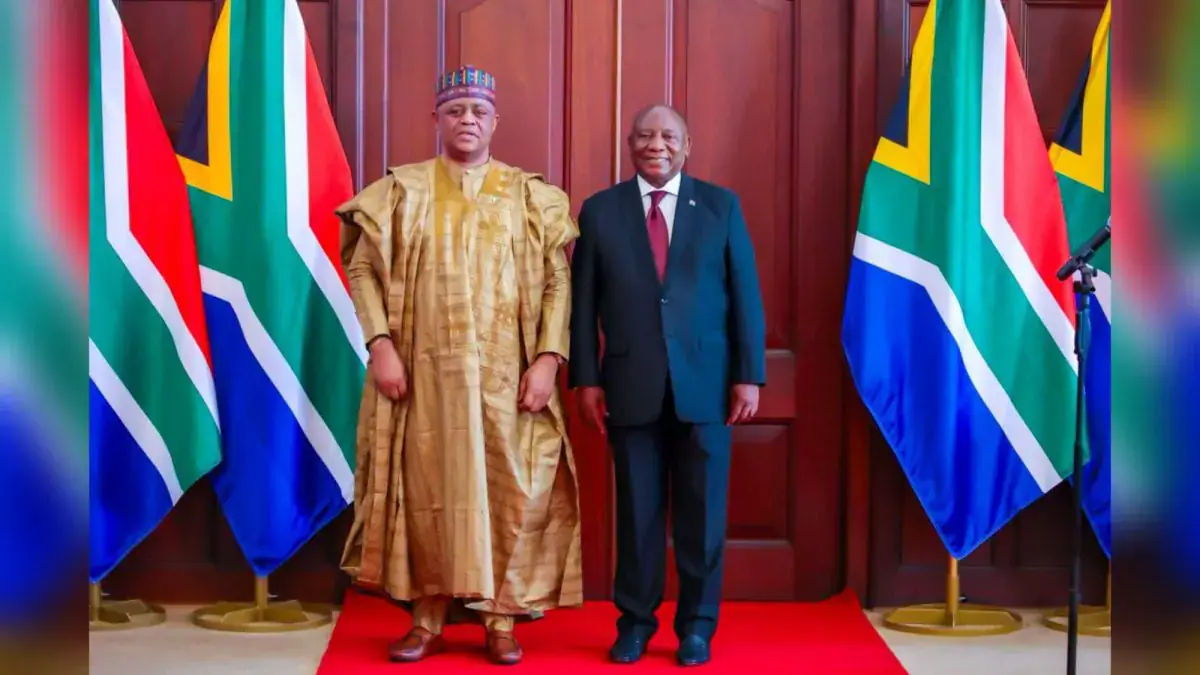
The South African Presidency has addressed concerns raised by Nigeria's High Commissioner to South Africa, Femi Fani-Kayode, regarding the exclusion of Nigerian representatives from a diplomatic ceremony livestream attended by President Cyril Ramaphosa. Fani-Kayode had expressed disappointment after discovering that his introduction and speech were missing from the official broadcast. The incident occurred during the presentation of letters of credence by ambassadors from 15 countries, including Nigeria, at the South African Presidential Guest House in Pretoria.
Vincent Magwenya, spokesperson for the South African Presidency, clarified that President Ramaphosa had no authority to interfere in the operational activities or editorial decisions of the South African Broadcasting Corporation (SABC), the country's public broadcaster. Magwenya stated that Ramaphosa merely directed Fani-Kayode to Sophie Mokoena, the appropriate person to address the complaint, and did not intervene on his behalf. This response aimed to correct Fani-Kayode's misrepresentation of the President's involvement in the matter.
Magwenya emphasized that the SABC operates as a public broadcaster, and the President has no legal or political mandate to interfere with its operations or editorial processes. He described Fani-Kayode's reaction to the minor operational issue as grossly inappropriate. The presidential spokesperson wished the Nigerian envoy well in his diplomatic assignment, urging him to engage constructively. This exchange highlights the importance of clear communication and understanding between diplomatic representatives.
Fani-Kayode had presented his letters of credence to President Ramaphosa, marking the first posting of a substantive Nigerian ambassador to South Africa in four years. The Nigerian envoy expressed disappointment over the incident but maintained that he had immense respect and affection for South Africa and its people. He also thanked Ramaphosa for his concern and timely intervention, ensuring that Nigeria would not tolerate any form of disrespect towards its government or citizens.
The incident has sparked attention to the role of public broadcasters in diplomatic events and the limits of executive intervention. According to Magwenya, the President's role is not to interfere in operational matters but to ensure that diplomatic representatives are directed to the relevant authorities. This clarification aims to maintain transparency and cooperation between South Africa and Nigeria.
Fani-Kayode revealed that Nigerian television stations present at the ceremony recorded his speech and would make the footage available to the Nigerian public. He declined an interview request from SABC News, instead directing the broadcaster to listen to his speech, which officials had allegedly refused to include in the livestream. This development underscores the significance of accurate representation in diplomatic events.
The diplomatic exchange between South Africa and Nigeria highlights the complexities of international relations and the importance of effective communication. Both countries value their relationship, and this incident is being addressed through constructive engagement. The South African Presidency's clarification aims to resolve the matter and strengthen bilateral ties.
Key points
- The South African Presidency has no authority to interfere in the operational activities or editorial decisions of the South African Broadcasting Corporation (SABC).
- President Cyril Ramaphosa directed Fani-Kayode to Sophie Mokoena, the appropriate person to address the complaint, but did not intervene on his behalf.
- The incident highlights the importance of clear communication and understanding between diplomatic representatives.