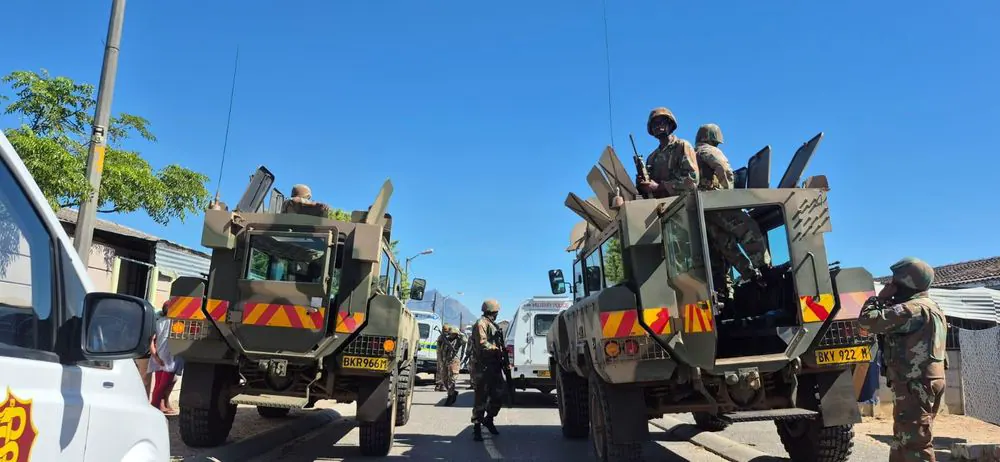
The South African Police Service is facing a precarious operational dilemma as high-level briefings have warned that arresting six SANDF Special Forces members could spark an armed confrontation between state security agencies. The six soldiers are wanted in connection with high-profile kidnapping charges, including the abduction of an Ethiopian businessman and suspected ISIS funder, and the murder of Hawks’ investigator Lieutenant-Colonel Frans Mathipa.
The standoff unfolds against a backdrop of escalating tensions between military and civilian law enforcement, highlighted by an intelligence assessment raising concerns about broader national security risks. According to information presented at high-level meetings involving the military, police, and the National Prosecuting Authority, held in August and September, there are concerns about the risks associated with enforcing the court orders and the possible consequences of attempting to take the six members into custody.
The six SANDF Special Forces members are among 12 facing criminal charges arising from the alleged December 2022 kidnapping of Abdella Hussein Abadigga and his bodyguard, Kadir Jemal Abotese, and the August 2023 murder of Mathipa. The State alleges that the accused were involved in the offences, but they have denied the allegations and remain presumed innocent unless and until convicted.
A National Intelligence Co-ordinating Committee assessment on May 11, 2026, raised concerns about the broader security environment surrounding the case, including allegations concerning misconduct, tensions within law-enforcement and security structures, criminal investigations, and court processes. However, these allegations have not been tested in court and do not constitute findings of fact, criminal convictions, or judicial findings against any individual or institution.
The intelligence assessment also contains allegations concerning alleged links between criminal or extremist networks and unidentified individuals within security structures, including claims relating to Islamic State-linked networks operating in South Africa. Those allegations form part of the intelligence assessment and have not been established through the criminal proceedings against the 12 accused.
The Gauteng High Court in Johannesburg revoked the bail of the six accused in January 2026 and ordered them to report to prison, but they failed to surrender, resulting in arrest warrants being issued. Police are therefore faced with the task of enforcing the outstanding warrants while managing concerns about the possibility of resistance during any attempt to take the accused into custody.
The existence of the warrants and the court's orders remain separate from the allegations contained in the NICOC assessment, which discusses alleged threats to Special Forces personnel and concerns about the potential consequences of taking certain members into custody. The police must now navigate this complex situation while ensuring that the rule of law is upheld.
Key points
- The arrest of the six SANDF Special Forces members could trigger an armed confrontation between state security agencies.
- The intelligence assessment raises concerns about broader national security risks and alleged links between criminal or extremist networks and unidentified individuals within security structures.
- The police must enforce the outstanding warrants while managing concerns about the possibility of resistance during any attempt to take the accused into custody.