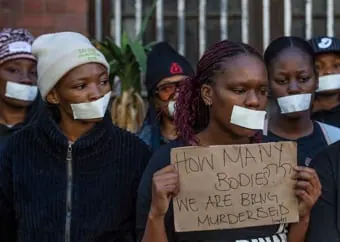
The South African Police Service has admitted to Parliament that their statistics on crimes against women and children are flawed. This admission was made on Wednesday, 24 September. The police had been under scrutiny for their handling of gender-based violence (GBV) cases. The admission comes amid concerns about the accuracy of crime statistics in the country.
The police's admission was made during a meeting with Parliament. They acknowledged that their current system of collecting and reporting GBV statistics is not reliable. This has raised concerns about the effectiveness of the police's response to GBV cases. The police have been criticized for their handling of GBV cases, with many arguing that more needs to be done to protect victims.
The police's GBV statistics are used to track the prevalence of GBV in the country. However, the police have now admitted that these statistics are not accurate. This has implications for policy and resource allocation. The police's admission has been welcomed by some, who argue that it is a step towards addressing the problem of GBV.
The South African government has been under pressure to address GBV. The country has one of the highest rates of GBV in the world. The government has introduced various measures to address the problem, including the implementation of a national GBV strategy. However, critics argue that more needs to be done to address the root causes of GBV.
The police's admission has sparked calls for a review of the country's crime statistics. Some have argued that the police's statistics are not only flawed but also misleading. This has implications for public perception of crime in the country. The police have been urged to improve their systems for collecting and reporting crime statistics.
The Western Cape government has opted out of a new Foundation Phase catalogue for 2027. This decision was made amid concerns about the quality of education in the province. The catalogue is used to guide the development of educational materials. The Western Cape government has argued that the catalogue does not meet the needs of the province.
Taxi boss Sindane's lawyers have argued that his appearance before the Madlanga inquiry was prevented due to a sacred sangoma journey. Sindane is facing allegations of corruption. His lawyers have argued that he was unable to appear before the inquiry due to a traditional obligation. The inquiry is investigating allegations of corruption in the taxi industry.
Key points
- The South African Police Service has admitted that their statistics on crimes against women and children are "inherently not correct".
- The police's admission has sparked calls for a review of the country's crime statistics.
- The Western Cape government has opted out of a new Foundation Phase catalogue for 2027.