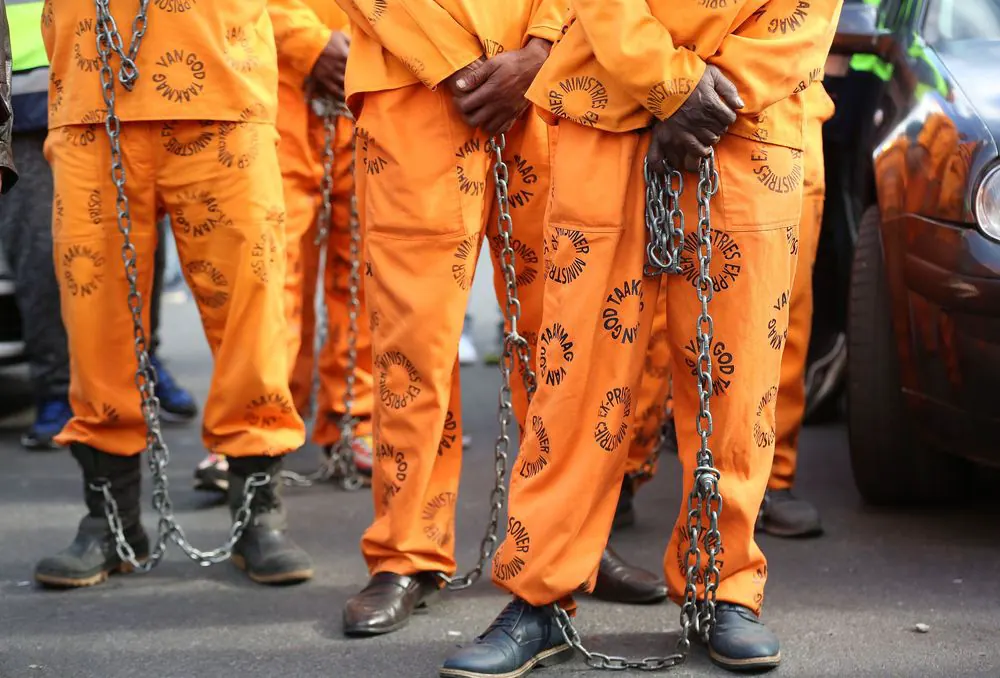
The South African criminal justice system is facing a severe crisis, with prisons becoming breeding grounds for gang recruitment and criminal activity. Correctional Services national commissioner Makgothi Thobakgale has admitted that imprisonment does not necessarily sever criminals' links to the outside world or bring their criminal ambitions to an end. This has led to calls from political parties for a complete overhaul of the system.
Overcrowding has been identified as a major contributor to the crisis, with prisons currently accommodating 173,955 people, comprising 63,400 remand detainees, 110,129 sentenced inmates, and 425 state patients. The department has about 107,100 bed spaces, resulting in an overcrowding rate of 62%. This has created power vacuums that organized gangs exploit, with contraband smuggling and compromised officials allowing criminal syndicates to continue operations behind bars.
The African National Congress (ANC) has identified vetting backlogs as another problem, with delays in security clearances leaving vulnerable staff exposed. Chairperson of the portfolio committee, Kgomotso Ramolobeng, has called for the streamlining of internal disciplinary processes and immediate referral of criminal cases to the police. She also recommends fast-tracking lifestyle audits and prioritizing clearances with state security agencies.
The Democratic Alliance (DA) has also weighed in on the issue, with MP Janho Engelbrecht calling for a complete redesign of the criminal justice system. Engelbrecht believes that the core of the problem lies in the massive overcrowding of prisons, which is caused by a tremendous amount of remand detainees who have not been tried yet. He also highlighted overspending and budget shortfalls, saying the department has funded vacancies on paper but no money in the bank to pay those officials.
The Economic Freedom Fighters (EFF) has also called for a radical overhaul of the system, with MP Carl Niehaus identifying overcrowding as "the first structural failure". Niehaus believes that the mixing of sentenced and unsentenced inmates, including first-time offenders mixing with hardened gang members, is conducive to the Numbers Gangs organizing, recruiting, disciplining, and extending their authority from the cell to the streets.
The EFF has also blamed the country's intelligence services for failing to provide enough intelligence on how gangs operate, the identities of their imprisoned leadership, or the precise channels that connect those leaders to street structures. Niehaus believes that without this intelligence, raids remain episodic, disciplinary cases remain individual, and the syndicate itself is never dismantled.
Correctional Services Minister Pieter Groenewald has acknowledged the crisis, stating that the department is working to address the issues. However, with systemic problems that can't be fixed, a complete redesign of the South African criminal justice system may be the only solution. The parties have identified key areas that need attention, including addressing overcrowding, vetting backlogs, and intelligence failures.
Key points
- Overcrowding is a major contributor to the crisis in South African prisons.
- The country's intelligence services have failed to provide enough intelligence on gang operations.
- A complete redesign of the criminal justice system may be necessary to address the crisis.