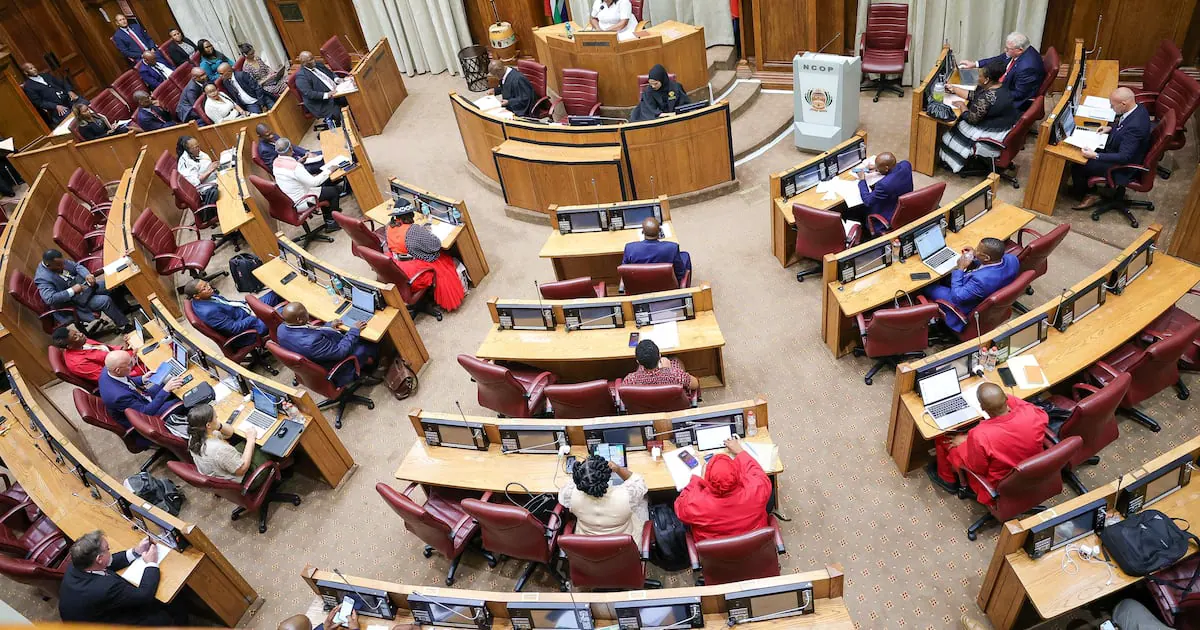
The Public Procurement Bill, which aimed to regulate government procurement, was passed by the National Assembly on December 6, 2023, despite opposition from the Democratic Alliance (DA). The bill was then introduced to the National Council of Provinces (NCOP) for processing. Dennis Ryder, a DA member, played a key role in scrutinizing the bill, citing concerns about its constitutionality and potential impact on procurement processes. The bill's passage was marked by controversy, with the ANC pushing for its adoption despite opposition.
The bill's background reveals that a version was initially released for public comment, but the ANC later rewrote key sections to make them more prescriptive, favoring strict criteria for preferential procurement. This move was criticized by many, who argued that it would entrench racial classifications and ignore value, capability, and service delivery. Ryder and his colleagues argued that the bill would reward politically connected intermediaries and front companies rather than promoting genuine economic opportunity for historically excluded South Africans.
Public hearings were held on February 23, 2024, where concerns about the bill were raised by various stakeholders. Ryder warned that the consultation process needed to be comprehensive and meaningful. Despite these concerns, the ANC pushed for the bill's adoption, and it was passed by the NCOP on May 7, 2024. However, the DA's objections were not silenced, and the party continued to raise concerns about the bill's constitutionality.
The NCOP's processes for section 76 bills involve obtaining voting mandates from provinces, which allows committee members to act as representatives of their provinces rather than party-political interests. Gauteng and the Western Cape raised concerns about the division of powers and functions between government spheres and provincial autonomy. These concerns were debated and recorded during the legislative process, providing a crucial parliamentary record.
As the elections approached, the committee faced pressure to finalize the legislation. Despite opposition, the committee adopted its report on the bill on May 7, 2024. Over 70 amendments were proposed during the NCOP process, but ultimately, the bill was rushed through, with the ANC using its majority to pass it. The DA's concerns about the bill's constitutionality were not addressed, and the party vowed to continue opposing it.
The Constitutional Court ultimately found the defects in the legislation to be fatal, rejecting the bill. Ryder argued that the parliamentary process had already highlighted the bill's constitutional problems, which were not speculative but rather part of the parliamentary record. The court's decision marked a significant victory for democracy and parliamentary scrutiny in South Africa.
The outcome of the Public Procurement Bill's saga serves as an important lesson about the role of parliamentary opposition in South Africa. The DA's rigorous scrutiny of the bill demonstrated the importance of multiparty parliamentary oversight in checking the exercise of political power. The ANC's attempts to push through the bill despite opposition ultimately failed, and the Constitutional Court's decision reinforced the significance of parliamentary processes.
Key points
- The South African parliament's scrutiny of the Public Procurement Bill highlights the importance of multiparty parliamentary oversight in checking the exercise of political power.
- The bill's rejection by the Constitutional Court marks a significant victory for democracy and parliamentary scrutiny in South Africa.
- The parliamentary opposition's efforts demonstrate that determined opposition can accomplish significant results, even when the governing party has a majority.