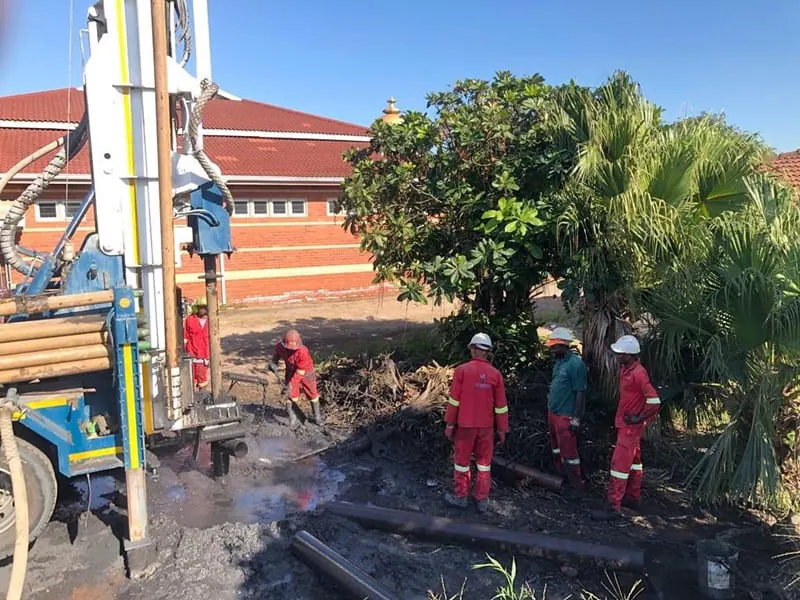
In August last year, residents of Vryheid in KwaZulu-Natal were surprised to find a "borehole tariff" on their municipal bills, in some cases even for properties without a borehole. This controversy raised questions about the extent to which municipalities can charge residents who develop alternative water sources at their own cost. As water outages, aging infrastructure, and poor municipal service delivery become common in many communities, boreholes are no longer a luxury but a necessary investment in water security.
South Africa's water problems are further highlighted by the significant amount of water lost before it can be used. This lost water is known as non-revenue water, which includes physical losses due to leaks and poor infrastructure, as well as losses from illegal connections and metering and billing issues. According to AfriForum's Water Crisis Portal and national water data, a concerning portion of South Africa's treated water is lost in this way. This problem is much larger than just a leaking pipe.
When treated drinking water is physically lost from the distribution network, the money and resources used to extract, treat, and distribute the water are also lost. Energy, chemicals, infrastructure, and labor have already been spent to make the water drinkable and transport it to communities. In a water-scarce country, such losses are particularly costly. They put further pressure on already vulnerable water systems and help explain why more South African citizens are looking for alternative ways to improve their water security.
Against this backdrop, boreholes have become a practical form of backup water supply for many people. The debate over borehole tariffs touches on something much larger than just a municipal bill item. It's about the principle that people who find their own solutions to service delivery problems at their own cost should not necessarily be charged again for doing so. Mangaung Metro recently reminded residents that a borehole service fee is payable by residents with boreholes on their property, regardless of whether the borehole is connected to the property's water supply system.
The amount of the borehole service fee in Mangaung has changed over the past few years, from R151.30 per month in 2024/25 to R167.94 in 2025/26, before being reduced to R70 per month for 2026/27. However, this does not change the fundamental question: what exactly are residents paying for? A borehole is typically sunk at the owner's own cost, and the owner pays for the drilling, pump, equipment, electricity, maintenance, and repairs. When the water is obtained from a source on the person's own property, it's reasonable to ask what concrete municipal service is being financed by a separate borehole tariff.
In Mbombela, the amounts involved are significantly larger. AfriForum is seeking answers from the City of Mbombela Local Municipality over tariffs on water supplied by private boreholes to properties. According to the municipality's tariff structure for 2026/27, residential properties with borehole water connected to their water system are charged R406.50 per month. For businesses, the amount is R877.12 per month, while businesses with more than one borehole may face tariffs of up to R8,953.92 per month.
AfriForum has asked how Mbombela's tariffs were calculated, what costs are being recovered, and how the municipality determines how much private borehole water ends up in its sewerage system. The organization will study the municipality's response and consider the matter with its legal team before deciding on further action. The problem is larger than just boreholes, highlighting the need for municipalities to rethink their approach to water supply and tariffs.
Key points
- Municipalities in South Africa are imposing tariffs on residents with boreholes, sparking debate over fairness and the need for alternative water sources.
- The tariffs have raised questions about the principle of charging residents who develop their own water sources at their own cost.
- The issue highlights the need for municipalities to rethink their approach to water supply and tariffs in a water-scarce country.