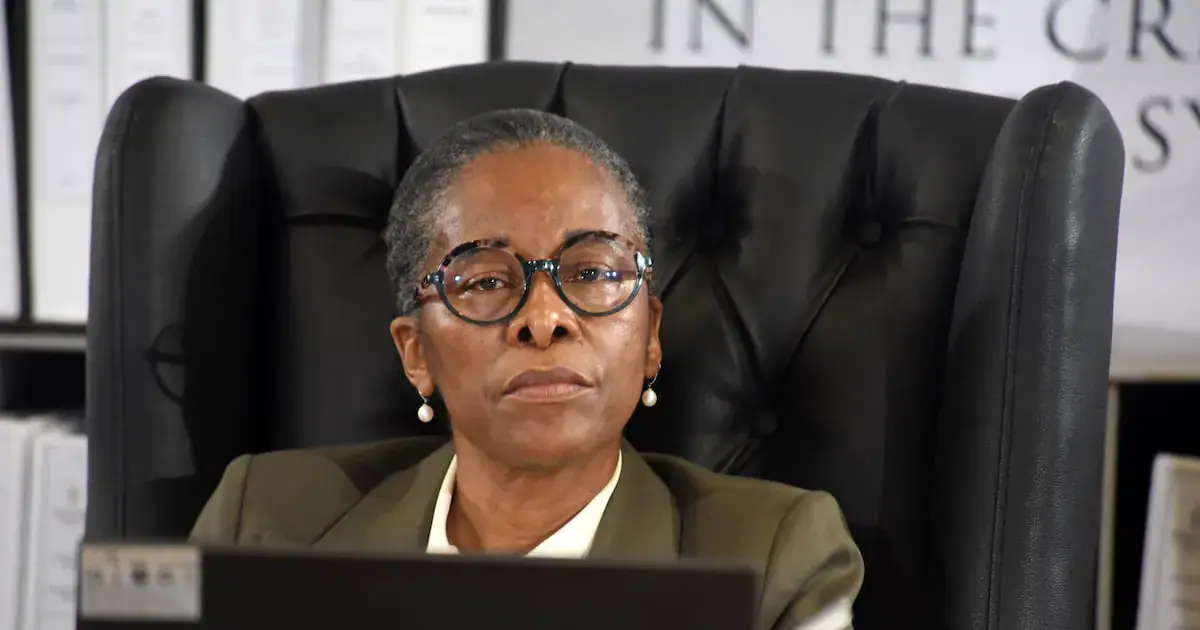
Adv Sesi Baloyi, a commissioner on the Madlanga Commission of Inquiry, has urged the South African media to critically evaluate claims before reporting them. Speaking at the South African National Editors’ Forum’s fundraising gala dinner, Baloyi emphasized the importance of fairness and balance in journalism. She noted that biased reporting can erode public trust in the media. Baloyi commended the media for its coverage of the Madlanga commission but expressed concern about the industry's understanding of its role in society.
Baloyi highlighted the challenges facing the media industry, including declining investment in newsrooms, which has led to significant job losses and smaller editorial teams. This reality inevitably affects the quality and depth of content produced for readers. She also specifically mentioned media coverage of anti-migration protests, arguing that some reporting reflected a preconceived position rather than a fair presentation of competing views. According to Baloyi, it is often easy to identify reporting that inflames tensions rather than presenting both sides of an issue.
The Press Code of South Africa requires journalists and media organisations to report truthfully, accurately, and fairly. It calls for reporting that is balanced and conducted without any intentional or negligent departure from the facts. The code also places an obligation on the media not to publish hate speech or content that advocates hatred based on race, ethnicity, gender, or religion. Baloyi argued that the media must not use its power to silence voices with which it disagrees.
In recent months, many news organisations have provided extensive platforms for activists and protest movements advocating stricter immigration controls. Their concerns and views have frequently been reported and scrutinised in the public domain. However, some claims made to mobilise support for these causes are not backed by facts. For instance, assertions that foreign nationals are responsible for crime and filth in city centres, that they vote in elections, or steal jobs meant for locals, cannot be published unchecked.
The media has historically played a crucial role in defending human rights and taking principled positions when fundamental freedoms are under threat. During apartheid, many journalists and publications chose to expose injustice and stand with the oppressed. Baloyi's call for the media to remain faithful to the facts and challenge misinformation is seen as a timely reminder of the importance of responsible journalism.
The South African National Editors’ Forum’s gala dinner was also a commemoration of Black Wednesday, which marked the apartheid government's ban on several independent media organisations in 1977. The event provided an opportunity for media practitioners to reflect on the challenges facing the industry and the importance of upholding the principles of good journalism.
Ultimately, the media's pursuit of fairness does not require journalists to abandon moral clarity; rather, it requires them to remain faithful to the facts and ensure that the public is equipped with the truth needed to make informed decisions. This, according to Baloyi, remains the highest calling of the noble profession of journalism.
Key points
- Adv Sesi Baloyi urges the South African media to critically evaluate claims before reporting them.
- The media must fairly present competing views and verify facts in reporting.
- Biased reporting can erode public trust in the media.