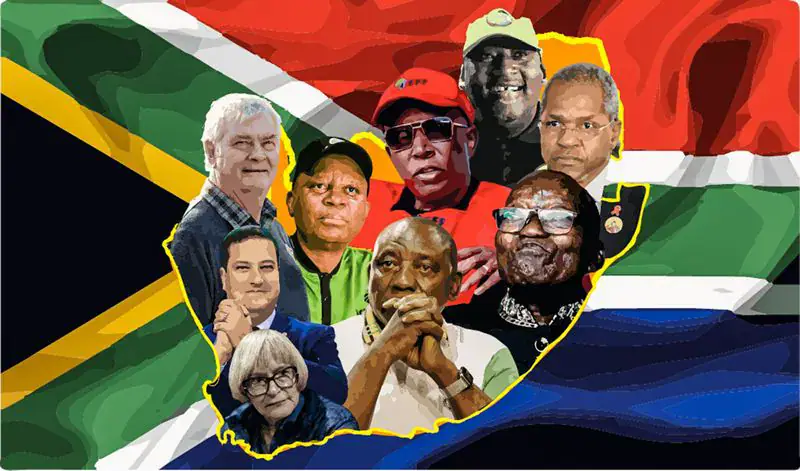
The 2026 local government elections in South Africa have revealed a significant shift in voter behavior, with many citizens abandoning their traditional party loyalties in favor of better governance and service delivery. This trend is forcing all political parties to reassess their approach to the electorate. According to Mondli Makhanya, writing for the Daily Maverick, the elections demonstrated that voters are increasingly willing to cross party lines and support newcomers who can deliver on their promises.
The ANC's national chairperson, Gwede Mantashe, has faced criticism for his remarks on the election trail, which were seen as insulting to urban and rural voters alike. His comments reflected the ANC's long-held attitude towards its loyal supporters, which may have contributed to the party's poor performance in the elections. Mantashe's remarks were characterized as tone-deaf and dismissive of the concerns of voters, particularly in urban areas where the ANC suffered significant losses.
The ANC's decline in the metros and secondary cities has been attributed to its failure to deliver on its promises and its perceived corruption. President Cyril Ramaphosa's assertion that the ANC would not collapse was proven wrong, as the party lost significant ground to other parties. The ANC's leadership recognizes the existential crisis facing the party and is working to reimagine itself and retain its remaining support base.
The Democratic Alliance (DA) has set an ambitious target of emerging as the biggest party in the country after the 2029 general election. The party has been buoyed by its performance in the local government elections, which showed encouraging inroads into predominantly African townships where the ANC once held sway. However, the DA still faces significant challenges in expanding its support base beyond its traditional comfort zone.
The elections have also highlighted the growing importance of issues-based politics in South Africa, with voters prioritizing good governance, service delivery, and a rejection of corruption. The voters of KwaZulu-Natal, for example, chose to support a party that promised to deliver on these issues, despite concerns about its leadership and corruption record.
The negotiations over coalition governments in municipalities with hung councils are expected to be complex and influenced by the 2029 general election. Parties are seeking to balance their desire for stable governance with their own electoral interests and growth strategies. The ANC, in particular, faces significant challenges in retaining its rural vote, which is increasingly being peeled away by upstart parties.
Ultimately, the 2026 local government elections have sent a clear message to South Africa's political parties: voters demand better governance, service delivery, and a rejection of corruption. Parties that fail to adapt to these changing voter expectations risk losing further ground in the 2029 general election. The ANC, DA, and other parties must now work to rebuild trust with voters and demonstrate their commitment to delivering on their promises.
Key points
- Voters are increasingly willing to abandon old loyalties for better governance and service delivery.
- The ANC's decline in the metros and secondary cities has been attributed to its failure to deliver on its promises and perceived corruption.
- The DA has set an ambitious target of emerging as the biggest party in the country after the 2029 general election.