The significance of traditional South African dishes like kerrievis and koeksisters was recently celebrated during the Afrikaanse Taalraad's (ATR) Heritage Month discussion, "Food as heritage: from family stories to indigenous knowledge". The event, which took place at the University of Pretoria (UP), highlighted the importance of food in shaping cultural identity and preserving heritage. Tylar Booysen, a honors student at UP's Department of History, Heritage and Cultural Tourism, presented her research on the annual making of kerrievis and its role in forming cultural identity.
Booysen's research focuses on the intergenerational transfer of knowledge and recipes, particularly in the context of kerrievis. She explained that her grandmother received the recipe from her mother, who learned it from the generation before her. This traditional dish is more than just a meal; it's a living form of heritage that lies not only in the final product but also in its preparation. Booysen's work aims to showcase the significance of food in preserving cultural heritage and promoting cross-cultural understanding.
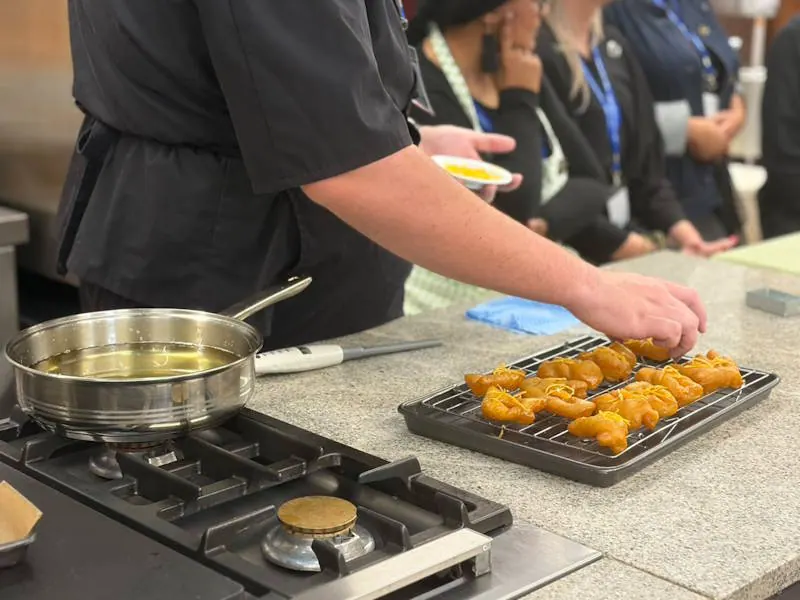
The discussion, led by Ingrid Jones, founder of the Food Fairies project, explored how food stories, traditional knowledge, and indigenous plants contribute to South Africa's cultural heritage. The event featured various speakers, including Dr. Hennie Fischer, a lecturer in culinary arts at UP's Department of Consumer and Food Sciences. Fischer discussed the importance of balancing innovation with tradition when it comes to food preparation. The event also included practical demonstrations of traditional dishes, such as koeksisters and koesisters.
The Food Fairies, a group consisting of Wilma Paulse and Lizelle Solomon, demonstrated the differences between the Cape Malay koesister and the Afrikaans koeksister. The koeksister, a traditional Afrikaans dessert, is made from braided dough that is deep-fried and then dipped in cold syrup. In contrast, the Cape Malay koesister is softer and more cake-like, flavored with spices like cinnamon, cardamom, and anise, and rolled in coconut after being dipped in syrup.
The event highlighted the significance of food in preserving cultural heritage and promoting cross-cultural understanding. According to Booysen, discussing food heritage provides young people with opportunities to learn about other communities and their culinary traditions. The event also showcased the diversity of South African cuisine, featuring various traditional dishes and cooking techniques.
The ATR's Heritage Month discussion demonstrated that food is often more than just a meal; it's a way to preserve memories, identity, language, and heritage. The event provided a platform for people to share their knowledge and experiences related to food and cultural heritage. By celebrating traditional dishes like kerrievis and koeksisters, South Africans can reconnect with their cultural roots and appreciate the diversity of their culinary heritage.
The University of Pretoria's Department of Consumer and Food Sciences played a significant role in hosting the event, providing a platform for people to share their knowledge and experiences related to food and cultural heritage. The department's involvement highlights the importance of collaboration between academia and the community in preserving cultural heritage. By working together, people can promote cross-cultural understanding and appreciation for South Africa's rich culinary heritage.
Key points
- Traditional South African dishes like kerrievis and koeksisters are considered living forms of heritage.