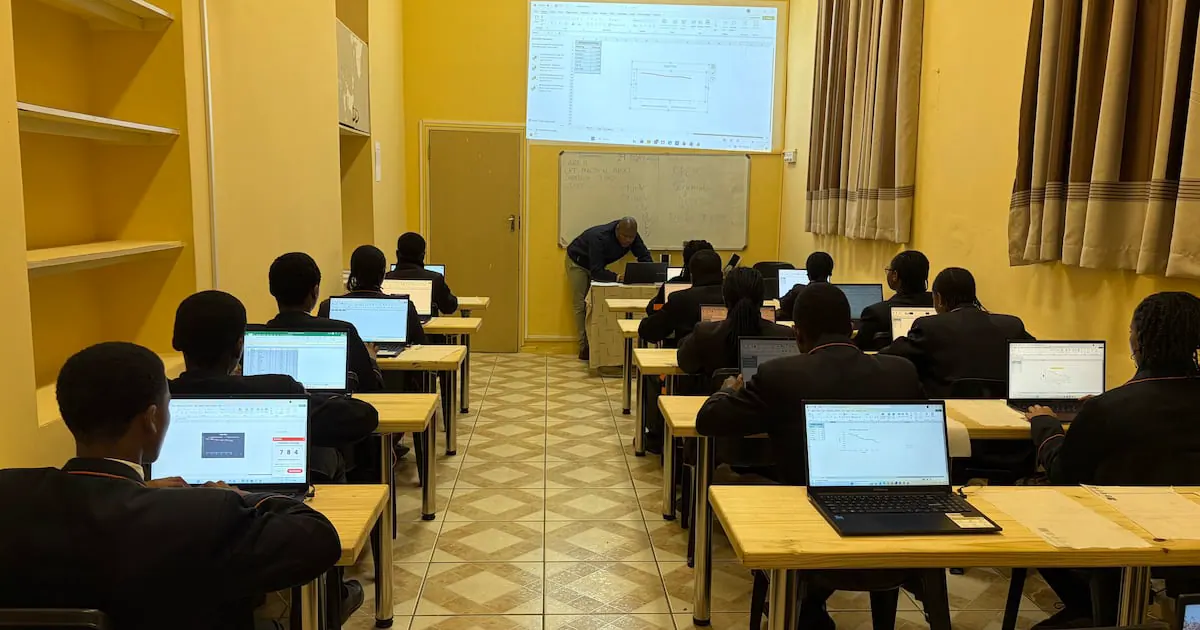
The concept of traditional schooling is becoming obsolete in South Africa, as technology continues to play a significant role in the education sector. With the rise of high-tech tools connected to the cloud, students can now access information and learn at their own pace. Progressive schools have started experimenting with the dialectic method, allowing students to conduct their own research and engage in debates in class. This approach enables students to think critically and develop essential life skills.
The UnVarsity College, a new institution in South Africa, is tackling the problem of outdated learning by introducing a Master of Business Learning (MBL) qualification. According to Avery Wong, the dean of the college, the focus is on unlearning, which involves challenging conventional wisdom and adopting new ways of thinking. Unlearning is not about forgetting but rather about being open to new ideas and inputs. This approach enables students to stay ahead of the curve in an ever-changing business environment.
The integration of pervasive computing in everyday life is also transforming the way people learn. The "thinking web" or "internet of thinking things" provides a constant flow of stimuli, encouraging individuals to think critically and solve problems. This subtle yet effective approach to learning enables people to acquire new skills and knowledge by doing, rather than just being told. With the help of virtual assistants like Alexa and Alpha, individuals can access information and learn new things on the go.
The traditional model of education, where students attend physical schools and learn from teachers, is no longer seen as the most effective way to acquire knowledge. Virtual classrooms, where discussions are conducted via holocam and students can be anywhere, are becoming increasingly popular. This approach allows students to learn from anywhere, at any time, and at their own pace. It also enables them to connect with people from different parts of the world and learn from their experiences.
The concept of lifelong learning is becoming increasingly important in today's fast-paced world. With technology advancing at an exponential rate, it's essential for individuals to stay adaptable and continuously update their skills and knowledge. The UnVarsity College's focus on unlearning and relearning is a step in the right direction. By teaching students how to think, learn, and unlearn, the college is equipping them with the skills they need to succeed in an uncertain future.
The Mindbullets scenarios, a series of fictitious articles, have been exploring possible futures and challenging strategic thinking. While they do not predict the future, they provide valuable insights into the potential implications of technological advancements on various sectors, including education. By examining these scenarios, educators and policymakers can develop strategies to prepare students for the challenges and opportunities of the future.
As the education sector continues to evolve, it's clear that traditional schooling is no longer the only way to learn. With the help of technology and new learning methods, individuals can acquire knowledge and skills in a variety of ways. The key is to stay adaptable, be open to new ideas, and continuously update one's skills and knowledge. By doing so, individuals can thrive in an exponential future and make the most of the opportunities that lie ahead.
Key points
- The UnVarsity College's focus on unlearning and relearning is a new approach to education that aims to equip students with the skills they need to succeed in an uncertain future.