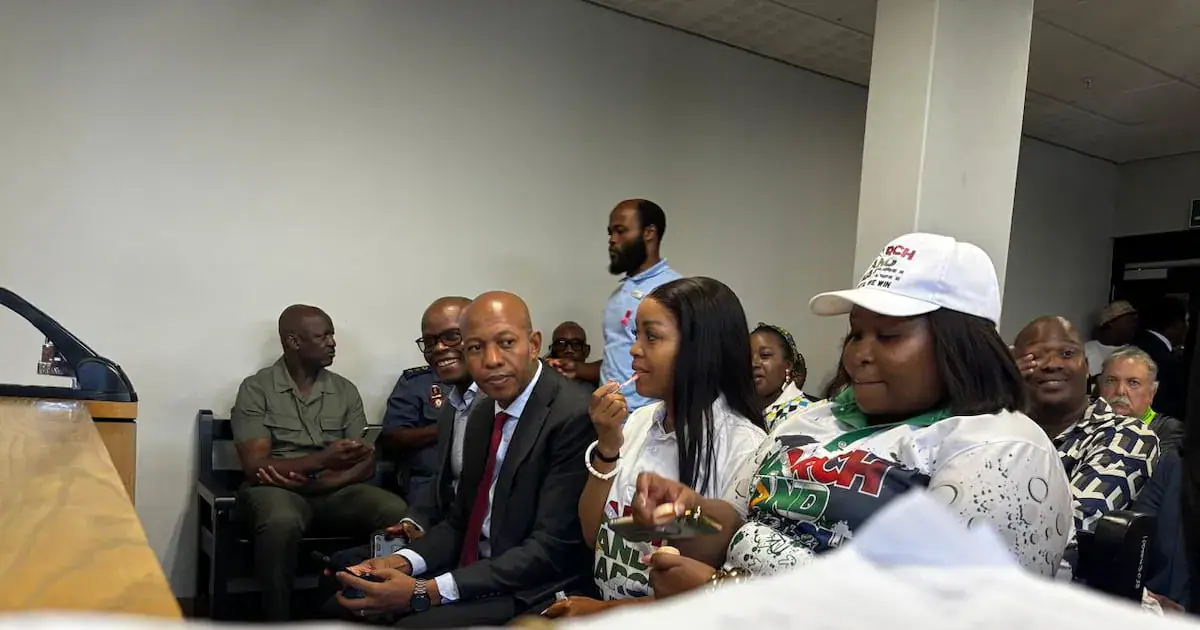
A high court in Durban is hearing an urgent interdict application by South Africa's police minister Firoz Cachalia and KwaZulu-Natal provincial commissioner Lt-Gen Nhlanhla Mkhwanazi to halt ongoing protests near the home affairs refugee reception centre on Che Guevara Road. The protests, led by March and March founder Jacinta Ngobese-Zuma, have been associated with violence, intimidation, and damage to property. The state claims intelligence suggests an alleged threat to burn down the centre and fears of retaliation after a foreign national was killed in the Durban CBD last week.
The state is seeking to stop March and March, Ngobese-Zuma, her husband Xolani, and other respondents from holding protests for at least two weeks. Advocate Nalini Govender, representing the police, told the court that police are "stretched" and unable to control unlawful gatherings and ongoing violence, particularly with the local government elections set for November 4. She said it wasn't the state's intention to stifle the constitutional right to protest but to preserve law and order and critical infrastructure.
Judge Peter Olsen questioned why police had not arrested men armed with sticks who marched through Durban in recent weeks. Govender said police were unable to control the crowds or arrest the armed men because they formed splinter groups and started demonstrations elsewhere. The state submitted photographs showing Ngobese-Zuma with armed men in masks before a protest in Durban last week.
Govender said there was irrefutable proof of a causal link between Ngobese-Zuma and the men in masks and brandishing weapons. Despite efforts by Col Lushaba to negotiate with Ngobese-Zuma, she refused to back down and continued with marches. The state argues that the protests pose a threat to public safety and the centre's operations.
Olsen asked Govender what the state was seeking in final relief, and she responded that she would need to take further instructions. Advocate Sandile Kuboni, acting on behalf of the respondents, agreed with Olsen, saying they could not respond to the state's final relief if it were not listed. The matter was adjourned for Govender to take further instructions.
The protests have caused tension in the area, with residents and business owners expressing concern about the violence and intimidation. The refugee reception centre is a critical facility for asylum seekers and refugees, and its disruption could have serious consequences for those relying on it. The court's decision is expected to have significant implications for the protests and the community.
The case will continue after Govender takes further instructions on the state's final relief. The court's decision will determine whether March and March can continue to hold protests near the refugee reception centre and what measures the state can take to maintain law and order in the area. The outcome will be closely watched by stakeholders and the community.
Key points
- The state is seeking to halt protests near a refugee reception centre in Durban due to concerns about violence and public safety.
- The court has questioned police inaction against armed men marching in Durban.
- The protests have caused tension in the area, with concerns about violence, intimidation, and disruption to the refugee centre's operations.