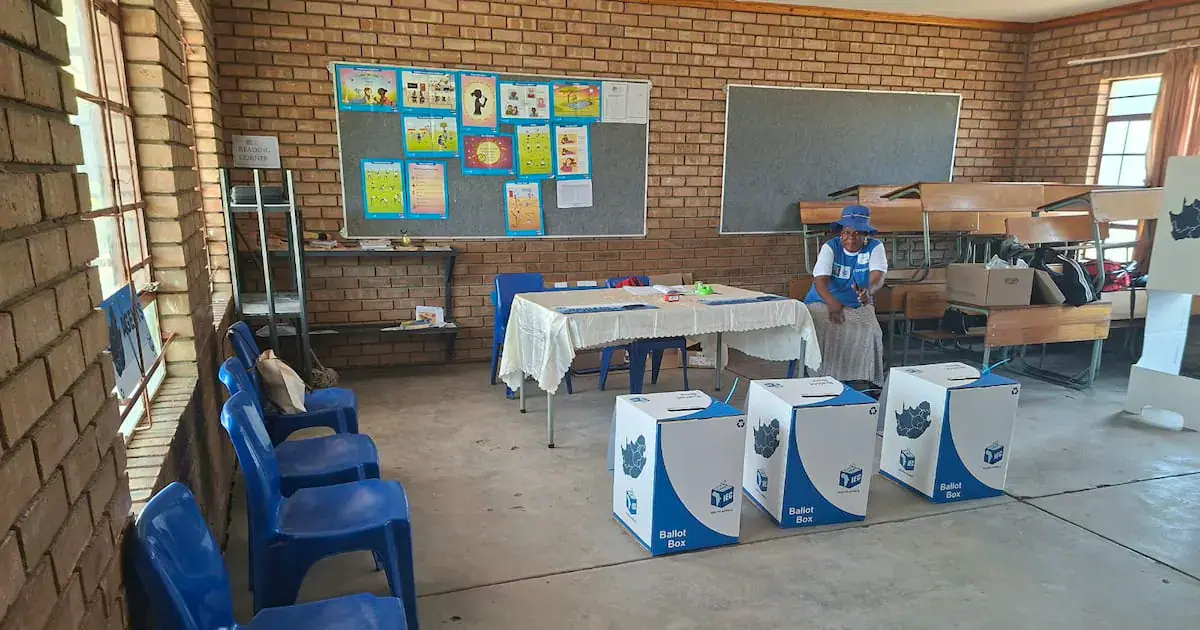
On Wednesday, millions of South Africans cast their votes at various polling stations across the country. However, residents in Ga-Chokoe, a community outside Mokopane in Limpopo, boycotted the elections in protest against a dispute concerning municipal ward demarcation. The community had convened a meeting, where it was decided that no one would vote. As a result, Mahlora Primary School, designated as a voting station, remained empty for most of the day, with only police and IEC officials present.
The boycott was sparked by the community's allegations that they were not consulted or properly informed by the municipal demarcation board about the decision to move them from Ward 3 to Ward 6. The affected communities include Nkidikitlana, Ga Musi, Monare, and Ga-Chokoe Sterkwater. Residents claim that the new ward will not be able to address their specific issues, and they are concerned that the candidates will not have their best interests at heart. One resident, who wished to remain anonymous, blamed the demarcation board and the municipal council for the situation.
Beyond their concerns about ward demarcation, the residents of Ga-Chokoe raised several longstanding service delivery challenges. The community continues to struggle with basic services such as streetlights, leaving the area in darkness at night. Water supply is another major concern, with residents sometimes having to share water with livestock. Joyce Sekalo, a resident, stated that they often have to go to rivers to fetch water when it is not available. The community also faces challenges with road infrastructure, which affects access to public transport.
The issue of housing is another pressing concern for the residents, with some having waited for proper housing for over 30 years. Despite these challenges, one resident, Nare Chokoe, still exercised her democratic right to vote. She stated that she understands the concerns of the community but believes that voting is essential as a resident of South Africa. Chokoe emphasized that even if the community does not vote, their problems will persist.
The boycott was not limited to Ga-Chokoe, as residents in other areas also chose not to vote. In Tsakane, Gauteng, a 41-year-old taxi driver, Mandla Madonsela, did not vote, citing that he could not afford to spend time in queues when he could be making money. He expressed skepticism about the impact of his vote, stating that the ANC would likely win anyway. In Bronkhorstspruit, a 32-year-old man chose to collect water from a borehole rather than vote, citing the recent water contamination issue in the area.
Other residents in different areas also shared their reasons for not voting. Xolani from Katlehong stated that he decided not to vote because he saw no change after voting twice before. A young person from Katlehong also expressed frustration about unemployment, stating that he would rather focus on finding employment than vote. These sentiments reflect a broader disillusionment with the voting process and the effectiveness of elected officials in addressing community concerns.
The boycott highlights the complexities and challenges facing South Africa's democratic process. While some residents exercised their right to vote, others chose to abstain due to various concerns. The IEC and municipal officials will need to address these concerns and work towards resolving the service delivery challenges faced by these communities. Ultimately, the boycott serves as a reminder of the need for effective communication and engagement between officials and residents to ensure that the democratic process is inclusive and responsive to community needs.
Key points
- Residents in Ga-Chokoe boycotted the elections due to a dispute over municipal ward demarcation and concerns that the new ward would not address their specific issues.
- The community faces longstanding service delivery challenges, including a lack of streetlights, water supply issues, and inadequate road infrastructure.
- The boycott reflects a broader disillusionment with the voting process and the effectiveness of elected officials in addressing community concerns.