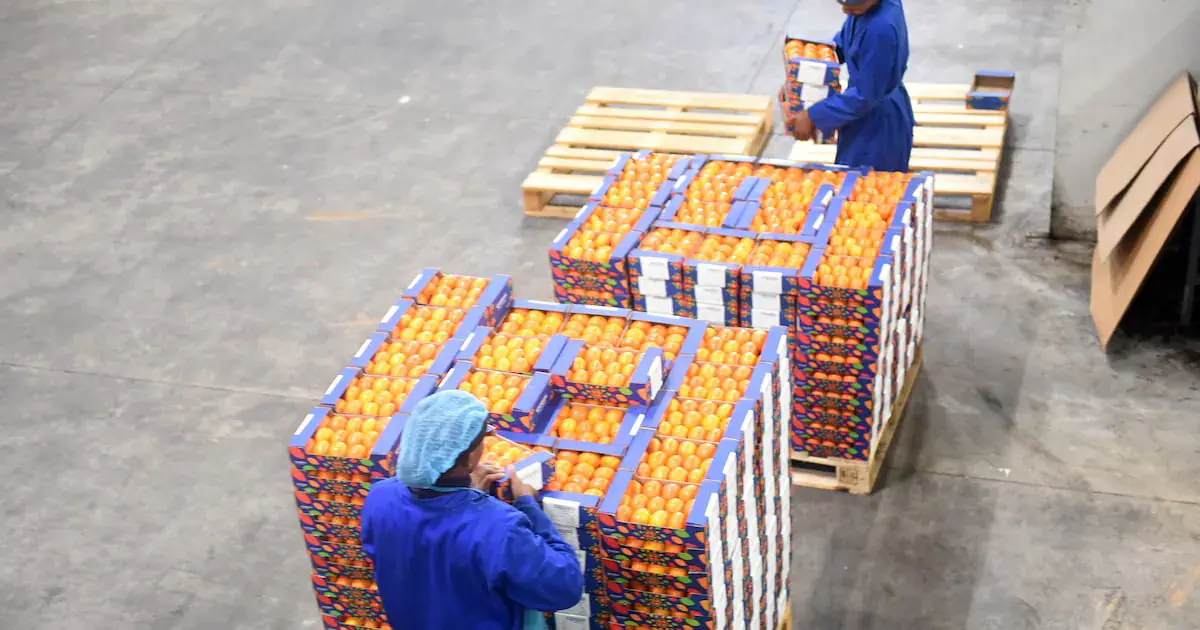
Southern African citrus exports for 2026 have been reported at 201 million 15kg cartons, 4% below the original estimate of 209.4 million cartons made in April. This shortfall is attributed to various challenges faced by the industry, including disruptions in key markets such as the Middle East, which was affected by war. The Citrus Growers' Association of Southern Africa (CGA) noted that despite strong farm yields, the export conditions tested every link in the chain.
The 2026 season was marked by limited access to shipping capacity into the Middle East and a shortage of containers for all markets. Some ports were not safely accessible, and those that were, faced heavy congestion. Key markets such as Iraq and Saudi Arabia could often only be reached along extremely long shipping routes, further complicating exports. The CGA highlighted that growers in most production areas achieved excellent yields on farms, but the export conditions were highly challenging.
The Citrus Growers' Association of Southern Africa CEO, Boitshoko Ntshabele, described the season as "very tough," with nearly every risk factor facing the industry materializing. Despite the challenges, Ntshabele emphasized that growers achieved excellent yields on farms. However, the conditions under which the fruit was exported tested every link in the chain, leading to a highly unprofitable season. The CGA represents about 1,400 export producers in South Africa and its neighboring countries.
The industry faced additional challenges, including flooding across the Western and Eastern Cape, which destroyed some orchards. Producers also faced a narrowed supply window into Europe due to a large, long-lasting Egyptian orange crop, which often competed on price rather than quality. Logistics backlogs, particularly at the Port of Durban, resulted in disrupted shipping and ultimately missed market supply windows. These challenges contributed to the shortfall in citrus exports.
The South African citrus industry is also reeling from the looming loss of duty-free access to the US market after the country was kicked out of the African Growth and Opportunity Act trade pact. This blow will particularly affect growers in the Western Cape and Northern Cape. Despite these challenges, the industry had a buoyant 2025, achieving the feat of overtaking Spain as the world's largest citrus exporter by volume.
Citrus is South Africa's leading agricultural export, accounting for 17% of its $15.1 billion farm earnings in 2025. The industry celebrated a significant breakthrough in August, with India agreeing to include additional treatment options for fresh citrus fruit from South Africa, potentially opening up a market of nearly 1.5 billion people. This development marked a big step forward as the sector looks to reduce its reliance on Europe.
Looking forward, the CGA will consider industry marketing initiatives in key countries, building on the India breakthrough. Ntshabele urged the government to take a leading role in improving market access and logistics, citing port backlogs and a severely underutilized rail network as major concerns. The CGA aims to avoid a repeat of the highly unprofitable season and protect the approximately 160,000 farm-level jobs that depend on the industry.
Key points
- Southern African citrus exports fell 4% short of preseason forecasts in 2026 due to disruptions in key markets and other impediments.
- The industry faced numerous challenges, including limited shipping capacity, port congestion, and logistics backlogs.
- The CGA is urging the government to improve market access and logistics to prevent future unprofitable seasons.
Reporting sources
- # 5 Citrus exports dip 4% under forecasts in ‘unprofitable season’ · The Rand Daily Mail