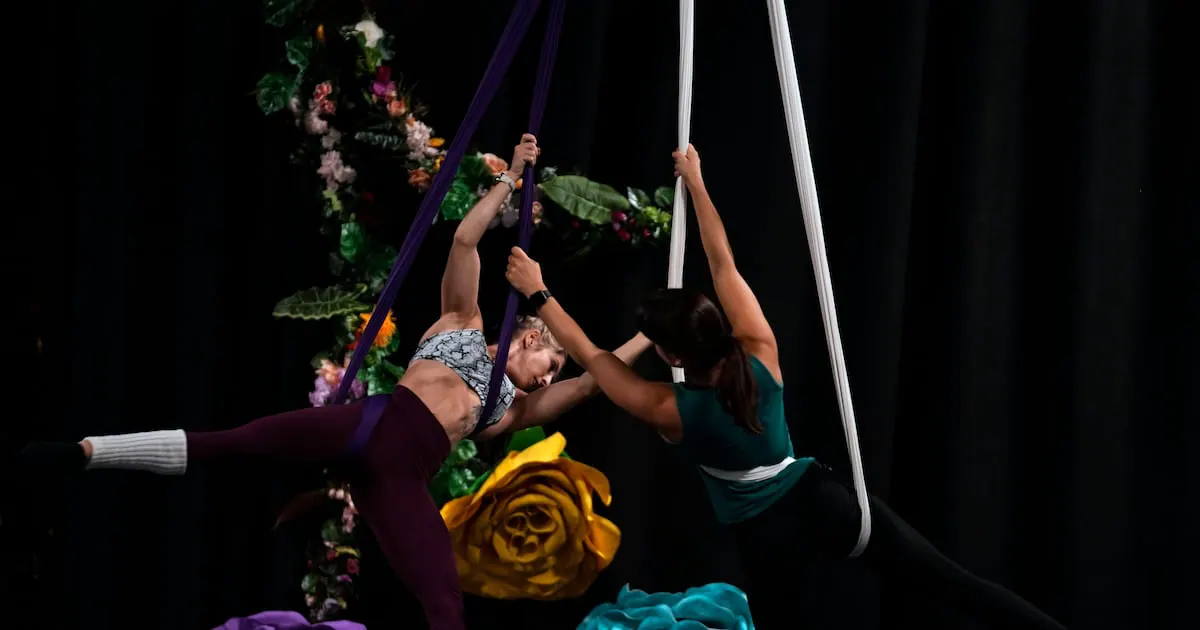
In a vibrant Johannesburg circus, a young performer soars through the air, captivating the audience with a dazzling aerial stunt. For 29-year-old Brian Ngobese, who grew up in the impoverished Alexandra township, such moments are more than just thrilling entertainment. The circus has provided him with a platform, a livelihood, and a chance to transform his talent into a sustainable career. Ngobese's story is a testament to the power of the circus's social program, which aims to empower young performers from under-resourced communities.
The circus's social program is designed to create pathways into professional circus arts, offering jobless young people a chance to turn their talents into paid work. Alexandra, one of Johannesburg's most densely populated townships, faces high poverty and unemployment rates, despite being close to the affluent Sandton financial district. The program's organizer, Michelle Fok, emphasizes that the goal is to provide a platform for young performers to launch their careers. With unemployment among 18- to 34-year-old South Africans standing at around 45% in 2025, initiatives like this are crucial.
Performers train for years to develop the strength, flexibility, and discipline required for professional circus work. Some go on to become instructors, while others secure paid work with production companies or The Cirk, a professional Johannesburg circus company. The program is structured to sustain itself through training, performances, and other circus work, rather than relying solely on external funding. Fok highlights that South African performers bring a unique rhythm and flow to circus arts, shaped by the country's diverse cultural heritage.
Ngobese's journey into the circus began when he auditioned as a dancer for a Joburg Theatre production in 2019. What started as a short-term job turned into a career when The Cirk invited him to stay and train. With support from Jozi Circus School's youth development program, Ngobese was able to pursue his passion. He credits The Cirk with being a turning point in his life, saying, "Cirk was like an adventure... I was like, 'Let's go for it.'" The program not only provided him with training but also helped him develop a sense of purpose.
The circus show itself is a spectacle that combines choreography with gravity-defying acrobatics on silks and hoops. Ngobese plays a "little star" on a journey through fantastical lands, reflecting his own path into a world he never thought possible. The show also features Zenzele Letsoela, a fellow dancer from Alexandra, with whom Ngobese has formed a strong bond. Together, they have attracted attention beyond the school, showcasing the program's potential to launch successful careers.
Letsoela, 38, has overcome his fear of heights to excel in aerial acrobatics. Despite being terrified, he has learned to work around his phobia, staying in character even when suspended 2m above the stage. Another performer, 22-year-old Megan Nielsen, has mastered the art of hair-suspension, swinging through a dizzying routine with her full weight supported by her hair. Her mother, though proud, admits to being too nervous to watch.
While the program has achieved significant success, it faces challenges in accommodating everyone who wants to join. With only four spots available per year, many talented young performers are turned away. Co-founder Orlando Vargas emphasizes that the program was born out of a need to develop performers in a country with limited opportunities for formal circus training. As the program continues to grow, it aims to provide a platform for more young performers to shine, both locally and globally.
Key points
- The circus's social program provides a vital platform for young performers from under-resourced communities to turn their talents into paid work and a better life.
- The program's focus on training, performances, and other circus work allows it to sustain itself, rather than relying solely on external funding.
- South African performers bring a unique rhythm and flow to circus arts, shaped by the country's diverse cultural heritage.