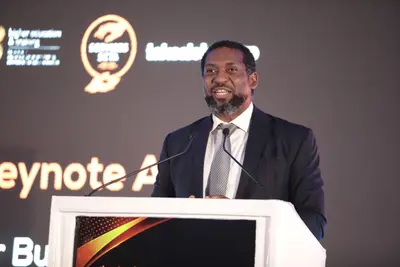
South Africa's Higher Education and Training Minister, Buti Manamela, recently criticised established businesses for being "absent" in assisting the government's skills development programmes targeting students graduating from tertiary institutions. He made these comments during the launch of the Services Sector Education and Training Authority's (Services Seta's) R103-million initiative to train 20,000 young people in e-commerce and the digital economy. This initiative is in partnership with South Africa's largest online retailer, Takealot.
Manamela acknowledged that some progress has been made, but he emphasised that the participation of industry is crucial to ensuring that training leads to employment. He urged businesses to open their doors and partner with the government to train skills that industry requires. Manamela also cautioned against employers being dishonest and abusing participants' learnerships and other skills development programmes. He stressed that if a company wants to train someone in a specific field, they should not use them for unrelated tasks.
The unemployment rate in South Africa is a significant concern, with a rate of 43.8% and more than 60% for young people. According to Matthew Parks, the parliamentary coordinator of trade union federation Cosatu, the government and private sector must work together to address this issue. Parks emphasised the need for public employment programmes, internship and artisanship programmes in the private sector, and ensuring that these opportunities comply with labour laws.
Parks described unemployment as South Africa's single greatest crisis, which cannot be defeated by the government alone. He stressed that the private sector must play its part in providing opportunities for the 12 million unemployed people. The Steel and Engineering Industries Federation of Southern Africa (Seifsa) represents 16 independent employer associations in the metal and engineering industries, with a combined membership of over 1,300 companies employing over 170,000 people.
Seifsa's human capital and skills development executive, Zizile Nyawo, stated that there is substantial participation by employers in the metals and engineering sector in training and workplace development. Nyawo emphasised that workplace exposure is fundamental to an effective skills development system, which aims to build a stronger pipeline from learning to productive employment. The metals and engineering sector needs more young people gaining meaningful workplace exposure and broader employer participation in skills development.
Nyawo explained that education and training must connect young people to real workplaces, practical experience, and viable pathways into employment. She noted that the scale of youth unemployment and the economy's evolving skills requirements mean that workplace-based learning opportunities must be expanded and participation broadened across sectors. The ability of employers to expand workplace opportunities is affected by the effectiveness of the broader skills development system.
According to Nyawo, sustainable expansion requires both stronger employer participation and an enabling, responsive skills development system. The government, Setas, and education and training institutions must ensure that programmes are responsive, efficient, and aligned to the skills required by industry. This will help address the country's high unemployment rate and provide young people with the skills and experience needed to find employment.
Key points
- South African businesses have been accused of not participating enough in skills development programmes.
- The country's high unemployment rate, especially among young people, requires a collaborative effort from the government and private sector.
- Workplace exposure and practical experience are crucial for an effective skills development system.