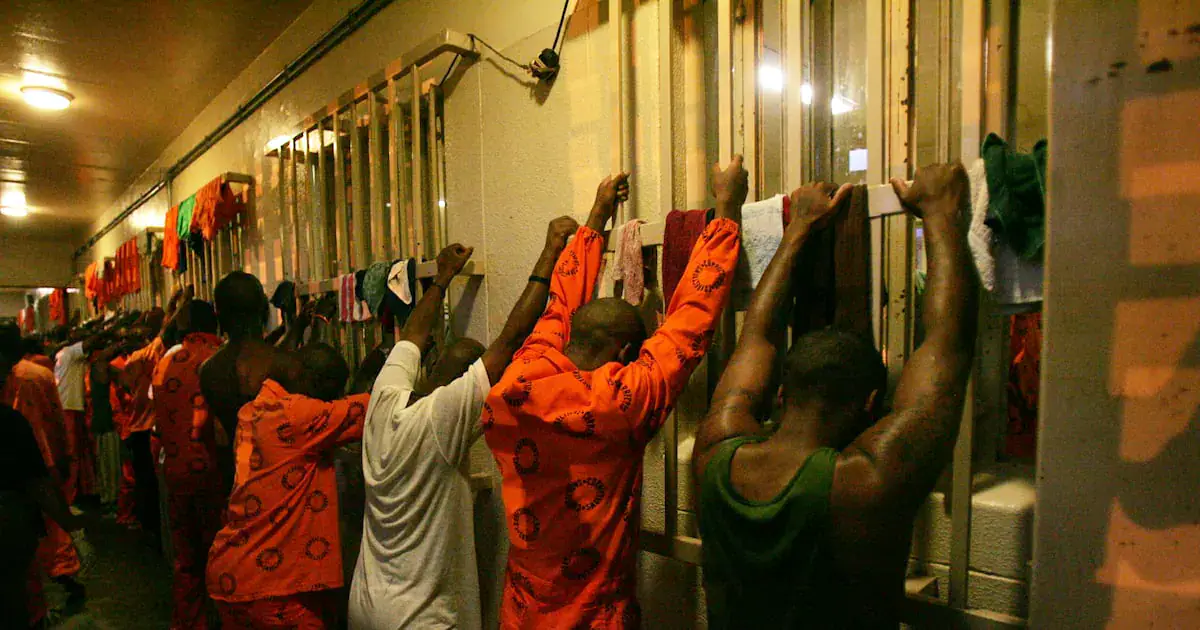
The South African Bail Fund has been launched to address overcrowding in correctional facilities by assisting those who cannot afford bail. The fund's objective is to advance bail payments of R1,000 or less for qualifying remand detainees who cannot afford them. This initiative aims to uphold the constitutional principles of dignity, equality, and personal liberty. Former Constitutional Court justice Edwin Cameron described those who cannot afford bail as "prisoners of poverty".
The scale of South Africa's remand detention problem is significant, with 62,002 remand detainees in correctional facilities reported in May. Remand detainees account for about 36% of South Africa's inmate population. The length of time some people spend awaiting the finalisation of their cases is alarming, with some remand detainees remaining unsentenced for between five and eight years. The Judicial Inspectorate for Correctional Services reported 4,112 remand detainees who had been awaiting trial for more than two years.
The financial implications of keeping someone incarcerated because they cannot afford bail are substantial. The department spends about R482 per inmate per day, amounting to R14,460 per month and about R175,930 annually for each detainee. The Bail Fund can help address this problem by assisting qualifying detainees who have already been granted bail by a court. This can reduce unnecessary detention, ease pressure on facilities, and limit expenditure on people whose continued incarceration is no longer required.
Public safety and victims' rights must remain central to the Bail Fund's implementation. Success cannot be measured by the number of people released alone, but also by whether those releases are responsible and consistent with public safety. The presumption of innocence is a cornerstone of South Africa's constitutional democracy, and awaiting trial detention must not become punishment by another name.
The rights of accused persons cannot be considered in isolation from the rights and safety of victims and communities. There are concerns that families may be unwilling to contribute towards an accused person's bail, even when the amount is relatively small, due to fears of further harm to victims and residents. These concerns must be taken into account, and the fund must establish clear eligibility criteria and transparent procedures.
Accountability and safeguards are essential to the Bail Fund's success. The fund must establish how applicants are identified, how their financial circumstances are verified, and how decisions are recorded. Assistance must reach those who genuinely cannot afford bail and must not become an avenue for preferential treatment or abuse. Strong financial controls are also important, including transparent records of payments and beneficiaries.
Ultimately, the South African Bail Fund presents an opportunity to address a glaring injustice in the country's criminal justice system. No person should remain in detention simply because they cannot raise R500 or R1,000 when a court has already determined that they may be released on bail. The fund's implementation must balance the need to uphold public safety and victims' rights with the need to address unnecessary pre-trial detention.
Key points
- The Bail Fund aims to assist those who cannot afford bail, with a focus on upholding constitutional principles of dignity, equality, and personal liberty.
- The fund's success will depend on its ability to balance public safety and victims' rights with the need to address unnecessary pre-trial detention.
- Accountability and safeguards are essential to the Bail Fund's success, including clear eligibility criteria, transparent procedures, and strong financial controls.