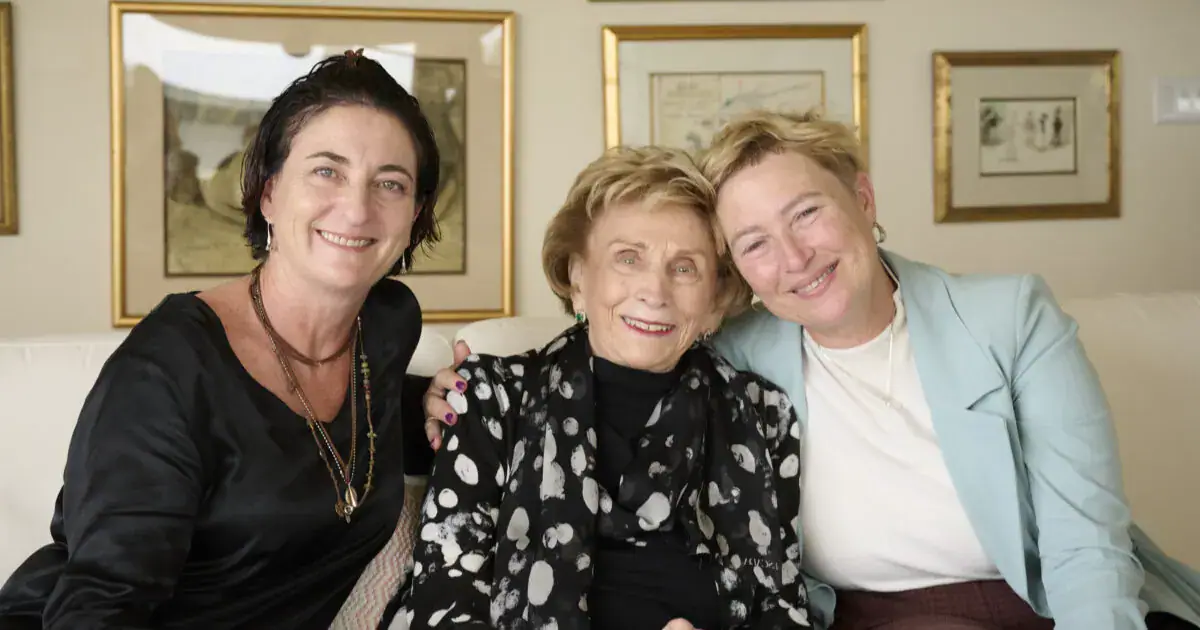
A South African artist, Kim Lieberman, has created a photographic series titled Still Life with Essential Objects, which has played a pivotal role in connecting a Holocaust survivor, an Israeli mother who lost her son in Gaza, and a former hostage. Lieberman's work has been featured in a documentary called The Choice, directed by American John David Coles. The film shares the stories of trauma, loss, and the choices made by Iris Haim, Edith Eger, and Sapir Cohen.
Lieberman's photographic series began in 2020 with a self-portrait featuring objects from her own life. The series evolved into photographic diptychs, pairing portraits with images of personal possessions chosen by each subject. Her subjects have included former Constitutional Court judges Albie Sachs and Yvonne Mokgoro. The handmade lace in the works represents the invisible connections between people. Lieberman is interested in understanding how people influence each other and the ripple effect of their actions.
After October 7, Lieberman wanted to create an artwork in Israel and chose Iris Haim, whose response to her son's death had deeply affected her. Yotam Haim was killed accidentally by Israeli soldiers while escaping captivity in Gaza. Lieberman was struck by Haim's compassion towards the soldiers involved and wanted to understand the woman behind that response. Haim agreed to take part in the artwork and chose objects that reflected her life, including a sewing kit that belonged to her grandmother.
Haim's grandmother, who was born in Transylvania, now part of Romania, arrived in what was then British Mandate Palestine in 1934, aged 17. Her parents and brother were murdered in the Holocaust. Haim loved her grandmother deeply, despite losing her when she was young. Her grandmother's embroidery connected her to her family's history and Jewish identity. Haim found the process of choosing and discussing the objects therapeutic, saying it helped her figure out the deeper meaning for her.
Lieberman realized that bringing Haim and Holocaust survivor Edith Eger together could be significant and arranged for them to meet in San Diego. The documentary crew was filming Eger's activities and recognized the importance of their encounter. During their first meeting, Eger encouraged Haim to focus on the years she had shared with her son. Eger said, "You had 28 years with him and you can focus on that. You can choose to focus on what you had, not what you will not have."
The meetings also revealed a connection through music. Yotam's brother, Tuval, is a musician, and Eger had been a dancer. The two connected through their shared interest in music, which Lieberman described as "magical and alive." The documentary follows Eger, Haim, and Cohen as they confront trauma and consider how to live afterwards. Haim hopes it will change how people respond to pain, anger, and loss.
Haim wants people to know more about Yotam than the circumstances of his death. She has since established a non-profit organization aiming to create a music school for people experiencing depression. For Lieberman, the artwork has become a way to connect lives and help their stories reach a wider audience. Haim believes the connections that led to the documentary weren't accidental, saying, "Everything that happens to us has a meaning. It's a way to spread what I believe."
Key points
- The documentary "The Choice" shares the stories of trauma, loss, and the choices made by Iris Haim, Edith Eger, and Sapir Cohen.
- Kim Lieberman's photographic series "Still Life with Essential Objects" connected the women and explores the concept of "Wild Integrity".
- The artwork and documentary aim to change how people respond to pain, anger, and loss.
Reporting sources
- SA artist brings Holocaust survivor and Israeli mother together · Jewish Report