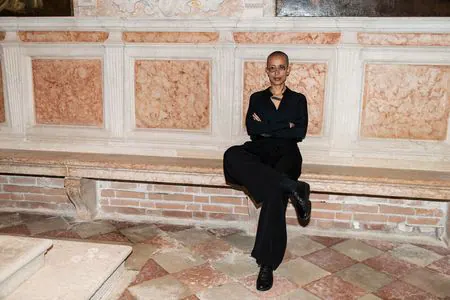
The South African art world is still reeling from the controversy surrounding Minister of Sport, Arts and Culture Gayton McKenzie's censorship of Gabrielle Goliath's video-based project Elegy at the Venice Biennale. The project, which explores femicide and violence against women in South Africa, Namibia, and Gaza, was set to represent South Africa at the prestigious event. However, McKenzie deemed the Gaza-related section "highly divisive" and requested that it be changed. When Goliath declined, the minister cancelled her plans, sparking widespread criticism.
Goliath and her curator, Ingrid Masondo, launched an urgent application to overturn the cancellation, but Judge Mamoloko Kubushi dismissed their application on February 18. The South African pavilion ultimately stood empty at the 2026 Venice Biennale. However, Elegy was still staged at the Biennale as an independent exhibition at Chiesa di Sant'Antonin, running until the end of July. The censorship and court ruling sent shock waves through the art world, with many viewing it as a serious blow to freedom of expression.
The case has sparked a heated debate about artistic freedom in South Africa. The Campaign for Free Expression (CFE), which is an amicus curiae in the case, argues that the ruling sent a number of discouraging messages, including one to South Africa's artistic communities: "that in order to survive or thrive, they must produce art that pleases – or at least does not displease – whomever happens to be the Minister of Sport, Arts and Culture at the time." The CFE is challenging the ruling, and Goliath and her team were back in court on September 8, applying for leave to appeal the judge's decision, which was granted.
Arts administrators and artists are speaking out against censorship, warning that it is a practice rooted in reactionary and non-inclusive ideologies. Ismail Mahomed, director of the Centre for Creative Arts at the University of KwaZulu-Natal, says that censorship and tampering with curatorial processes is "always on the wrong side of history." He calls for a revision of cultural legislation in South Africa to protect the arts and prevent state censorship.
Molemo Moiloa, a Johannesburg-based artist and researcher, believes that Goliath's case is an example of the power of artistic resistance. Moiloa, who was part of the independent panel that selected Elegy to represent South Africa in Venice, says that Goliath's decision to take on the authorities is a significant moment for the arts sector. She notes that artists often respond from a "place of precarity" and victimhood, but Goliath's case shows that artists can self-protect and assert their rights.
Moiloa also highlights the importance of support structures for artists, noting that the scientific community has more robust support systems than the arts sector. She believes that this lack of support contributes to the arts sector's tendency to respond from a place of precarity. However, she sees Goliath's case as a positive example of artistic resistance and the power of cultural capital.
The controversy surrounding Elegy has sparked a wider conversation about artistic freedom and censorship in South Africa. As the case continues to unfold, many are watching to see how it will impact the country's art world. Key to the debate are questions about the role of government in artistic expression and the limits of state power.
Key points
- The censorship of Gabrielle Goliath's project Elegy at the Venice Biennale has sparked a heated debate about artistic freedom in South Africa.
- The case has highlighted the need for a revision of cultural legislation in South Africa to protect the arts and prevent state censorship.
- The controversy has also raised questions about the role of government in artistic expression and the limits of state power.