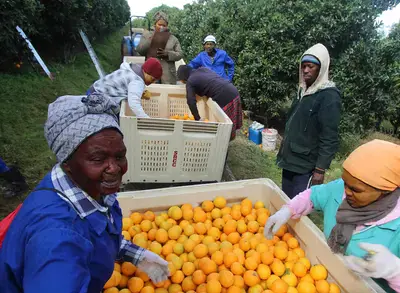
South Africa's agricultural sector is ending 2026 on a note of mixed fortunes, with an estimated 6% growth in gross value added. This growth is primarily driven by robust harvests in field crops, particularly grains and oilseeds, as well as decent harvests in the fruit industry. The poultry industry also performed well, thanks to affordable feed prices and minimal animal disease occurrences. However, the livestock industry struggled due to foot and mouth disease outbreaks, which kept lucrative export markets closed.
The livestock industry continues to face challenges, with foot and mouth disease remaining a major hurdle. Although the vaccination campaign is gaining traction, the sector's economic gains are minimal due to closed export markets. The Citrus Growers Association of Southern Africa recently lowered its export forecast for 2026 due to constraints at domestic ports and localized flood damage. The association now forecasts that Southern African citrus growers will pack 201 million 15kg cartons for export, 1.5% below the 204 million cartons packed in 2025.
The citrus and table grape industries are also facing challenges, with export volumes expected to decline mildly due to port constraints. The South African Table Grape Industry reported a preliminary national crop estimate for 2026-27 of 78.4 million cartons inspected for export, down 4% from the previous season. Despite these challenges, the industries remain crucial to South Africa's agricultural export activity, accounting for 24% of the country's agricultural exports in 2025.
The wine industry is also a key beneficiary of the favourable weather conditions, with improved dam levels providing vital irrigation relief. Stakeholders in the industry are focused on export markets, particularly the Chinese market, where zero-tariff access offers hope for broadening exports. However, phytosanitary matters still need to be resolved for some products.
Looking ahead to 2027, the agricultural sector may experience a potentially negative overall performance due to looming El Niño weather conditions and blistering heatwaves. The El Niño drought could weigh on field crop production and undermine yields in some fruits and vegetables. However, higher dam levels will help sustain production somewhat.
The agricultural sector's growth in 2026 was driven by various factors, including robust grain harvests and resilient fruit production. The sector's gross value-added growth was mainly underpinned by the robust harvest in field crops, particularly grains and oilseeds. The fruit industry also had decent harvests, contributing to the sector's overall growth.
Wandile Sihlobo, South Africa's Agriculture and Land Envoy, notes that the sector's performance in 2027 will depend on various factors, including the impact of El Niño drought conditions and heatwaves. The sector's resilience will be tested in 2027, with some industries expected to show more resilience than others.
Key points
- South Africa's agricultural sector is expected to achieve around 6% growth in gross value added for 2026, primarily driven by strong field crop yields.
- The livestock industry continues to struggle as foot and mouth disease outbreaks keep lucrative export markets closed.
- Projections for 2027 point towards a potential contraction, with emerging El Niño drought conditions posing major risks to national crop yields.