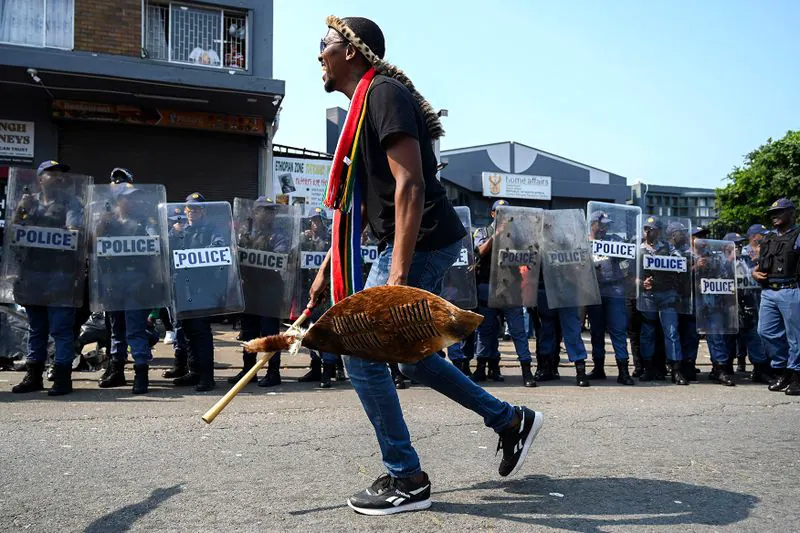
The Department of Home Affairs in South Africa has withdrawn a directive that allowed asylum seekers to apply for refugee status, following violent protests in Durban and Soweto. The directive, issued on 28 September 2026, was meant to implement a Constitutional Court ruling that declared certain provisions of the Refugees Act unconstitutional and invalid. The ruling aimed to ensure that asylum seekers' applications would be judged on their merits rather than excluded on procedural grounds.
The Constitutional Court ruling, issued in July 2026, found that procedural hurdles could have prevented asylum seekers from accessing a merits-based assessment of their claim. The court emphasized the constitutional right to dignity and the principle of non-refoulement, which prevents states from returning people to countries where they face persecution or other serious harm. The directive instructed Refugee Reception Offices to receive people who report in person and indicate that they intend to apply for asylum.
However, the directive was met with widespread misinformation and protests by anti-immigrant groups. Many claimed that the directive granted asylum seekers citizenship or voting rights, which is not the case. The Inter-Ministerial Committee on Migration had to reassert that the court's judgment does not automatically grant refugee status or permanent residence. The committee emphasized that every applicant must still subject themselves to the formal Refugee Status Determination process.
Violent protests erupted in Durban and Soweto, with anti-immigrant groups disrupting asylum applications at the Durban Refugee Reception Centre. Protesters blocked access to the centre, arguing that the asylum system was being abused. The protests continued throughout the week, with violence escalating, leaving people injured, multiple vehicles torched, and foreign-owned shops looted. In Soweto, anti-foreigner demonstrators clashed with foreign shop owners amid reports of gunshots and property destruction.
The Department of Home Affairs announced that it would start from scratch to draft a sustainable plan that meets the requirements set by the Constitutional Court. The department acknowledged that the attempt to implement the judgment immediately led to serious consequences, including overwhelmed Refugee Reception Offices and serious threats to public safety and order. The DHA reaffirmed its respect for the judiciary and the rule of law.
Before scrapping its directive, Home Affairs announced it would report disinformation regarding the directive to the Electoral Commission for alleged breaches of the Electoral Code of Conduct. The DHA did not disclose the political parties it planned to report. The Inter-Ministerial Committee on Migration also addressed the misinformation surrounding the ruling, warning that false or sensational claims could fuel social tensions and undermine confidence in public institutions.
The withdrawal of the directive has significant implications for asylum seekers in South Africa. The DHA will embark on a fresh process to determine the most appropriate operational approach to ensure compliance with the Constitutional Court's order. The department aims to find an operationally appropriate and sustainable method to comply with the order, while also addressing the concerns of anti-immigrant groups and ensuring public safety.
Key points
- The Department of Home Affairs withdrew the directive due to violent protests and misinformation.
- The Constitutional Court ruling aimed to ensure that asylum seekers' applications would be judged on their merits.
- The DHA will draft a new plan to implement the court's order in a sustainable and operationally appropriate manner.