Energy poverty remains a significant challenge in South Africa, affecting childhood development, inequality, and economic growth. The Department of Electricity and Energy reported that 1.6 million households in the country remained without electricity last year. The Integrated National Electrification Programme, which aims to expand electricity access, has struggled to keep pace with the increasing number of households needing connections.
The government has announced plans to increase the Free Basic Electricity allocation from 50 kWh to between 200 and 300 kWh per household each month. However, current efforts focus primarily on reforming the electricity market and implementing cost-reflective pricing rather than addressing immediate energy needs. Research highlights the benefits of reliable energy services for low-income households, but the government's Integrated Resource Planning often overlooks the socio-economic advantages of providing subsidized electricity.
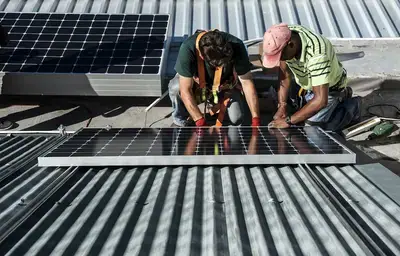
Advocates for social justice argue that access to electricity is vital for economic growth and necessitates a shift in how resource value is perceived. The government's current focus on attracting investment tends to favor projects that promise immediate returns, sidelining decentralized renewable energy solutions. The most promising approach to achieving universal electricity access by 2030 is through large-scale installation of solar photovoltaic systems paired with battery energy storage.
Deploying decentralized renewable energy solutions can create numerous jobs and should be supported by a strong national investment over the next five years, independent of foreign aid. Recently, the Department of Electricity and Energy proposed expanding the Integrated National Electrification Programme to include off-grid renewable solutions, which the Cabinet accepted. However, details about this Universal Access Programme have yet to be clarified.
The Presidential Climate Commission Framework for a Just Energy Transition emphasizes justice principles in implementing decentralized renewable energy. The new JET Municipal Council could facilitate the realization of this Universal Access Programme, ensuring the large-scale roll-out of solar initiatives across the country. Minister Kgosientsho Ramokgopa's plans for increasing Free Basic Electricity lack clarity on funding.
Currently, less than a third of the allocated funding reaches eligible households. National Treasury has stated it will not increase Free Basic Electricity allocations until existing issues within the distribution system are resolved. Nevertheless, this shouldn't hinder funding for decentralized renewable energy programmes. A significant budget commitment is crucial to achieving universal access to electricity soon.
Public investment in decentralized renewable energy would yield widespread benefits, from job creation to improvements in gender equality and child development. The responsibility for advancing decentralized renewable energy initiatives should not fall on a single department; the forthcoming Universal Access Programme must not be delayed by market reforms or financial challenges. The Electricity for All campaign continues to advocate for the political commitment necessary to unlock renewable energy's potential for South Africa.
Key points
- The government is urged to invest in decentralized renewable energy to address energy poverty in South Africa.
- A significant budget commitment is crucial to achieving universal access to electricity soon.
- Public investment in decentralized renewable energy would yield widespread benefits, including job creation and improvements in gender equality and child development.