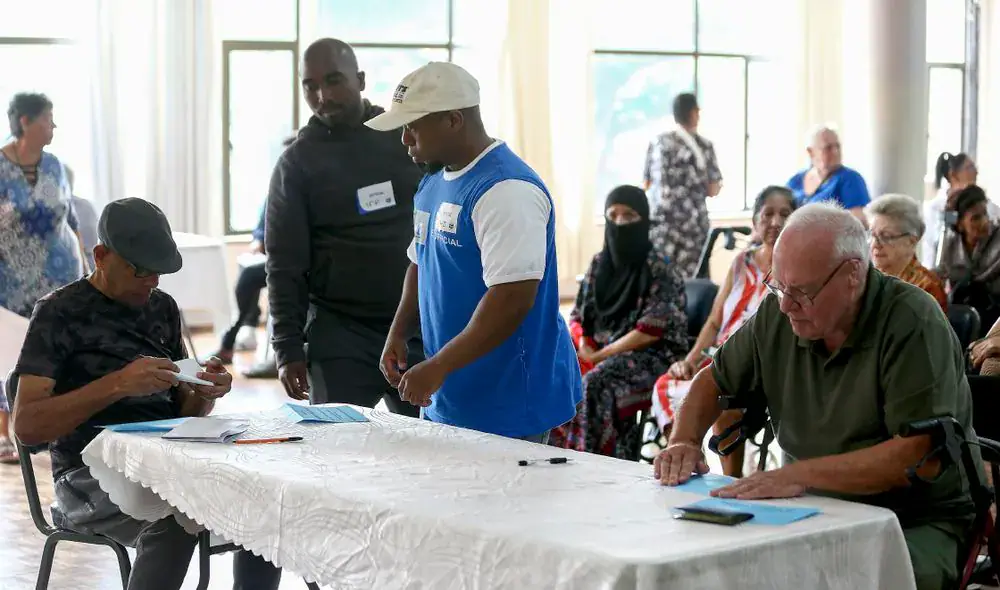
Special voting for South Africa's 2026 Local Government Elections began nationwide on November 2, with a record 2,655,067 applications approved, a 131% increase from the 2021 municipal elections. The Electoral Commission of South Africa reported that special voting will continue on November 3. This comes as the country seeks to address a decade of challenges in local government, marked by unstable coalitions and poor service delivery. The upcoming elections on November 4 are seen as crucial in determining the future of local governance.
The period leading to the current state of local government in South Africa was marked by significant events, including the dismissal of Finance Minister Nhlanhla Nene in December 2015, which led to economic instability. Revelations by Mcebisi Jonas in March 2016 about interference in executive appointments further eroded trust. The Constitutional Court's ruling on the Nkandla matter in March 2016 and the Gupta brothers' departure in April 2016 also contributed to the current challenges. These events have been linked to the poor performance of local governments.
The 2016 municipal elections marked a turning point, leading to more local councils being led by unstable political coalitions. These alliances, often formed out of convenience rather than shared principles, have resulted in the collapse of service delivery across the country. A comparison of Auditor-General reports from 2015-2016 and 2023 highlights the decline in infrastructure and service delivery. The reports cite poor planning, internal controls, and accountability as major factors contributing to the current state of local government.
South Africa's voter turnout has been a concern, with the 2021 local government elections recording the lowest turnout ever at 45.87%. Experts argue that the current system of coalitions has failed to deliver effective governance. According to the Mapungubwe Institute for Strategic Reflection's 2026 Coalition Barometer, more than half of South Africa's hung municipalities have experienced coalition collapse, with administrations lasting about 21 months on average.
The Human Sciences Research Council's 2025/26 Voter Participation Survey found that only 17% of adult South Africans are satisfied with the performance of the country's democracy. This dissatisfaction is linked to the poor delivery of basic services, corruption, and infrastructural collapse. In contrast, recent elections in Israel saw a significant increase in voter turnout among Palestinian citizens, who voted in record numbers to influence the political landscape.
The upcoming elections in South Africa are seen as an opportunity for citizens to effect change. Experts and commentators are urging citizens to vote in massive numbers to break the cycle of unstable coalitions and poor governance. A high voter turnout is expected to help restore trust in local government and ensure that citizens' voices are heard. The World Bank Group's report on Brazil's advances in social protection through high voter turnout and digital mobilization serves as an example of the potential for positive change through electoral participation.
As South Africans head to the polls on November 4, the message is clear: a massive voter turnout is necessary to revitalize local government and address the challenges of the past decade. Commentators, including Charmain Naidoo, are emphasizing the importance of voting to fix the country's crumbling infrastructure and service delivery. With the right level of participation, citizens can help create a more stable and effective system of local governance.
Key points
- A massive voter turnout is urged to break the cycle of unstable coalitions and poor governance in local government.
- The 2026 Local Government Elections are seen as crucial in determining the future of local governance in South Africa.
- Experts argue that high voter turnout can help restore trust in local government and ensure that citizens' voices are heard.