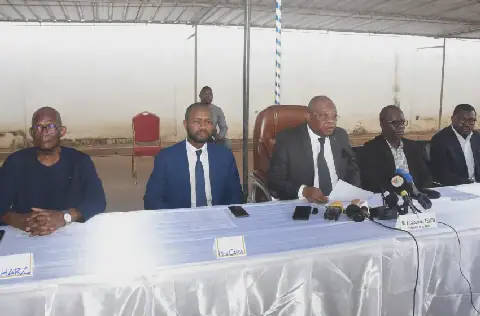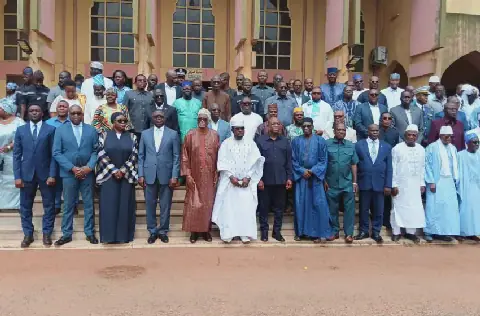
The South African government has invited the public to comment on its latest plans to overhaul the country's largely dysfunctional water and sanitation sector. The new Strategic Framework for Water and Sanitation Services aims to provide reliable water and sanitation services to millions of South Africans. Deputy Water and Sanitation Minister Dr. Jack Bloom presented the framework at a public consultation meeting in Durban on 22 September.
According to Dr. Bloom, there is a long way to go in "narrowing the gap" between government promises and delivery to ordinary citizens. He cited the example of the eThekwini municipality, which reported 58.7% non-revenue water in the last financial year. This means that more than half of the treated and pumped water was not reaching paying customers. Dr. Bloom also noted that the municipality had a backlog of 13,000 unfixed leaks.
Dr. Bloom expressed his "deep frustration" that his department had to launch at least 96 criminal cases against municipalities nationwide for sewage pollution and wastewater treatment failures. He emphasized that fixing water leaks is not rocket science and that basic steps such as sending out plumbers and water bills can make a significant difference. He also suggested that cities install smart meters, starting with the biggest users.
The new Strategic Framework plan aims to shift away from basic access to water and sanitation services towards more reliable services. The framework requires Water Services Authorities to renew at least 10% of high-risk ageing assets annually, with at least 30% of end-of-life pipelines, pumps and process units replaced by 2035. It also targets 80% of urban households to have smart meters by 2032.
The framework also aims to reduce national non-revenue water to below 25% by 2035 and invest R108-billion in additional infrastructure in South Africa's eight metros in the years leading to 2031. This includes R54-billion in Treasury performance incentives and an equal amount in metro self-financing. The investment in water-services infrastructure is expected to reach at least 0.75% of GDP by 2035.
Dr. Bloom also mentioned that law reform proposals are before Parliament to hold municipal managers and other senior officials personally liable for service delivery failures. He added that the government is seeking to legislate an independent economic and water services regulator by 2029, separating the department's dual role as operator and regulator.
The new framework has several core targets, including all schools and clinics having adequate and safe water and sanitation services by 2035, and a free basic water and sanitation policy implemented in all Water Services Authorities by 2035. The framework also aims for 100% compliance with Sans 241 potable-water standards by 2035, while Blue Drop and Green Drop certification require minimum scores of 95% and 90%, respectively.
Key points
- The South African government has unveiled a new Strategic Framework for Water and Sanitation Services to address the country's water and sanitation challenges.
- The framework aims to provide reliable water and sanitation services to millions of South Africans and targets significant reductions in non-revenue water and infrastructure investment.
- The government plans to legislate an independent economic and water services regulator by 2029 to oversee the sector.