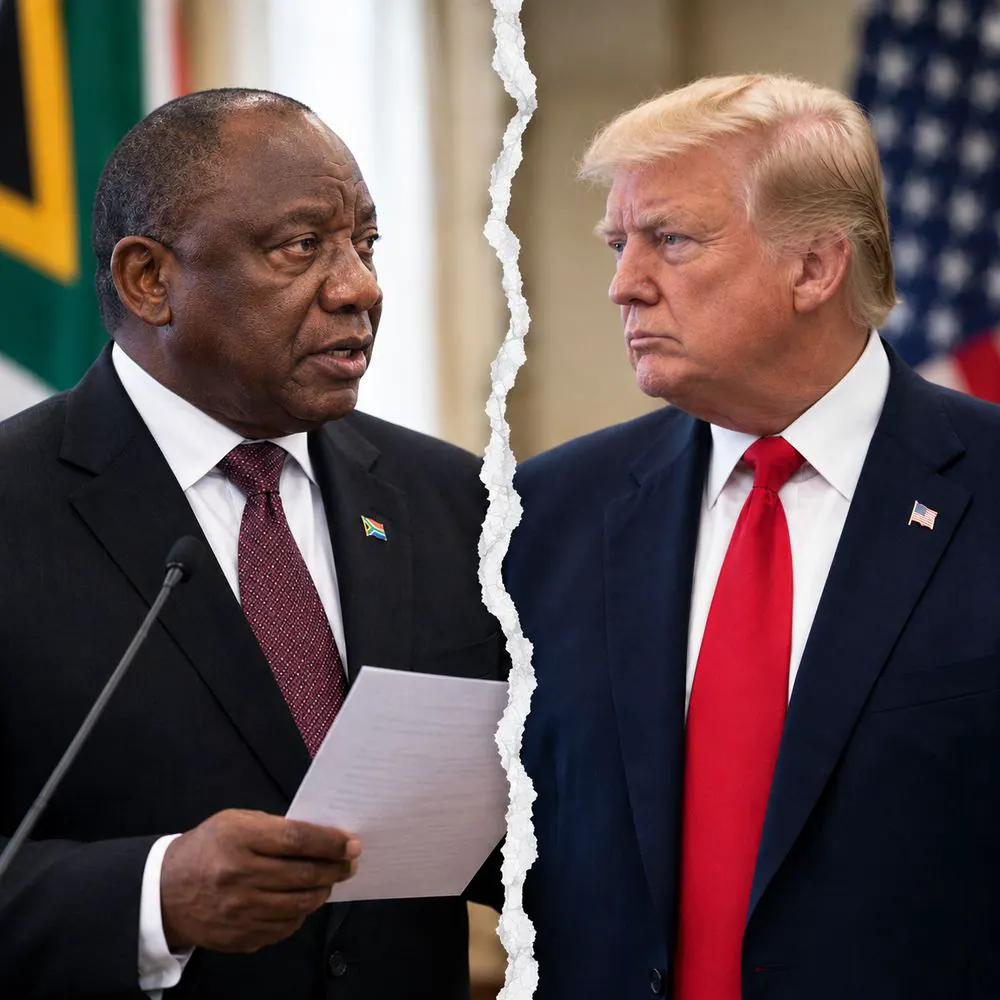
South Africa is seeking to manage rising diplomatic tensions with Washington while maintaining crucial trade ties under the African Growth and Opportunity Act. International Relations and Co-operation Minister Ronald Lamola is in the United States for bilateral meetings ahead of the high-level United Nations General Assembly debate. The Department of International Relations and Co-operation said Lamola's engagements would cover economic diplomacy, South Africa's relationship with the US, and other international relations matters.
The visit comes days after US Secretary of State Marco Rubio announced targeted visa restrictions against foreign nationals whom Washington says are responsible for, or complicit in, policies involving uncompensated land seizures, race-based discrimination, or the incitement of violence against minority groups in South Africa. No individuals were named when the restrictions were announced, but Rubio said existing visas could be revoked and future applications rejected.
The US administration has repeatedly raised concerns about South Africa's land reform and affirmative action policies, as well as allegations of violence against Afrikaners. The South African government rejects the characterisation of its policies and has disputed claims that white South Africans are being systematically persecuted. Lamola said the latest US action was based on a "mischaracterisation" of South Africa's domestic policies.
Despite the diplomatic tensions, the US has extended the African Growth and Opportunity Act until December 2028. The extension maintains preferential access to the US market for eligible South African products, with the South African government saying it provides greater certainty for local producers and exporters. Public policy expert Dr Sean Muller said the continued operation of AGOA showed that the rhetoric surrounding the relationship should be distinguished from the practical ties between the two countries.
Muller said he believed the rhetoric surrounding the relationship was driven by several factors, including political tensions in both countries and the use of trade and diplomatic pressure as a negotiating tool. Previously, many experts predicted that South Africa would be expelled from AGOA's special trade provisions, but that did not happen. The continuation of AGOA keeps a major channel of preferential trade between the two countries open.
Political analyst Professor Theo Neethling said the visa restrictions should be viewed as a targeted measure against individuals rather than a blanket restriction on South Africans. He said government officials, senior civil servants, and possibly political leaders could be affected if they were deemed personally responsible for policies covered by the US restrictions. Neethling also pointed to wider differences between Pretoria and Washington, including South Africa's support for Palestine.
The latest measures follow a series of disputes between the two countries, including the US imposing a 30% tariff on South African exports and cutting funding for South Africa's HIV treatment programmes. For now, the two countries remain engaged through diplomatic channels, while the extension of AGOA provides a continuing trade framework despite growing political disagreements.
Key points
- The US has extended the African Growth and Opportunity Act until December 2028.
- The visa restrictions are targeted against individuals rather than a blanket restriction on South Africans.
- The diplomatic tensions between South Africa and the US are driven by several factors, including political tensions and the use of trade and diplomatic pressure as a negotiating tool.