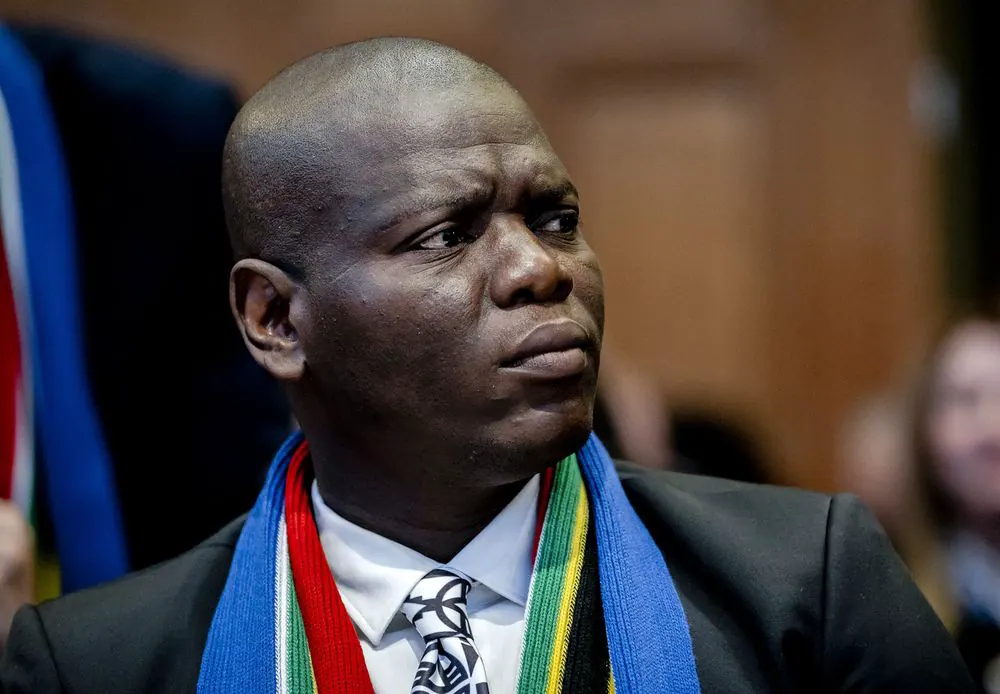
South African International Relations and Cooperation Minister Ronald Lamola is currently in the US, where he is expected to hold several bilateral meetings following the US decision to impose targeted visa restrictions and travel sanctions on South African officials. The Department of International Relations and Cooperation (Dirco) said Lamola is on a working visit ahead of the 81st UN General Assembly in New York, which opened on September 8.
The US decision to impose targeted visa restrictions and travel sanctions on South African officials was made in response to what they claim are uncompensated land seizures, race-based discrimination, and the incitement of violence against minority groups, specifically targeting policies impacting the Afrikaner minority. US Secretary of State Marco Rubio announced that the US will revoke existing US visas and reject future applications for affected individuals and potentially their immediate family members.
The US policy follows a long-standing narrative championed by US President Donald Trump regarding the alleged persecution and “white genocide” of Afrikaners and minority groups in South Africa. It represents an escalation of actions that include a 2025 executive order offering refugee programmes for Afrikaners, and diplomatic friction between Washington and Pretoria. This friction has resulted in the US imposing a 30% tariff on South African exports and cutting funding earmarked for South Africa’s HIV treatment programmes.
Minister Lamola has rejected the US decision, saying it is based on a mischaracterisation of domestic policies. He stated that these restrictions align with narratives pushed by “fringe groups” who falsely claim to represent minorities and Afrikaners. British politician George Galloway echoed this sentiment, saying there is “no white genocide” and no systemic discrimination against white people in South Africa, following his recent visit to the country.
Despite the US sanctions, the African Growth and Opportunity Act (AGOA) has been extended through December 2028, keeping South Africa and 31 other eligible nations in the duty-free programme. Public policy expert Dr Sean Muller argued that despite harsh public talk from the US government, the actual relationship between the US and South Africa is stable, and the US currently holds significant influence over South Africa.
Political analyst Professor Theo Neethling said the visa restrictions should be understood as a targeted instrument against specific individuals rather than a general restriction on South Africans. He noted that government officials, senior civil servants, and possibly political leaders could fall within the scope of this policy if they are deemed personally responsible for or complicit in such measures.
International relations expert Professor Andre Thomashausen said the visa review policy is not a broad country-wide sanction like those historically placed on Iran or Zimbabwe. However, he warned that South Africa’s continued failure to engage with the US on the issue of direct discrimination against White South Africans could have further implications for the relationship between the two countries.
Key points
- The US has imposed targeted visa restrictions and travel sanctions on South African officials over land seizures and racial discrimination.
- South Africa has rejected the US decision, stating it is based on a mischaracterisation of domestic policies.
- Despite the US sanctions, the African Growth and Opportunity Act (AGOA) has been extended through December 2028.