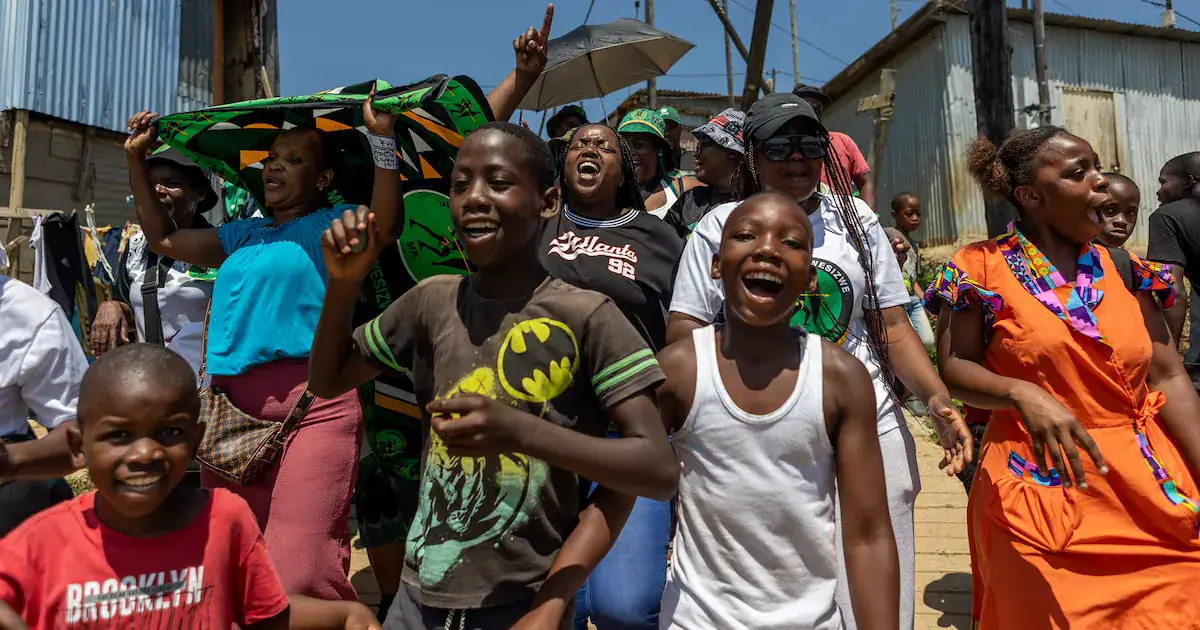
South Africa's democratic system is facing a concerning trend: young people's disengagement from the electoral process. Despite the country's hard-won right to vote, many young citizens appear to have lost faith in the power of the ballot. This shift is evident in voter registration numbers and turnout figures. In the 2021 local government elections, 168,040 people aged 18-19 were registered to vote, compared to 693,913 this year. However, during the recent local government elections, it was predominantly older people who were seen at voting stations.
A 2023 voter participation survey by the Human Sciences Research Council found significant levels of disillusionment among young voters, particularly those aged 18-19. The decline in youth participation is also reflected in voter turnout figures. Participation among registered voters aged 20-29 dropped by 15 percentage points, from 50% in the 2016 local government elections to 35% in 2021. Many young people, like 21-year-old Khanya Ndabambi, expressed skepticism about the impact of their vote, saying, "I did not even know when voter registration was taking place. Honestly speaking, I don’t know how my vote will change anything."
Some young people, like Sinalo Siduna, 24, an African Transformation Movement party member, believe that a lack of political education contributes to young people's disengagement. "They treat voting like group work. They don’t understand the power of voting. We also have several young people who are unemployed and spend their time smoking drugs and drinking alcohol," she said. Stellenbosch University senior lecturer and political analyst Kuhle Zwakala attributes young people's growing disillusionment to the country's high youth unemployment and persistent inequality.
Zwakala argues that young people's disengagement is understandable, given the country's economic challenges. "I know this is often described as political apathy, but in a country where the economy seems to be neglecting young people, what do you expect them to do?" he said. Zwakala disagrees with the narrative that little has been achieved in South Africa since the advent of democracy 30 years ago. He believes that progress has been made, but acknowledges that service delivery failures and a lack of attention to impoverished areas have contributed to young people's disillusionment.
Zwakala emphasizes that the political system is the primary vehicle for people to voice their concerns and influence change. However, he also notes that civil society has an equal responsibility to help advance society. He warns that continued disengagement among young people could have long-term implications for representative democracy, particularly if their concerns are not reflected in political decision-making.
To address this trend, Zwakala suggests that political parties need to do more to make themselves relevant and attractive to the younger generation. He also emphasizes that young people have a responsibility to participate in shaping the country's future. "Political parties should largely be formulated and constituted by young people. Equally, young people have a responsibility to take an interest in moving this country forward," he said.
The disengagement of young people from the electoral process has significant implications for South Africa's democratic future. As older generations continue to participate in the electoral process, the absence of younger voters raises concerns about political representation, accountability, and the future of South Africa's electoral democracy.
Key points
- Youth disengagement from the electoral process threatens the future of South Africa's democratic system.
- Disillusionment with the political system is driven by high youth unemployment and persistent inequality.
- Political parties and civil society must work together to engage young people and address their concerns.
Reporting sources
- What happens to democracy when young people stop voting? · The Sunday Times