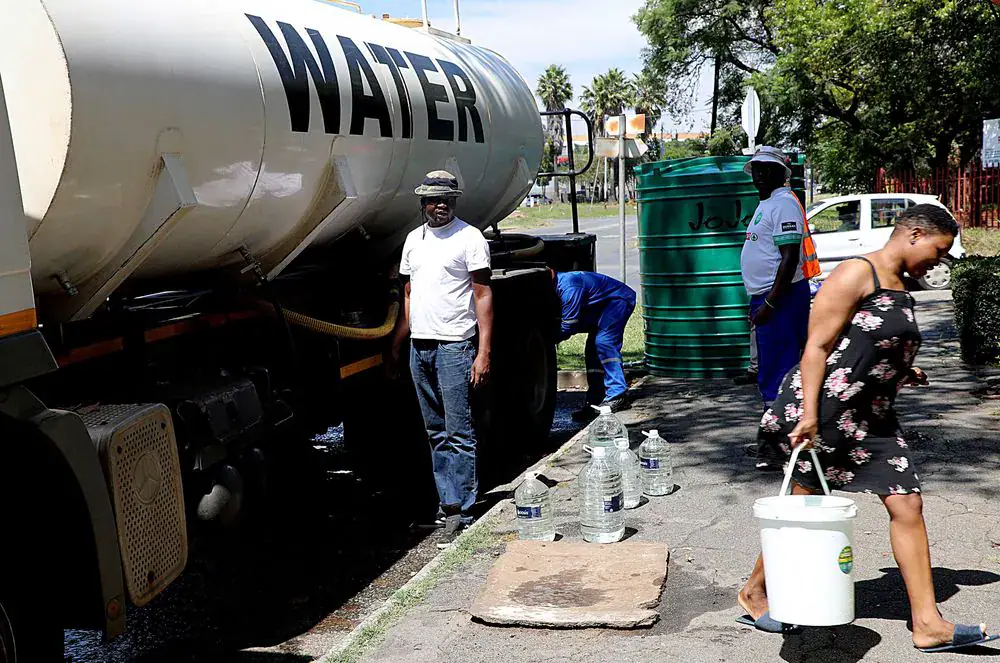
South Africa's deepening water crisis cannot be solved by infrastructure spending alone, according to the Water Institute of Southern Africa (WISA). The crisis is attributed to a wider failure of professional competence, institutional management, and accountability. WISA chief executive Dr Lester Goldman says reliable water services depend not only on new pipes, plants, and reservoirs but also on the ability of municipalities and water institutions to operate, maintain, and govern existing systems.
The financial challenge of the water crisis was underscored by figures presented to Parliament's Portfolio Committee on Water and Sanitation. Rand Water reported R5.612 billion in long-outstanding arrears from four defaulting municipalities. Magalies Water reported R978 million in bulk-water debt and a further R1.7 billion owed for operations and maintenance. Lepelle Northern Water reported R1.43 billion in customer debt, with a recovery rate of just 22%.
According to the Department of Water and Sanitation, overdue municipal debt to water boards stood at approximately R23.77 billion at the end of July 2026. Dr Goldman says municipalities face genuine financial pressures, ageing infrastructure, and growing demand. However, poor maintenance, water losses, and weak management also contribute to the crisis. He argues that building more infrastructure will achieve little if existing systems cannot be properly operated and maintained.
The consequences of the water crisis are no longer abstract. On 16 November, the City of Tshwane introduced Level 2 water restrictions after consumption exceeded its permanent Rand Water allocation by approximately 34%. For businesses, the pressure is direct. Managing director at Sanitech, Robert Erasmus, says water has shifted from a routine operating expense to a strategic risk requiring board-level attention.
Water losses add further pressure to the crisis. Non-revenue water is estimated at 49% in Johannesburg, 45% in Tshwane, and more than 70% in Emfuleni. Gauteng's estimated physical water losses alone amount to 431 billion litres annually. Dr Goldman argues that these losses reflect weak maintenance, poor management, and the inability to turn available resources into reliable services.
Erasmus says companies must stop viewing water as an abundant, low-risk utility. Boards need accurate, consolidated data on consumption, losses, water quality, and wastewater discharge before setting credible reduction targets or meeting ESG reporting requirements. He argues that executive leadership must understand which facilities are in water-stressed areas or depend on fragile local supplies, and how shortages affect production, employee health, and community relations.
Dr Goldman says South Africa does not lack knowledge or expertise to address the water crisis. The challenge is implementation and sustained improvement. He emphasizes that people judge the water sector by what comes out of their taps, and they have every right to do so. Erasmus suggests that companies should invest in on-site water recycling, greywater systems, and advanced treatment technology to reduce reliance on municipal supply and move toward a circular water model.
Key points
- The water crisis in South Africa requires a comprehensive approach that includes effective water management, responsible consumption, and the capacity to ensure that available water resources are treated and distributed reliably.
Reporting sources
- Water crisis requires more than infrastructure investment · Pretoria News