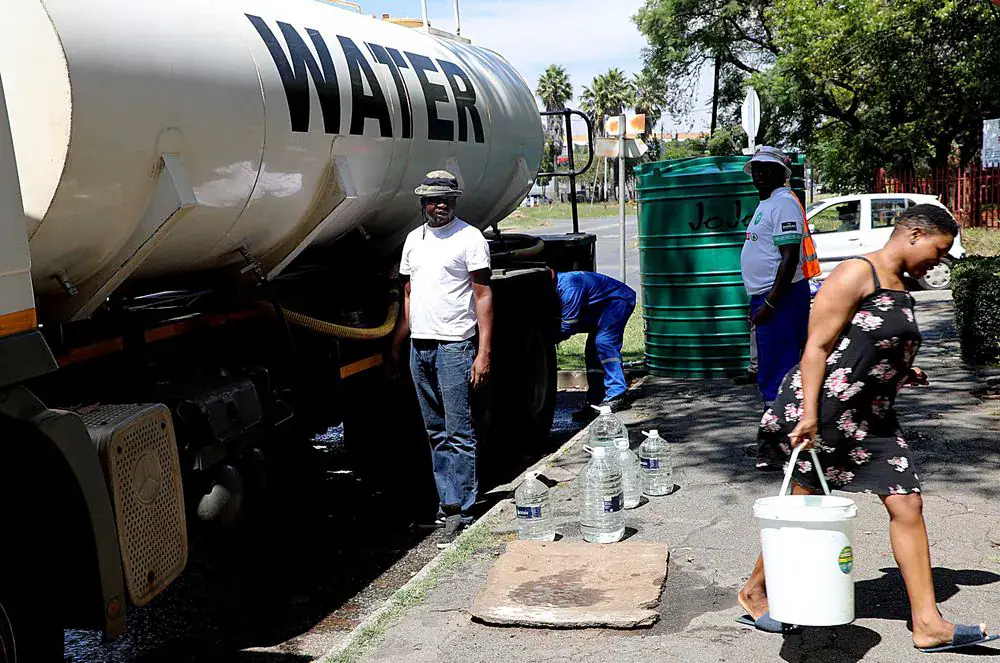
A severe water crisis is unfolding across South Africa, with millions of litres of water being lost through ageing and leaking infrastructure. Communities in major urban centres, including Johannesburg, Tshwane, and Ekurhuleni, are experiencing prolonged supply disruptions due to depleted reservoirs, rising demand, and mounting pressure on available supplies. The crisis has renewed concerns over years of infrastructure deterioration and water losses.
The situation is dire in Gauteng, where several systems, including Sandton, Midrand, Randburg, Roodepoort, Commando, and Central, are experiencing supply constraints. Johannesburg Water said Midrand was particularly affected by poor incoming supply and high demand, with some systems receiving low volumes and others providing no water. Technical teams from Johannesburg Water and bulk supplier Rand Water are assessing the affected systems and implementing interventions to improve supply.
The DA has warned that Gauteng is entering a period of "water-shedding", accusing municipalities of restricting supply to prevent reservoirs from running dry. DA water and sanitation spokesperson Stephen Moore said the party had received confirmation that Rand Water was throttling supply to Johannesburg after the city allegedly exceeded its allocation. Moore cited the Department of Water and Sanitation's October 30 dashboard, which showed overall Rand Water reservoir storage at 31.1%, against a target of 60%.
The water crisis is not limited to Gauteng, with parts of Pinetown South in KwaZulu-Natal enduring nearly two weeks of disruptions. eThekwini Municipality said supply curtailments by bulk supplier uMngeni-uThukela Water at Durban Heights Water Treatment Works had reduced flows through the Southern Aqueduct, lowering levels at the Northdene and Shallcross reservoirs. The municipality confirmed that the Washington Heights and Intake reservoirs were empty.
Deputy Minister of Water and Sanitation Jack Bloom said Johannesburg recorded non-revenue water of about 49%, including physical losses of 26%. Tshwane stood at 45%, with physical losses of 34%, while Ekurhuleni recorded about 30%, including physical losses of 22%. Bloom said physical losses through burst and leaking pipes across Gauteng amounted to an estimated 431 billion litres annually.
WaterCAN's Citizen Science and Training Co-ordinator, Nomsa Daele, said the disruptions reflected years of inadequate investment in municipal infrastructure. She called for transparency over the City's revenue ring-fencing arrangement for Johannesburg Water and urged reducing unnecessary consumption. Daele said Johannesburg's water problems did not develop overnight and would not be fixed overnight, requiring significant investment in infrastructure.
The South African Human Rights Commission's Gauteng Provincial Office is due to release its inquiry report into water and sanitation service delivery, which examined persistent water and sanitation challenges across the province. The Commission considered how these challenges affected communities' constitutional rights to water, health, and dignity. Deputy Minister David Mahlobo said the Water Crisis Committee would work to address water challenges across the country.
Key points
- Gauteng is facing a severe water crisis with widespread outages and shortages
- Millions of litres of water are being lost through ageing and leaking infrastructure
- The crisis has renewed concerns over years of infrastructure deterioration and water losses