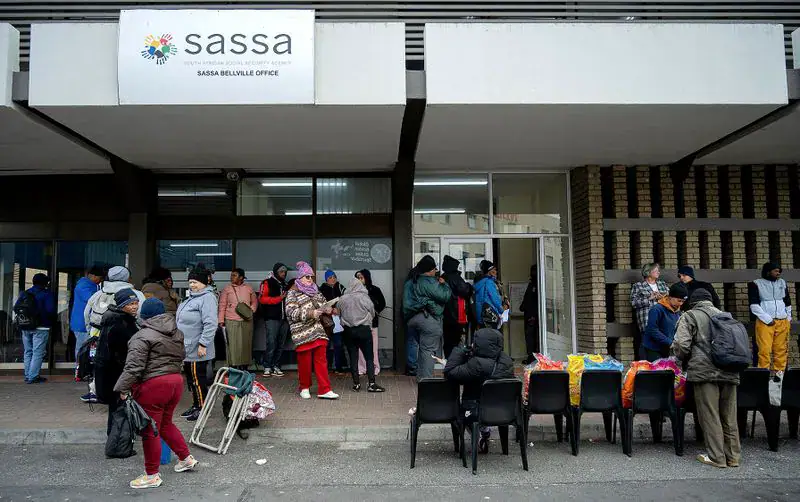
South Africa operates one of the largest social assistance systems in the developing world, with the 'social wage' accounting for more than 60% of government expenditure. The system, however, has been criticized for its inefficiencies and lack of comprehensiveness. While the country cannot be considered a traditional welfare state, the Constitution has been used to expand welfare, particularly through Section 27, which guarantees the right to social security.
The Institute for Economic Justice (IEJ) has been vocal in its criticism of the Treasury's plan to reduce social grants, arguing that the proposed changes will have a devastating impact on the poor and vulnerable. The IEJ advocates for a Universal Basic Income Guarantee (UBIG) to establish an unalienable income floor for all individuals living in poverty. According to Dr. Kelle Howson, senior researcher and project lead at the IEJ, the Treasury's plan to cut R13 billion from social grants is arbitrary and cruel.
The National Treasury, on the other hand, approaches social security through the lens of macro-fiscal sustainability, expenditure restraint, and systemic efficiency. Deputy Director-General of Public Finances Ulrike Britton argues that state resources are strictly finite and that expanding unbudgeted expenditure risks escalating public debt and undermining public finances. The Treasury has saved R13 billion from reducing fraud in social grants, according to Britton, who also highlights the need for reforms in the administration of social grants.
Despite their differences, both the IEJ and the National Treasury agree on several fundamental starting points, including the constitutional obligation to provide a functional social security system, the recognition of acute distress, and the rejection of waste and corruption. Both also acknowledge the lifeline role of social grants in supporting millions of impoverished households across the country.
The policy questions surrounding social grants center on how to interpret the Constitutional mandate. The IEJ grounds its argument in the substantive right of Section 27(1)(c) and the positive obligation of progressive realisation under Section 27(2). In contrast, the Treasury emphasizes the need for fiscal sustainability and efficiency in the administration of social grants.
The debate around social grants has significant implications for the millions of South Africans who rely on these grants for survival. The IEJ argues that the proposed changes will exacerbate poverty and inequality, while the Treasury maintains that its plan will ensure the long-term sustainability of the social security system. The outcome of this high-stakes battle will have far-reaching consequences for the country's social safety net.
The Treasury's plan to reform the social safety net grant system is part of a broader effort to improve the efficiency and effectiveness of government expenditure. The plan has sparked a heated debate, with various stakeholders weighing in on the potential impact on the poor and vulnerable. As the debate continues, one thing is clear: the fate of millions of South Africans hangs in the balance.
Key points
- The Treasury's plan to cut R13 billion from social grants has been criticized by the IEJ as arbitrary and cruel.
- The IEJ advocates for a Universal Basic Income Guarantee (UBIG) to establish an unalienable income floor for all individuals living in poverty.
- The Treasury emphasizes the need for fiscal sustainability and efficiency in the administration of social grants.