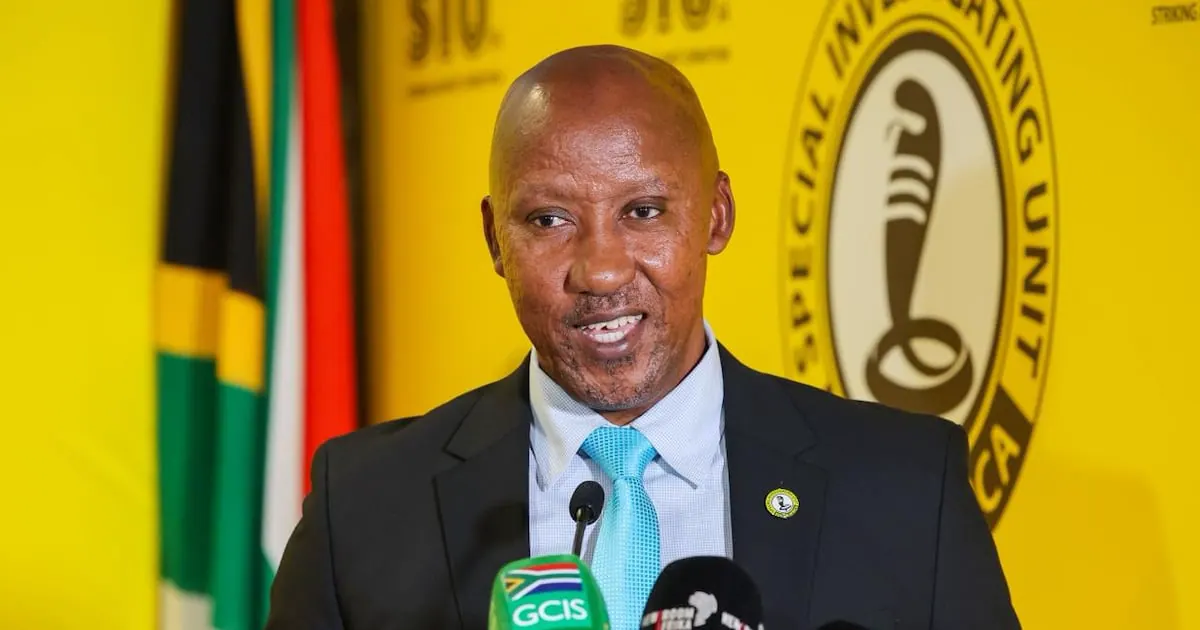
The Special Investigating Unit (SIU) in South Africa has highlighted a significant flaw in its funding model, where officials it investigates are also responsible for approving the entity's invoices. This revelation comes as the SIU pursues cases worth R106.8bn. The unit's Chief Financial Officer, Andre Gernandt, outlined this contradiction, stating that the organisation tasked with recovering public money depends partly on payments from the institutions under investigation.
The SIU's funding model is problematic, with some senior officials being investigated through proclamations, who are also agents required to sign off on the unit's invoices. Gernandt described this as "the biggest flaw in the funding model." Furthermore, municipalities have disrupted the funding model, with about a quarter of the debt book attributed to local government. The SIU reported a R162m deficit, with about R59m linked to increased debt provisions.
The remaining shortfall in the SIU's finances reflects cash expenses exceeding revenue, mainly due to growing employee costs. Government grants contributed about R460m, while invoices for investigators' work amounted to R486m. Litigation cost recoveries brought in R56m. Gernandt noted that the grant was about the same as five years earlier, making a funding review particularly important, given the organisation's increasing workload and need for specialised staff.
Outstanding debt stood at just less than R1.2bn at year-end, with R572m provided for due to collection risks. This is money owed for the SIU's services, rather than the value of corruption cases. Affected public institutions did not budget for investigations they had not anticipated. Gernandt emphasised that these institutions "don't plan to commit fraud or any irregularities, but it happens, and for that reason, then it is important that the funding model be amended."
The SIU head, Leonard Lekgetho, reported that the unit had missed its R1bn target for actual cash or assets recovered. However, Lekgetho noted that the unit had achieved other targets, including contracts or administrative decisions worth R25.7bn set aside and R1.9bn in potential losses prevented. Thenjiwe Dlamini, chief strategy and innovation officer, stated that civil litigation stood at R106.8bn as of August.
This litigation comprised 301 Special Tribunal cases worth more than R27.9bn and 80 high court cases valued at R78.9bn. These values are attached to cases, not money recovered. Dlamini reported that the unit had obtained a clean audit, both financially and on performance information. This achievement is part of the unit's efforts to improve its turnaround time.
The SIU's annual report was presented before parliament, led by Lekgetho, who had recently been cleared by the public protector. Justice Minister Mamoloko Kubayi attended the briefing to the committee on justice, which heard from the auditor-general and the information regulator before the SIU. The unit's financial struggles and funding model flaws highlight the need for a review to ensure its effectiveness in pursuing corruption cases.
Key points
- The SIU's funding model is flawed, with officials under investigation approving its invoices.
- The unit reported a R162m deficit, with outstanding debt standing at just less than R1.2bn at year-end.
- The SIU pursues cases worth R106.8bn, with civil litigation comprising 301 Special Tribunal cases and 80 high court cases.