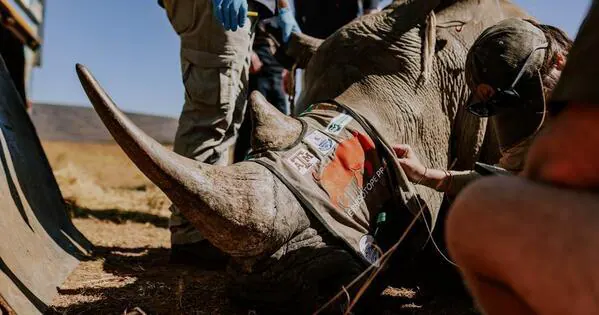
South Africa has seen a decline in rhino poaching, with 352 rhinos killed by poachers in 2025, down 16 percent from 420 in 2024. However, conservation experts stress that sustained protection is necessary to ensure the long-term survival of the species. The country's Department of Forestry, Fisheries and the Environment reported that South Africa, home to the world's largest rhino population, has seen its rhino numbers decline from 20,711 in 2010 to 14,389 in 2024.
Donovan Jooste, project manager of African Parks' Rhino Rewild Initiative, emphasized that coordinated action is required to protect the species. This includes stronger protection and intelligence against organized crime, sound habitat management, and cooperation across borders. African Parks is a non-profit conservation organization that manages 24 protected areas in 13 countries covering over 20 million hectares.
The decline in rhino poaching in some areas, such as Hluhluwe-iMfolozi Park in KwaZulu-Natal Province, is a positive trend. Poaching losses at the park fell from 198 in 2024 to 63 in 2025. Jooste attributed this improvement to a combination of strategic dehorning, stronger protection, better detection technology, institutional integrity measures, and closer cooperation between conservation partners and rhino owners.
However, contrasting trends in other areas, such as Kruger National Park, highlight the need for sustained protection. Poaching losses at Kruger nearly doubled from 88 to 175 over the same period. Jooste warned that organized criminal networks are mobile, adaptive, and quick to exploit weaknesses, stressing that rhino conservation cannot be tackled reserve by reserve.
Beyond poaching, habitat loss, climate change, and financial pressures pose additional challenges to the long-term survival of rhino populations. Jooste emphasized that the loss and fragmentation of suitable land can isolate populations, limiting natural movement, breeding opportunities, and effective genetic management. Drought, changing rainfall patterns, and deteriorating grazing conditions can also affect rhino health and reproduction.
The high cost of conservation places considerable pressure on both public and private custodians, making sustainable financing essential to maintaining long-term protection. Jooste stressed that protecting South Africa's iconic species is not simply about guarding individual animals, but about securing functioning landscapes, managing populations effectively, and building a sustainable economic and institutional base for conservation.
Looking ahead, Jooste emphasized the need to establish and reinforce viable rhino populations across suitable landscapes in South Africa and elsewhere in Africa. African Parks is working with governments, communities, and conservation partners through its Rhino Rewild Initiative to return 2,000 southern white rhinos to suitable habitats over 10 years. By the end of 2025, 632 had been rewilded into 16 recipient areas.
Key points
- South Africa has made progress in reducing rhino poaching, but sustained protection is necessary to ensure the long-term survival of the species.
- Habitat loss, climate change, and financial pressures pose additional challenges to the long-term survival of rhino populations.
- Sustainable financing is essential to maintaining long-term protection for rhino conservation.