South Africa's Renewable Energy Independent Power Producer Procurement Programme (REIPPPP) has been hailed as a success by government and private finance for delivering infrastructure at scale. Launched in 2011, the programme has attracted billions of rands in private capital and enabled the rapid development of large wind and solar projects. National Treasury describes REIPPPP as a "successful experience" and proposes extending elements of its model to other infrastructure sectors. Standard Bank and Nedbank have also cited the programme's success in terms of private capital deployment and funding.
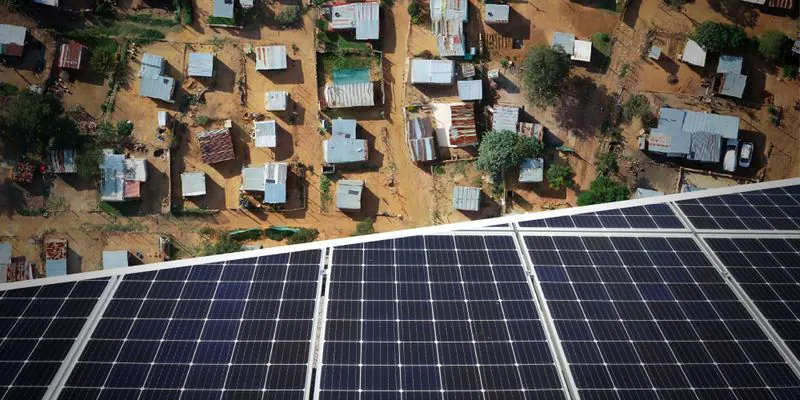
However, despite its success in attracting private capital and developing renewable energy projects, REIPPPP has fallen short of its promises of jobs, local economic development, community benefits, affordable electricity, and broader prosperity. In towns hosting renewable energy projects, poverty and unemployment remain high, and local municipalities struggle to provide basic services. For example, in Sutherland, 97% of households have access to electricity, but only 10.6% have electric geysers, and most residents rely on firewood, gas, and paraffin for heating due to expensive electricity.
The programme's design has been criticised for prioritising private capital accumulation over community development. REIPPPP has a corporate, market-focused framework that channels decarbonisation through competitive tenders, private investment, and shareholder profits. Within this framework, socioeconomic development is not a primary goal, but rather a compliance layer added to an investment structure built for capital accumulation. This design has a long history in South Africa's energy policy, dating back to the 1998 White Paper on Energy Policy.
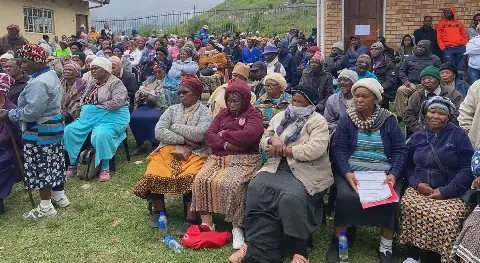
Employment created under REIPPPP has been largely concentrated during the construction phase and declines substantially once projects enter operation. According to the IPP Office, 104,209 job years were created under the programme by March 2026, but this figure does not represent 104,209 permanent jobs. Residents in towns hosting renewable energy projects have expressed frustration with the lack of permanent work and the limited interventions by Independent Power Producers, such as school upgrades and one-off donations.
The programme's limitations have been highlighted by a wind farm on communal land in the Eastern Cape, which was built with community shares and participation. Despite this, the community's material conditions remain unchanged, and relations to the land and soil remain extractive. This project highlights the need for a more nuanced approach to renewable energy development that prioritises community development and socioeconomic benefits.
Critics of the programme argue that secure livelihoods require diverse local economies, education and health depend on functioning schools, universities, and healthcare systems, and democratic participation depends on accountable governance. Ecological wellbeing also depends on restoring biodiverse ecosystems at landscape scale rather than isolated mitigation. These outcomes depend on functioning institutions and sustained public investment, which cannot simply be purchased into existence by private developers.
The South African government's commitment to austerity has also been cited as a limitation of the programme. The government's approach to reducing public spending to control debt has been criticised for harming marginalised communities and workers. The REIPPPP model is unlikely to reverse the hardships it was never intended to solve, and a more comprehensive approach to renewable energy development is needed to address the country's socioeconomic challenges.
Key points
- The REIPPPP programme has delivered infrastructure at scale, but its corporate design prioritises private capital accumulation over community development.
- The programme has fallen short of its promises of jobs, local economic development, community benefits, affordable electricity, and broader prosperity.
- A more nuanced approach to renewable energy development is needed to prioritise community development and socioeconomic benefits.