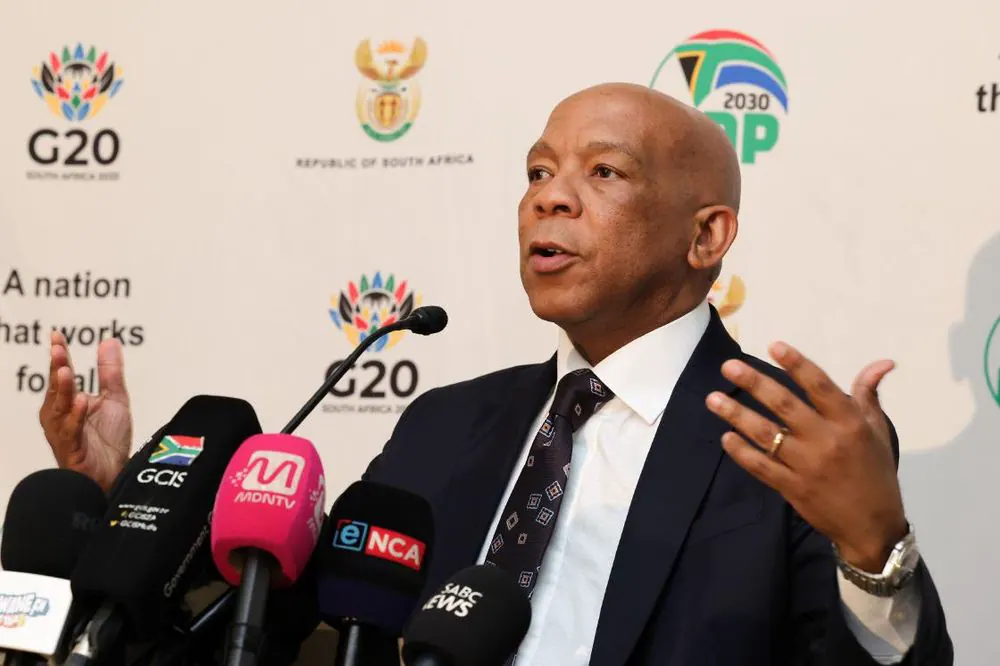
Electricity and Energy Minister Kgosientsho Ramokgopa has unveiled the "Eskom 2.0" strategy, which focuses on making the power utility financially sustainable while lowering the cost of supplying electricity and preparing for increased competition in South Africa's liberalised electricity market. The plan aims to transform Eskom into a more efficient and competitive entity. Ramokgopa emphasized that the shareholder expects a financially sustainable Eskom that can fulfil its obligations without relying on repeated fiscal support or sustained double-digit tariff increases.
Ramokgopa stated that government will not provide further bailouts to Eskom or accept sustained double-digit electricity tariff increases. He stressed that Eskom must prepare itself for a new era of financial and operational reform. The minister highlighted that electricity costs remain a major concern for households, businesses, and South Africa's industrial competitiveness. Eskom, responsible for the majority of the country's electricity generation, must cut technical losses, revenue leakages, and inefficiencies to provide relief to consumers.
Eskom recently reported its second consecutive annual profit for the financial year ending March 2026, citing improved operational performance and cost discipline. However, Ramokgopa warned that Eskom's future sustainability depends on reducing losses and improving revenue collection, rather than relying on the state or consumers to absorb its costs. He instructed the board to develop a strategy targeting electricity theft, inaccurate metering and billing, technical losses, and weak collection.
The government also wants Eskom and the National Transmission Company South Africa to support a major expansion of the national grid as more independent generation is brought online. Ramokgopa mentioned that government aims to construct 14,500 kilometres of new transmission lines, with an estimated R440 billion price tag. The programme should stimulate local manufacturing and employment, rather than relying heavily on imported equipment.
Ramokgopa emphasized that Eskom must lower the cost of electricity supply by improving plant performance, procurement, maintenance, project delivery, and workforce productivity. He stated that the intention of lowering the cost of electricity will not materialise as long as Eskom is unable to address these inefficiencies. The minister also encouraged Eskom to expand beyond South Africa as new private generators erode its traditional dominance of the domestic electricity market.
The "Eskom 2.0" strategy will also establish clear positions on nuclear power, gas, renewable energy, and the future of its coal fleet. Ramokgopa instructed Eskom Green to develop a credible project pipeline, while the utility should make artificial intelligence a central part of its operations. He emphasized that Eskom must aggressively develop its artificial intelligence capability to reduce technical losses, improve weather and demand forecasting, and strengthen visibility of the grid.
Ramokgopa cautioned that keeping the lights on is no longer the only measure of success, as the cost of electricity can undermine the ambition to grow the South African economy. He expects Eskom's board to produce a single three-to-five-year "Eskom 2.0" roadmap covering the utility's public mandate, commercial position, and investment programme. The plan comes after Eskom reached 365 consecutive days without load shedding in May 2026 and reported a second consecutive year of profitability.
Key points
- The "Eskom 2.0" strategy aims to make Eskom financially sustainable without government bailouts or steep tariff increases.
- Eskom must cut inefficiencies and reduce technical losses to lower the cost of electricity supply.
- The government plans to construct 14,500 kilometres of new transmission lines, with an estimated R440 billion price tag.