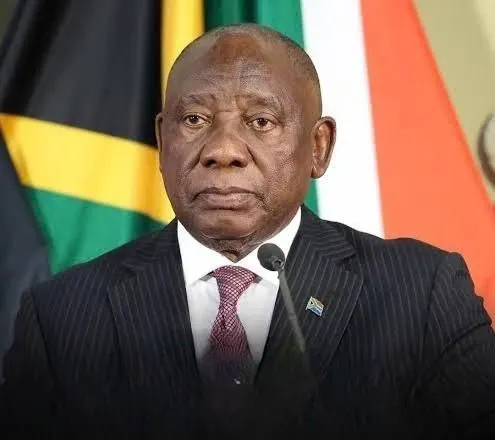
President Cyril Ramaphosa addressed the nation on Tuesday, outlining his government's response to the recent killing of 11 women in Ekurhuleni since July. The plan has been welcomed by some, but critics argue that it lacks a sufficiently detailed prevention strategy, clear accountability, and evidence that funding will reach communities. Ramaphosa's plan includes identifying hotspot areas, but activists say that traditional understanding of GBV hotspots needs to be challenged.
Activists, including Brandon Pillay, former MP and chairperson of the Ubuntu Community Centre in Bayview, have expressed concerns that the plan does not adequately address prevention at the grassroots level. Pillay noted that one of the most significant hotspots for GBV is inside a woman or child's own home, where the perpetrator is often someone known to the victim. He emphasized the need for clear accountability between the national government, provincial government, and municipalities.
The government has allocated additional resources to GBV, including R43 million in 2026/27, R45 million in 2027/28, and R47.3 million in 2028/29 for operationalizing the National Council on GBV. However, Pillay questioned how much of this funding actually reaches the communities where it is needed. He stressed the importance of identifying responsible authorities, budgets, timeframes, and mechanisms for communities to monitor delivery.
Pastor Anita Ramdhanie, deputy chairperson of the Chatsworth CPF, expressed disappointment that Ramaphosa's plan did not have a stronger prevention strategy. She emphasized that GBV begins much earlier, in attitudes, controlling behavior, disrespect, entitlement, and the belief that violence or coercion is acceptable. Ramdhanie argued that prevention must begin in homes, schools, religious organizations, and communities, and that boys and men need to be taught about respect, consent, accountability, and healthy relationships.
Dr. Keresha Govender, a psychologist and member of the DSK Group, a non-profit organization dealing with GBV, said that Ramaphosa's response was not aggressive enough to deal with the current challenges of GBV. She emphasized the need for more stakeholders to be involved in strategy and implementation, and for meaningful engagement and dissemination of true facts, figures, and emotions.
Vanessa Chetty, founder of The Hope Foundation, a GBV organization based in Durban, said that the intervention steps announced by Ramaphosa should have been a priority years ago. She noted that while the streets were identified as a hotspot for GBV, a major cause of GBV is the breakdown of families, which Ramaphosa mentioned but did not have a proper plan to tackle. Chetty welcomed the focus on boys and men being called to eradicate GBV, but questioned whether the targets of 60 and 90 days for implementation of action plans would be met.
Ramaphosa's action plan includes several key steps, such as identifying unresolved cases, tackling forensic backlogs, and conducting safety audits to identify areas where women are vulnerable. The plan also includes a 60-day deadline for police and forensic authorities to produce a funded plan to reduce forensic backlogs, and a 90-day deadline for priority and stalled cases to have recovery plans detailing what still needs to be done, who is responsible, and when it must be completed.
Key points
- Activists criticize Ramaphosa's GBV plan for lacking a detailed prevention strategy and clear accountability.
- The government has allocated additional resources to GBV, but activists question how much of this funding reaches communities.
- Ramaphosa's plan includes several key steps, such as identifying unresolved cases, tackling forensic backlogs, and conducting safety audits.