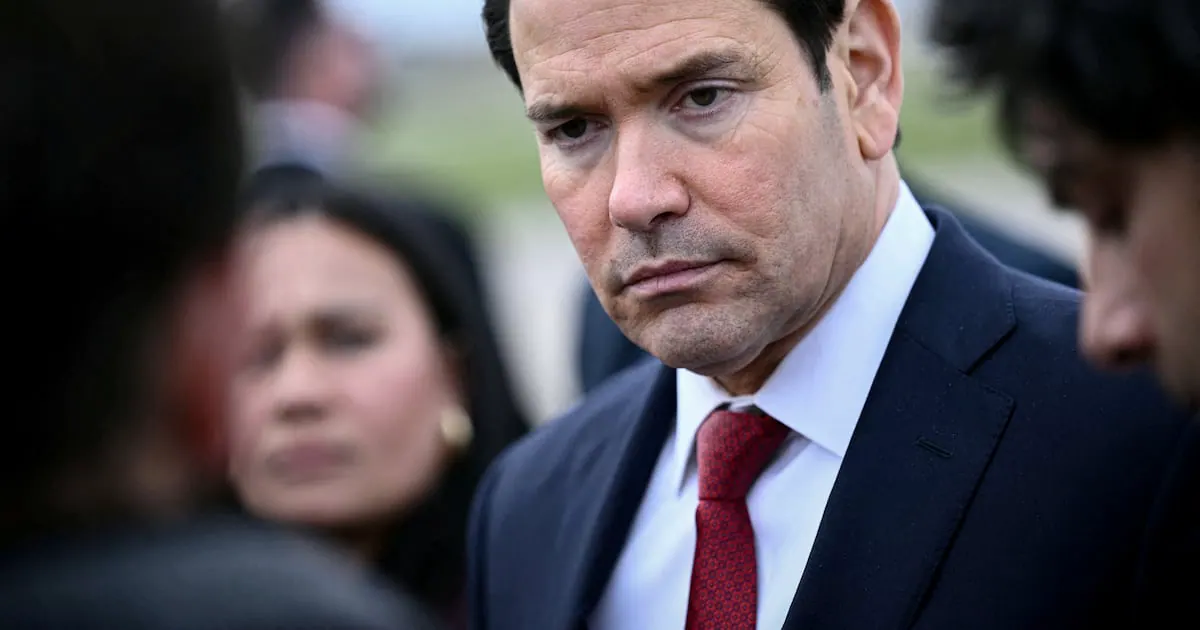
The recent statement by US Secretary of State Marco Rubio on South Africa has brought attention to the country's race-based policies. The US has taken a more tempered approach, criticizing South Africa's policies without using the term "genocide". This shift in tone comes as the US seeks to discredit and justify punishing South Africa for its perceived favoritism towards China and Russia. The US also aims to replenish its skilled farm labor force, which has been impacted by its deportation program.
South Africa's policies, particularly Broad-Based Black Economic Empowerment (BEE), have been a subject of debate. While BEE aimed to address the legacy of apartheid, some argue that it has outlived its usefulness. The policy has been criticized for benefiting a small elite, while the majority of the population remains impoverished. The US has warned that South Africa's exclusion from the African Growth and Opportunity Act (Agoa) benefits may be a consequence of its BEE policies.
The global economic debate is currently focused on income inequality, with many countries questioning the effectiveness of trickle-down economics. The US, Australia, and European countries are re-examining their economic policies, which have been criticized for exacerbating wealth disparities. Former US Secretary of Labor Robert Reich has argued that capitalism has tipped in favor of organized capital and owners, leading to increased inequality.
South Africa's approach to addressing inequality has been criticized for being overly focused on historical racial issues. The country's BEE policies have been seen as a way to address the legacy of apartheid, but some argue that this approach is short-sighted and neglects the broader global issues driving inequality. The world is facing critical issues related to wealth and income inequality, and South Africa's policies may not be effective in addressing these challenges.
In contrast to the US, South Africa still has some measures of community protection and labor union strength, which have helped to mitigate the effects of inequality. However, the country's focus on racial issues may be distracting from more pressing global challenges. The Springbok rugby team's success is often cited as an example of South Africa's ability to work together and achieve success despite adversity.
Critics argue that South Africa's politicians are deflecting responsibility for failed policies by focusing on historical racial issues. The country's leaders have been accused of being unwilling to admit mistakes or back down from idealistic positions. This approach may be detrimental to the country's economic development and its ability to address the complex issues driving inequality.
As the global debate on inequality continues, South Africa is urged to join the conversation and consider more nuanced approaches to addressing wealth disparities. The country's experience with BEE and its efforts to address the legacy of apartheid can provide valuable insights, but it must also be willing to learn from others and adapt its policies to meet the changing global economic landscape.
Key points
- South Africa's BEE policies have been criticized for benefiting a small elite, while the majority of the population remains impoverished.
- The US has warned that South Africa's exclusion from Agoa benefits may be a consequence of its BEE policies.
- The global economic debate is currently focused on income inequality, with many countries questioning the effectiveness of trickle-down economics.