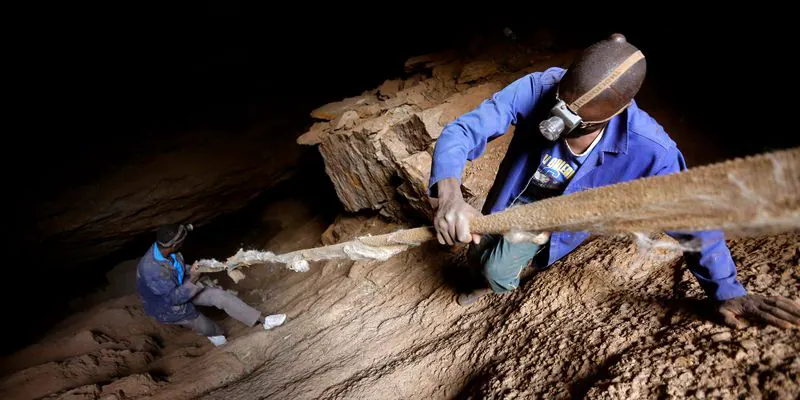
A proposed bill in South Africa has sparked concerns over excessive punishment for artisanal miners. The General (Mining) Laws Amendment Bill, which has been approved by Cabinet, proposes penalties of up to 30 years' imprisonment and a fine of up to R100-million for unlicensed mining. The bill's proponents argue that the harsh penalties are necessary to combat illicit mining and related crimes such as kidnapping, human trafficking, and murder.
However, critics argue that the bill fails to distinguish between violent criminal networks and vulnerable, subsistence artisanal miners. The bill's penalties apply equally to those convicted of possession, sale, and purchase of unpolished diamonds, and those convicted of processing, erecting, and operating machinery, and exportation of unpolished diamonds. This has raised concerns that the bill could lead to the criminalization of survival for many artisanal miners.
The proposed penalties have been criticized for being excessively harsh. The maximum sentence of 30 years' imprisonment and a fine of R100-million is more severe than a standard life sentence of 25 years imposed for the most severe offences, such as murder. The bill's critics argue that such penalties could be considered cruel, inhuman, or degrading, and therefore unconstitutional.
The historical and present context of mining in South Africa has also been cited as a reason for concern. The country's mining industry has a history of excluding the African majority from access, control, and benefits. The current minerals regime has also failed to ensure that mining houses bear the environmental and socioeconomic risks of mine closure, leading to thousands of unrehabilitated mine sites and post-closure ghost towns with extreme levels of poverty and unemployment.
The Department of Mineral and Petroleum Resources has been criticized for failing to address law, policy, and governance gaps put forward by affected communities, civil society, and constitutional institutions. The department has also failed to establish a legislated and fully functioning permitting system that can accommodate the needs of the artisanal mining sector.
The bill's critics argue that a more nuanced approach is needed to address the issue of illicit mining. They propose that the state should distinguish between fundamentally different forms of conduct, levels of participation, and degrees of culpability. This would ensure that punishment is rational and proportionate to the offence and the offender.
The proposed bill has sparked a heated debate about the need to balance the state's response to illicit mining with the need to protect the rights of artisanal miners. The bill is currently before Parliament, and it remains to be seen whether it will be passed in its current form or amended to address the concerns of critics.
Key points
- The proposed bill's penalties of up to 30 years' imprisonment and a fine of R100-million for unlicensed mining have sparked concerns over excessive punishment for artisanal miners.
- Critics argue that the bill fails to distinguish between violent criminal networks and vulnerable, subsistence artisanal miners.
- The bill's proposed penalties have been criticized for being excessively harsh and potentially unconstitutional.