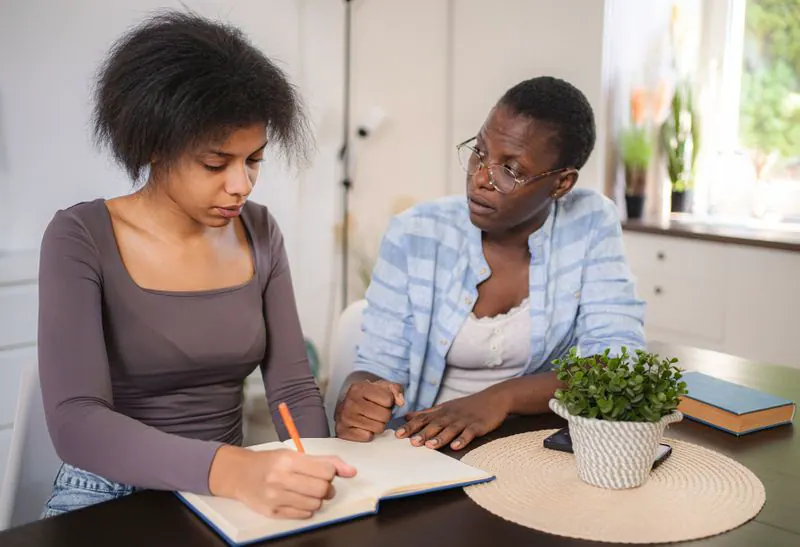
South Africa's booming private tutoring market is deepening a two-tier education system, with one-to-one lessons reaching up to R750 an hour. This has made extra help unaffordable for many learners, especially in matric. According to Taryn Jankes, Chief Marketing Officer at Teneo Online School, when tutoring in a single subject can cost R6,600 a month, it becomes about which family can afford it, rather than which child needs it.
A new analysis by Teneo of 750 live tutoring adverts collected between January 2025 and July 2026 shows an extra-curricular education sector priced far beyond the reach of many working households. Across all grades and subjects, private tuition averages R330 an hour, but the market operates on a steep sliding scale: R258 an hour at primary school, R379 in Grade 12, and R389 at university level. The steepest costs are in Science, Technology, Engineering, and Mathematics subjects.
Matric Mathematics averages R427 an hour, rising to R750 at the top end. Location also shapes what families pay, with Johannesburg being the most expensive city at R370 an hour, followed by Cape Town at R343 and Pretoria at R334, with small-town and rural areas averaging R255. When those hourly fees are translated into a realistic study schedule, the financial burden becomes clearer, with a matric pupil receiving two 1.5-hour sessions a week facing a monthly bill of R2,300 for group tutoring, R3,660 at the median individual rate, and R6,600 for a premium matric specialist.
For many parents, turning to private tutors or online schools is about finding a rescue line when mainstream schooling has failed their child. This is often due to severe classroom bullying, learners recovering from long illness or dealing with anxiety, and households needing continuity after relocating. Jankes expects tutoring costs to keep climbing, especially in high-demand Stem subjects, where the shortage of specialist tutors pushes prices up.
A Johannesburg parent whose child attends one of South Africa's top private schools now sees a tutor twice a week, after the school suggested extra lessons when the child's average dropped by around 30% this year. The parent feels that if the school is charging premium fees for "world-class education" and "the best teachers", it should be the tutor, rather than making parents pay twice for the same promise.
A Johannesburg-based private tutor highlighted the pressures and hidden costs behind this booming industry, including invisible labour such as marketing, scheduling, invoicing, and chasing payments. When working through a company, tutors earn significantly less, with the company charging about R500 per lesson, while the tutor earns R210 and covers their own petrol and unpaid travel time.
The tutor agrees that private tutoring is quietly entrenching a two-tier education system in South Africa, where families with disposable income can buy intensive one-on-one support, while lower-income families are effectively locked out. The high costs and precarious nature of the tutoring industry have raised concerns about the unequal access to quality education in South Africa.
Key points
- One-to-one matric tuition in South Africa reaches up to R750 an hour.
- Private tutoring market operates on a steep sliding scale, with average costs of R330 an hour across all grades and subjects.
- The high costs of private tutoring are deepening a two-tier education system in South Africa.