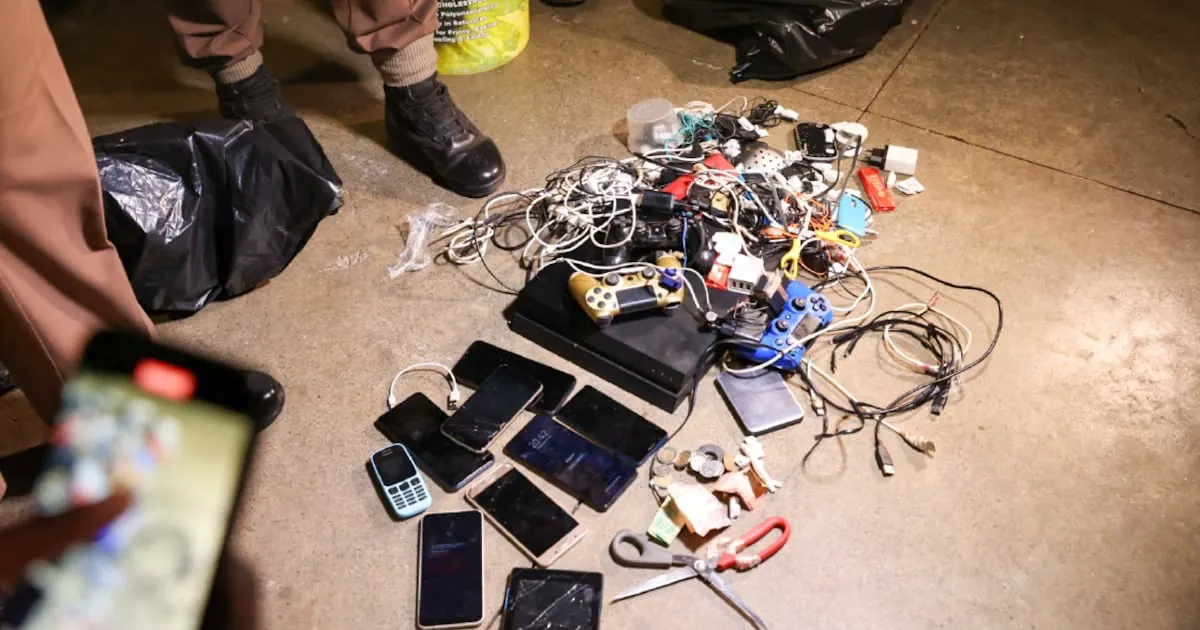
The issue of illegal cellphone use in South African prisons has raised significant concerns, with National Commissioner of Correctional Services Makgothi Thobakgale revealing that 102,720 cellphones were seized in correctional facilities between 2023 and 2026. This has led to allegations that inmates are using the devices to direct criminal operations, coordinate drug distribution, intimidate witnesses and officials, and facilitate fraud against members of the public.
According to Thobakgale, the problem of illegal cellphone use in prisons is not getting smaller, despite efforts to confiscate the devices. During Operation Vala in December 2025 and January 2026, correctional services officials seized 8,063 cellphones nationally. The department has been relying heavily on searches to find phones after they have entered prisons, but this approach has proven to be ineffective in curbing the problem.
In an effort to address the issue, the Department of Correctional Services (DCS) announced in October 2023 that it was collaborating with the Council for Scientific and Industrial Research (CSIR) to develop technology that would prevent the use of mobile devices inside correctional facilities. However, it appears that this technology has not yet been implemented, and the department is still seeking a solution to the problem.
One potential solution that has been proposed is the use of cellphone jammers to block signals in prisons. However, the DCS has claimed that regulatory obstacles prevent it from using this technology, citing a ruling by the Independent Communications Authority of South Africa (Icasa). The department has been seeking an exemption from Icasa to allow the use of cellphone jammers in prisons at specified times.
The issue of illegal cellphone use in prisons has significant implications for public safety and security. When inmates can use cellphones to run criminal enterprises from behind bars, it undermines the protective wall between incarceration and society. The DCS needs to explain why, three years after announcing that technology was being developed to prevent cellphone use in prisons, the department is still confiscating tens of thousands of cellphones and hearing evidence that some inmates are using them to maintain criminal networks.
The department's efforts to confiscate cellphones and discipline officials who assist criminals in bringing the devices into prisons are necessary but fundamentally reactive. To effectively address the problem, the DCS needs to develop and implement a more proactive strategy that prevents cellphones from entering prisons in the first place. This may involve working with mobile network operators, law enforcement agencies, and other stakeholders to develop a comprehensive solution to the problem.
Key points
- The Department of Correctional Services has seized 102,720 cellphones in correctional facilities between 2023 and 2026.
- The use of cellphones in prisons allows inmates to direct criminal operations, coordinate drug distribution, intimidate witnesses and officials, and facilitate fraud against members of the public.
- The department is exploring alternative solutions to prevent cellphone use in prisons, including technology developed by the Council for Scientific and Industrial Research.