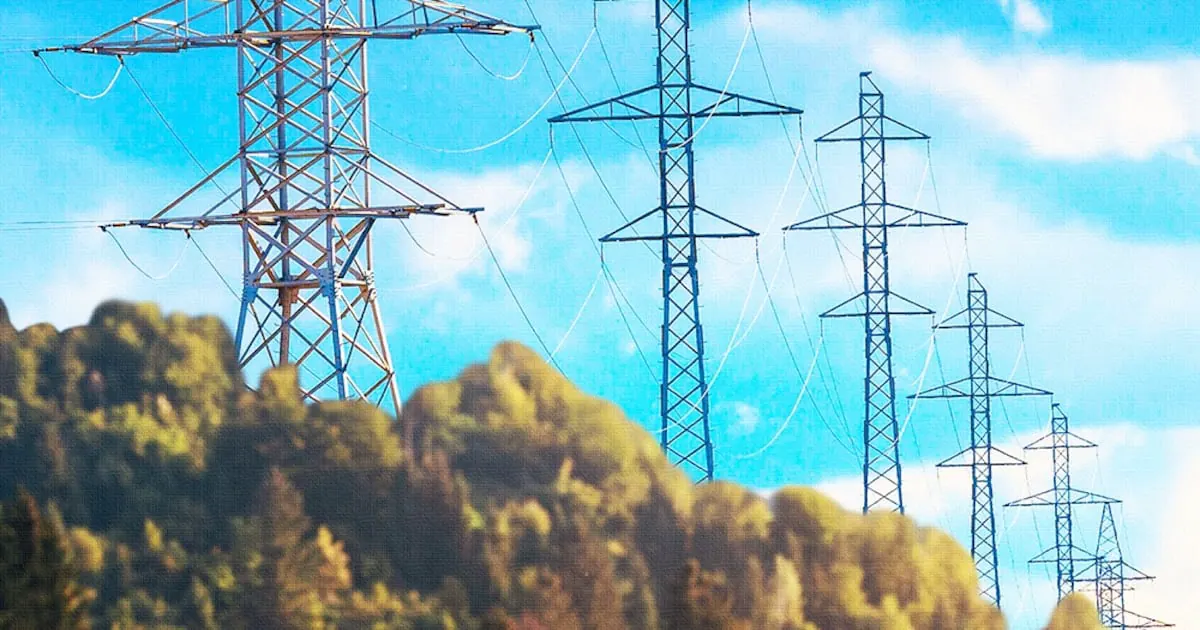
South Africa has made significant progress in stabilizing its power generation, with energy availability now above 65% and unplanned outages roughly halved. This improvement is attributed to the efforts of Dan Marokane and the Generation Recovery Plan team. However, the focus is now shifting to the transmission network, which will be crucial in supporting the integration of new power sources. The country's power landscape has changed, with lower demand and reduced generation, but the need for a robust transmission network remains.
The transmission development plan calls for new 765 kilovolt corridors through the Northern and Central Cape and a link between the Eastern Cape and KwaZulu-Natal. This will enable the connection of new renewable energy sources, particularly wind and solar power, to the grid. The plan involves building 14,500km of new transmission lines over the next decade, at a cost of around R440bn. The National Transmission Company South Africa (NTCSA) has secured funding for the first five years, but the challenge lies in accelerating the delivery of these projects.
One of the major hurdles in building the transmission network is securing environmental authorization and land access. The process of acquiring servitudes across private land can be lengthy and complex, requiring consent from landowners. The experience of Red Cap Energy, which built a 116km, 132kV line connecting the Impofu wind farms, highlights the importance of community engagement and compensation for landowners. The NTCSA has acknowledged that the country's capability to deliver these projects is a concern, with a limited number of credible contractors available.
The NTCSA CEO, Monde Bala, has stated that the capital for the first five years is secured, but the delivery needs to accelerate seven to 10 times over to reach the 2034 target. The immediate constraint is not money, but capability, with the country having only five credible contractors. Bala has emphasized the need to double or triple this number within 18 months. The skill base was lost during the years when nothing was being built, making it essential to rebuild the capacity.
There are concerns that a country with a current power surplus may find reasons to stall the transmission build. However, Eskom's own winter outlook points to a possible supply crunch in 2029 and 2030 if new capacity doesn't arrive in time. The National Energy Regulator of South Africa has approved congestion curtailment, which can release additional capacity on the network. A 4% curtailment can increase hosting capacity in the Eastern and Western Cape, allowing for the connection of more wind power.
The importance of expanding the transmission network ahead of need cannot be overstated. Unlike generation decisions, which are bets on specific technologies and fuel prices, transmission carries whatever ends up being built. The lines take the longest to build, making it essential to start the process early. The 14,500km in the transmission plan involves many conversations with landowners, who mostly prefer the line to go somewhere else. These conversations need to happen now, years before the power is needed.
The challenge of building the transmission network is not just about engineering, but also about consent and community engagement. Landowners are compensated, but most start out unwilling. The experience of Red Cap Energy and the NTCSA highlights the need for a coordinated approach to building the transmission network. The country's power landscape will continue to evolve, and the transmission network must be able to support the integration of new power sources.
Key points
- The transmission development plan involves building 14,500km of new transmission lines over the next decade, at a cost of around R440bn.
- The immediate constraint is not money, but capability, with the country having only five credible contractors.
- The country's power landscape will continue to evolve, and the transmission network must be able to support the integration of new power sources.