South Africa's local government elections on November 4 have produced no outright winner in seven of the country's eight metros, leaving the nation's biggest cities in a state of limbo. The African National Congress (ANC) remains the largest party nationally but has never been weaker, securing 30.76% of the vote. The Democratic Alliance (DA) topped the poll in Johannesburg, Tshwane, and Ekurhuleni but holds a majority in none of them.
The ANC's national executive committee met in Boksburg on November 12 and opted for ambiguity, choosing to engage with all parties and rule out no one. The committee proposed a "common minimum programme" as a basis for coalition talks. The DA was not explicitly excluded, and the two parties began formal talks on November 15. This approach is understandable given the risks of partnering with other parties, including the Economic Freedom Fighters (EFF) and the MK Party.
A potential coalition between the ANC and DA would require the ANC to hand its rival a chance to govern competently in Gauteng, which could lead to the ANC losing support. The ANC now draws under 14% in Cape Town, a worrying trend for the party. On the other hand, a coalition with the EFF, MK Party, and smaller parties would rest on razor-thin margins and invite instability.
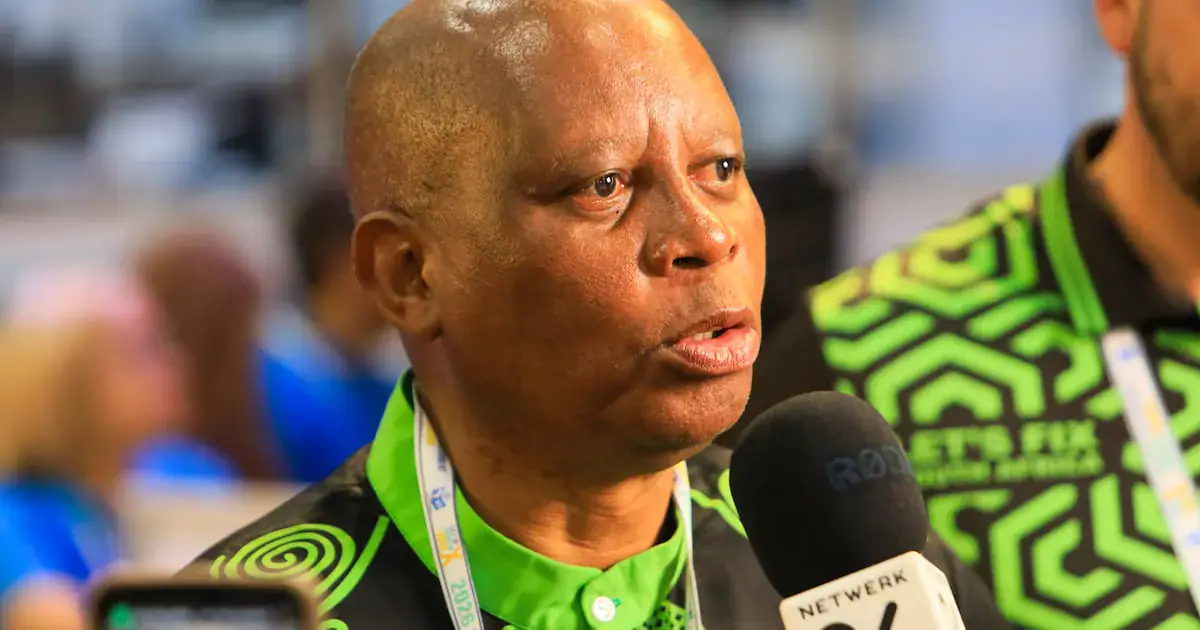
The DA faces its own challenges, particularly with regards to leadership. ActionSA has made it clear that it will not support a DA government in Johannesburg with Helen Zille as mayor. Herman Mashaba, the leader of ActionSA, has also rejected Cilliers Brink in Tshwane. Mashaba has described both Zille and Brink in harsh terms and declared his demands deal-breakers.
The feud between Mashaba and Zille is old, dating back to Mashaba's tenure as mayor of Johannesburg from 2016 to 2019. Zille has alleged that Julius Malema, the leader of the EFF, sought to influence tenders in the city, a claim Malema denies. Voters may sympathize with old grievances, but they did not vote to adjudicate them.
A precedent for dictating leadership has been set in KwaZulu-Natal, where a 47% majority party does not govern. However, setting such a precedent could be dangerous, as it would imply that a party's leadership is up for negotiation. The DA is unlikely to concede to ActionSA's demands, and it remains to be seen how the talks will unfold.
The outcome of the coalition talks will have significant implications for South Africa's governance and politics. Three possible outcomes remain: the ANC and DA could replicate their national government of unity in the metros, the ANC could lead a multi-party bloc that leaves the DA in opposition, or the DA could build a coalition with ActionSA and others if the impasse over Zille and Brink is broken.
Key points
- The ANC and DA are engaged in coalition talks, but their discussions are complicated by leadership disputes and the risk of instability.
- ActionSA's veto of Helen Zille and Cilliers Brink as mayors has added a layer of complexity to the talks.
- The outcome of the coalition talks will have significant implications for South Africa's governance and politics.
Reporting sources
- # 4 LUCKY MATHEBULA | ActionSA’s veto tests whose mandate counts · The Sunday Times