The National Treasury of South Africa has made adjustments to its fiscal targets following the recent rebasing and benchmarking of the country's Gross Domestic Product (GDP). The primary surplus for 2026/27 is now expected to be 10 basis points lower. This adjustment comes after Statistics South Africa's rebasing showed the economy was 5.3% bigger at R8.044-trillion in 2025 compared to the previously stated R7.642-trillion.
The rebasing of GDP, which was updated to 2022 from 2015, showed that the size of the economy for the new base year increased by 4.9% to R6.99-trillion from the previously stated R6.667-trillion. The largest change occurred in the mining industry, whose size was raised by 12.5% due to the inclusion and better coverage of illegal mining. The second biggest adjustment of 9.1% was in finance, real estate, and business services.
Based on Statistics South Africa's updated numbers, the Treasury now sees the primary surplus at 1.6% in 2026/27, slightly down from the 1.7% forecast in the medium-term budget policy statement. The primary surplus is expected to rise to 2.8% by 2029/30, previously forecast at 2.9%. The 2026/27 main budget deficit has been adjusted to 3.5% of GDP from 3.7%.
The debt-to-GDP ratio is now estimated to have peaked at 74.6% in 2025/26, down 3.8 percentage points from the 78.4% stated in the medium-term budget policy statement. In the Treasury's recalculations, the country's debt-to-GDP ratio falls below 70% by 2032/33, a year earlier than previously forecast.
The updated ratios are a mechanical revision based on Statistics South Africa's new data, with all else being equal. The Treasury stressed that it had not revised the assumptions used in its medium-term budget policy statement estimates or changed revenue, spending, or debt estimates.
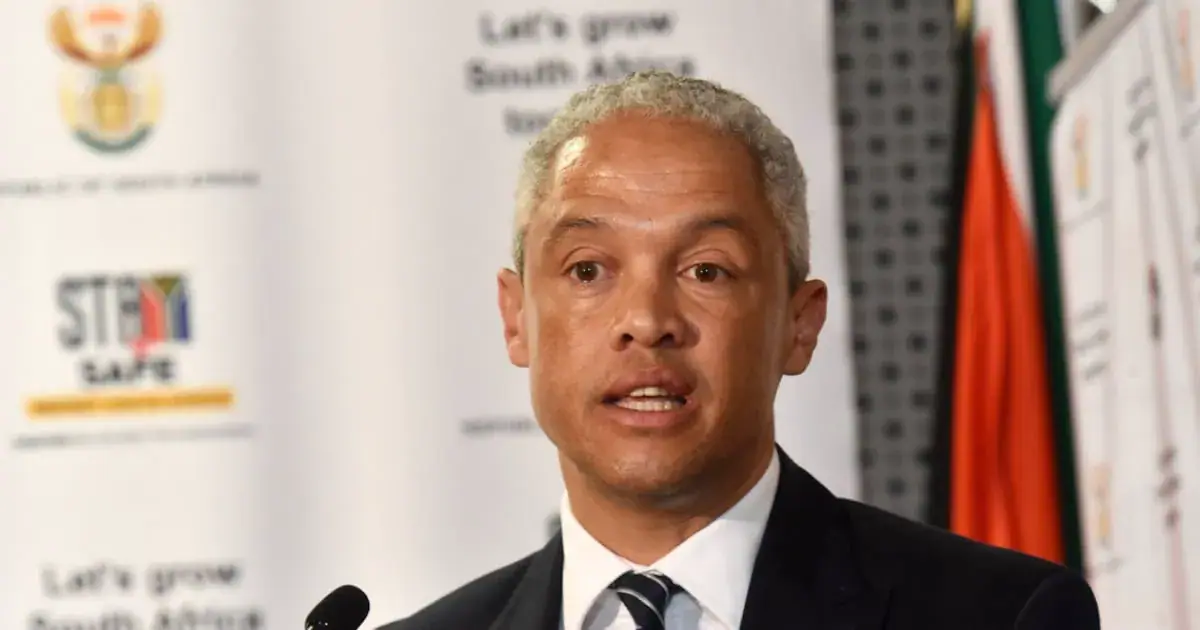
Treasury director-general Duncan Pieterse stated that the updated calculations confirm the government continues to achieve its fiscal targets. Pieterse added that the fiscal metrics look even better than previously projected based on Statistics South Africa's revised GDP data, leading to lower borrowing costs and a stronger foundation for investment and growth.
The rebasing also showed that finance, real estate, and business services remain the largest contributor to South Africa's economy among the 10 industries measured. The contribution of this sector edged up to 21.8%. In contrast, the troubled manufacturing sector has retreated further, with its contribution easing to 11.9% from 12.4%, making it the fourth largest GDP industry.
Key points
- The primary surplus for 2026/27 is now expected to be 1.6%, slightly down from the 1.7% forecast.
- The debt-to-GDP ratio is now estimated to have peaked at 74.6% in 2025/26.
- The country's debt-to-GDP ratio is expected to fall below 70% by 2032/33.