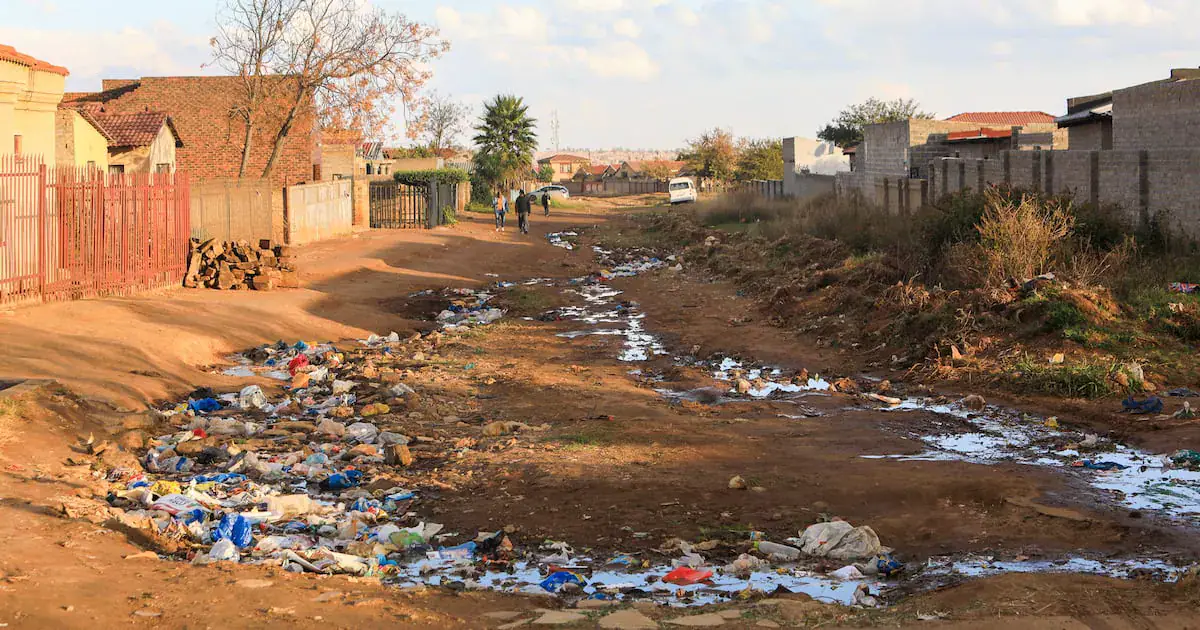
As South Africa prepares for local government elections, familiar promises of clean streets, reliable water, and functioning sanitation systems are at the forefront of the political landscape. However, decades into constitutional democracy, the country is still grappling with why these basic obligations are not being fulfilled. Overflowing sewage, uncollected waste, and deteriorating infrastructure have become common problems, contaminating rivers, accumulating in communities, and posing significant environmental and public health risks.
The constitutional environmental right is in place to protect people's health and wellbeing, with municipalities entrusted with giving this right practical effect through waste management, sanitation, and municipal planning. However, many municipalities have failed to live up to their responsibilities, with wastewater infrastructure neglected, landfills operating unlawfully, and pollution persisting despite repeated complaints. This raises serious questions about compliance with environmental legislation and the fulfilment of constitutional duties.
Municipal environmental failure has significant socio-economic implications, with communities already burdened by poverty, inadequate infrastructure, and spatial inequality bearing the highest costs. The consequences of environmental degradation extend far beyond municipal performance statistics, threatening the health, dignity, livelihoods, and quality of life of residents. The crisis runs deeper than service delivery, with corruption, financial mismanagement, and weak oversight contributing to municipal failures.
The issue of municipal failure cannot be attributed solely to incompetent leadership, as the crisis runs deeper. Historical inequality, infrastructure backlogs, and inadequate institutional support have eroded municipal capacity, compounded by corruption, financial mismanagement, and political interference. Replacing political leaders without addressing these structural conditions risks reproducing the same failures under different administrations.
Climate change has added a new layer of urgency to the need for municipal reform, with municipalities at the forefront of climate change adaptation and resilience. Those with failing stormwater, water, and sanitation systems face greater risks from flooding, drought, and water insecurity, while environmentally burdened communities remain most vulnerable to climate disasters. The Climate Change Act recognises the importance of co-ordinated climate governance, including municipal climate planning.
To address these challenges, South Africa needs accountable leaders who treat public office as a constitutional responsibility, vigilant leaders who anticipate risks, and visionary leaders who confront structural inequalities and prepare municipalities for a changing climate. However, leadership alone is insufficient, and transformation requires professional municipal administrations, sustainable financing, effective environmental enforcement, and stronger co-operation between spheres of government.
As citizens prepare to cast their votes, they should demand more from their leaders, seeking to understand how they will represent local priorities, address environmental failures, scrutinise infrastructure and climate budgets, and report progress to residents. The future of South Africa's municipalities and the wellbeing of its citizens depend on making informed choices and demanding the leadership and systemic transformation necessary to build the municipalities that the country deserves.
Key points
- Municipalities are struggling with environmental governance and service delivery.
- Climate change has added urgency to the need for municipal reform.
- Accountable leadership and systemic transformation are necessary to address municipal challenges.