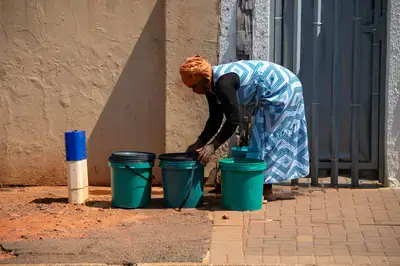
As the South African elections approach on November 4, the country's municipalities are facing intense scrutiny over their failures to deliver basic services. In Matjhabeng, Free State, residents are grappling with sewage flowing through streets, potholes covering roads, and a lack of clean water. Similar challenges are evident in Ditsobotla, North West, where raw sewage and uncollected rubbish are prevalent, and some residents have lived without electricity for over five years. These conditions are fueling frustration among voters and will test the parties contesting the elections.
The ANC, which has governed many of these municipalities, faces accusations of neglecting basic services in its traditional strongholds, including Limpopo, the Free State, North West, and the Eastern Cape. The party's record in Matjhabeng illustrates the scale of the problem, with a deficit of R871.6 million in 2024/25 and liabilities exceeding assets by R5.8 billion. Auditor-General Tsakani Maluleke's findings highlight the severity of the situation. Residents in Matjhabeng have described sewage entering homes, mounting rubbish, and children falling ill after drinking tap water.
In response to these challenges, the ANC has promised an intensive program of interventions in its first 100 days in office. This includes repairing potholes and streetlights, stopping water leaks and sewage spills, clearing illegal dumping sites, and unblocking stormwater drains. The party also proposes establishing local economic development desks, paying legitimate suppliers within 30 days, and blacklisting contractors who fail to deliver. Additionally, it aims to review municipal development plans, expand free basic services for vulnerable households, and establish community safety forums.
The Democratic Alliance (DA) offers a different approach, promising corruption-free, professional municipal administrations. The party advocates for merit-based appointments, consequences for poor performance and corruption, and public-private partnerships to design, finance, build, and maintain infrastructure. The DA also proposes vetting contractors, recruiting more engineers and finance officials, and providing training to build municipal capacity. This approach aims to address the systemic issues plaguing municipalities.
The Economic Freedom Fighters (EFF) propose rebuilding struggling municipalities through greater state capacity, land reform, and improved public services. The party suggests establishing permanent teams of engineers, plumbers, and electricians to maintain infrastructure and reduce reliance on contractors. The EFF also advocates for municipalities to use their expropriation powers to acquire abandoned land and vacant buildings, and to reserve municipal land for redistribution to black communities and youth-led businesses.
Other parties, such as the Inkatha Freedom Party (IFP) and the uMkhonto weSizwe (MK) party, have also outlined their plans for addressing municipal challenges. The IFP pledges to refer allegations of corruption for investigation, protect whistleblowers, and prioritize women's safety and local government transformation. The MK party's manifesto focuses on jobs, infrastructure, electricity, and radical economic transformation, promising job creation through various projects and expanded municipal electricity capacity.
Ultimately, the parties' ability to deliver on their promises will depend on their capacity to implement their plans and address the complex issues facing South Africa's municipalities. Voters will be closely watching the parties' performance, particularly in areas where service delivery has been severely lacking. The elections will serve as a critical test of the parties' commitment to improving the lives of South Africa's citizens.
Key points
- The ANC faces significant challenges in convincing voters it can deliver on its promises after years of governing underperforming municipalities.
- The DA proposes public-private partnerships to address infrastructure challenges in municipalities.
- The EFF advocates for greater state capacity and land reform to rebuild struggling municipalities.