South Africa is set to hold its sixth local government election since the advent of democracy on November 4. The polls are expected to be one of the most consequential in the nation's democratic history, with the African National Congress (ANC) facing mounting public frustration over unemployment, corruption, and service delivery. The ANC has been the governing party in South Africa for over three decades, but its grip on power is being challenged by several parties, including the Democratic Alliance (DA), the Economic Freedom Fighters (EFF), and the uMkhonto weSizwe (MK) Party.
The Electoral Commission of South Africa (IEC) has confirmed that 620 political parties are registered to contest the 2026 Local Government Elections, highlighting the growing diversity and competitiveness of the country's municipal political landscape. This represents a substantial increase from the 508 parties registered ahead of previous elections. The IEC Chief Electoral Officer, Sy Mamabolo, noted that the growing number of registered parties reflects the vibrancy of South Africa's constitutional democracy and the continued confidence of citizens in the electoral process.
The election arrives at a pivotal moment, with municipal governance becoming the frontline of voter dissatisfaction. Issues such as water shortages, deteriorating infrastructure, unemployment, crime, and municipal mismanagement have emerged as the defining concerns of this election. For many voters, the debate is no longer about liberation credentials, but about whether municipalities can provide reliable services. Johannesburg, South Africa's economic hub, remains a flashpoint, plagued by infrastructure decay, water challenges, and rising crime.
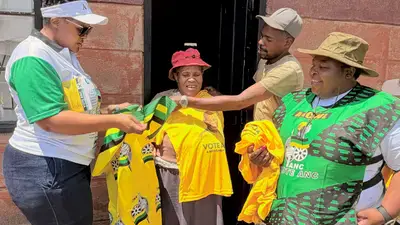
The DA, under mayoral candidate Helen Zille, has centred its campaign on governance reform, anti-corruption measures, and municipal renewal, presenting itself as a credible alternative to ANC rule in major metros. Meanwhile, Julius Malema's EFF continues to campaign on economic transformation and service delivery, while Herman Mashaba's ActionSA is targeting urban voters frustrated by crime, corruption, and municipal collapse. The MK Party, led by former president Jacob Zuma, has emerged as a disruptive force capable of reshaping the electoral landscape, particularly in KwaZulu-Natal.
The MK Party has mounted an aggressive grassroots campaign aimed largely at former ANC supporters, and polling suggests that it is polling strongly in Durban, positioning itself as a potential contender for control of the multi-billion-rand eThekwini Municipality. The municipality has been synonymous with recurring water crises, service delivery failures, infrastructure deterioration, and governance controversies, fuelling increasing voter frustration. A change of administration in Durban is no longer unthinkable, with the IFP and DA also seeking to gain control of the city.
One of the encouraging features of this election is the emergence of younger candidates determined to shape the future of their communities from within local government. Researchers, entrepreneurs, community activists, and professionals under the age of 30 are contesting seats across the country, reflecting growing frustration with unemployment, limited economic opportunities, and deteriorating public services. Their participation may prove significant in attracting first-time voters and re-engaging a generation that has often felt disconnected from traditional party politics.
The outcome of the election will have significant implications for South Africa's position on the continent and the global stage. A free and fair electoral outcome may influence the country's approach to some of the most pressing challenges of our time, including geopolitical tensions, armed conflicts, social protest movements, economic transformation, and the strengthening of multilateral diplomatic cooperation. The election will also be closely watched by foreign diplomats stationed at 134 embassies and high commissions in Pretoria.
Key points
- The ANC's hold on local government power is being challenged by several parties, including the DA, EFF, and MK Party.
- The election is expected to be one of the most consequential in South Africa's democratic history, with issues such as service delivery, corruption, and unemployment dominating the campaign.
- The emergence of younger candidates and the rise of ratepayer and civic organisations are adding new dynamics to the electoral landscape.