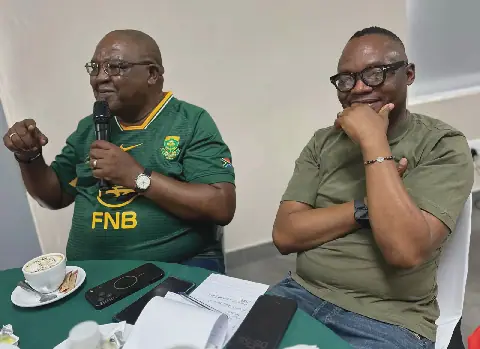
South Africa's Minister of Trade, Industry and Competition, Parks Tau, has strongly defended the country's Broad-Based Black Economic Empowerment (BEE) policies against domestic and international criticism. Speaking at the Broad-based BEE Practice and Policy Conference, Tau argued that transformation efforts were under attack from multiple directions. He cited the US's executive order in February 2025, which expressed grievances over South Africa's empowerment requirements, and Washington's list of demands in March, including ending the mandatory surrender of ownership or control as a cost of doing business.
Tau emphasized that the pressure on BEE policies was not limited to international criticism. At home, employment equity targets had been challenged in court, with six constitutional challenges still pending. Despite these challenges, Tau vowed that the government would not trade BEE for tariff relief. The US government has been piling pressure on South Africa to scrap its redress policies, warning of selective US visa restrictions targeting individuals deemed to enable race-based discrimination or land confiscation.
The effectiveness of B-BBEE in promoting black economic empowerment has been a subject of debate for years. The Democratic Alliance (DA) has drafted a bill seeking to repeal the policy, arguing that it benefits politically connected individuals and excludes the majority of South Africans. A recent study commissioned by British International Investment and Swedfund found that black-owned and led businesses in South Africa were concentrated in the small business segment and struggled to access capital and graduate into larger companies.
The study attributed the struggles of black-owned businesses to a combination of historical and structural factors, including the legacy of apartheid and limited access to capital. The report revealed that black-owned businesses faced a funding gap of $45bn and were in a worse position now than before the implementation of B-BBEE about 20 years ago. President Cyril Ramaphosa has announced a review of B-BBEE measures to improve the policy across various areas.
Tau insisted that the review would not lead to the scrapping of B-BBEE. Instead, the government aimed to shift its focus from compliance to outcomes, transactions to industrialization, and certificate ownership to productive assets and exports. He emphasized that reform must be evidence-based and that all stakeholders must account for the results. The government's direction was clear, Tau said, and it would not be swayed by critics.
The US ambassador to South Africa, Leo Brent Bozell III, has warned of selective US visa restrictions targeting individuals deemed to enable race-based discrimination or land confiscation. This has created a rift between the two trade partners, with South Africa resisting pressure to scrap its redress policies. Tau argued that the most dangerous argument against B-BBEE was not ideological but rather that the policy did not work.
Tau concluded that a policy that delivered results was a policy that defended itself. The government's review of B-BBEE was not a concession to critics but the strongest defense of transformation. The review aimed to improve the policy and ensure that it benefited a broader range of South Africans. The outcome of the review and the future of B-BBEE remain to be seen.
Key points
- The South African government is under pressure from the US to scrap its Broad-Based Black Economic Empowerment policies.
- Minister Parks Tau has defended BEE policies, arguing that they are essential for transformation and economic empowerment.
- A recent study found that black-owned businesses in South Africa faced significant challenges, including limited access to capital and a funding gap of $45bn.
Reporting sources
- # 2 Tau digs in on BEE as US pressure mounts over transformation · The Rand Daily Mail