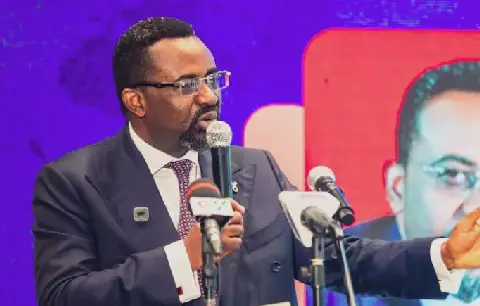
South Africa's mining industry has presented a growth blueprint to the government, aiming for sustained annual growth of 3%. This target is expected to add approximately R65 billion to the country's real GDP and support between 50,000 and 100,000 additional jobs by 2035. The Minerals Council South Africa, led by President Paul Dunne, unveiled the Investment and Growth Strategy at the 2026 Joburg Indaba. The council believes that the main obstacle to growth is not geological but rather the systems surrounding the mining industry.
The urgency for growth is underscored by South Africa's economic challenges, including 8.5 million unemployed people and 300,000 new job seekers entering the market annually. The International Monetary Fund forecasts a growth rate of only 1% for this year, falling short of the 3% needed to absorb new entrants into the labor market. Mining is one of the few sectors capable of driving growth quickly, having been the country's largest export earner in 2025 at R814 billion.
According to the Minerals Council South Africa, the sector's underperformance is not due to a lack of resources but rather issues with the operating environment. These include logistics, electricity and water constraints, crime, and illegal mining. The council's analysis, based on engagement with over 20 mining chief executives, identifies bottlenecks in the system that can be addressed. With capital available and growing demand for minerals, investors are weighing factors such as infrastructure quality, permitting efficiency, and regulatory predictability.
There are early signs of momentum in the sector, with several mining companies announcing extensions, new mines, and feasibility progress. The council cites PwC's SA Mine publication, which reports that reserves in gold, platinum group metals, and iron ore have grown significantly. Approximately R70 billion in investment is committed and ready for implementation, mostly aimed at maintaining current output. A more enabling environment could lead to expansion.
The government's support for the mining sector is evident in its inclusion as one of three priority sectors in the Government-Business Partnership under the Presidency. The partnership aims for sustained growth above 3% annually and one million additional jobs by 2030. The Department of Mineral and Petroleum Resources and the Minerals Council South Africa share joint accountability for the sector's growth, with three workstreams focused on unlocking investment, closing competitiveness gaps, and implementing a national mining cadastre.
The Minerals Council South Africa has committed to making the sector attractive to investors and putting it on a sustainable growth path. The council and the government will work together to address the identified bottlenecks and implement the necessary reforms. With a quantified prize, a ready pipeline, and deadlines to track, the sector is poised for growth.
The success of the mining sector's growth strategy depends on delivery by both government and industry. The R65 billion and 100,000 jobs are potential gains rather than guarantees. However, with the pieces in place, including a seat at the national growth table, the sector is optimistic about its prospects. Key to this growth is addressing the operating environment challenges and implementing the necessary reforms to make South Africa a destination of choice for investors.
Key points
- The mining sector aims to achieve 3% annual growth, adding R65 billion to GDP and 50,000 to 100,000 jobs by 2035.
- The sector's growth is hindered by issues with the operating environment, including logistics, electricity and water constraints, and crime.
- The government has included mining as a priority sector in the Government-Business Partnership, aiming for sustained growth above 3% annually and one million additional jobs by 2030.